• Skip to primary navigation
  • Skip to main content
  • Skip to primary sidebar
  • Skip to footer
Trending:
  • Kashmir
  • Elections
Saturday, June 6, 2026

Daily Times

Your right to know

  • HOME
  • Latest
  • Iran-Israel war
  • Gilgit Baltistan Election
  • Pakistan
    • Balochistan
    • Gilgit Baltistan
    • Khyber Pakhtunkhwa
    • Punjab
    • Sindh
  • World
  • Editorials & Opinions
    • Editorials
    • Op-Eds
    • Commentary / Insight
    • Perspectives
    • Cartoons
    • Letters to the Editor
    • Featured
    • Blogs
      • Pakistan
      • World
      • Lifestyle
      • Culture
      • Sports
  • Business
  • Sports
  • E-PAPER
    • Lahore
    • Islamabad
    • Karachi

Agencies

Many older adults fall at home in well-lit rooms

Published on: June 2, 2019 2:11 PM

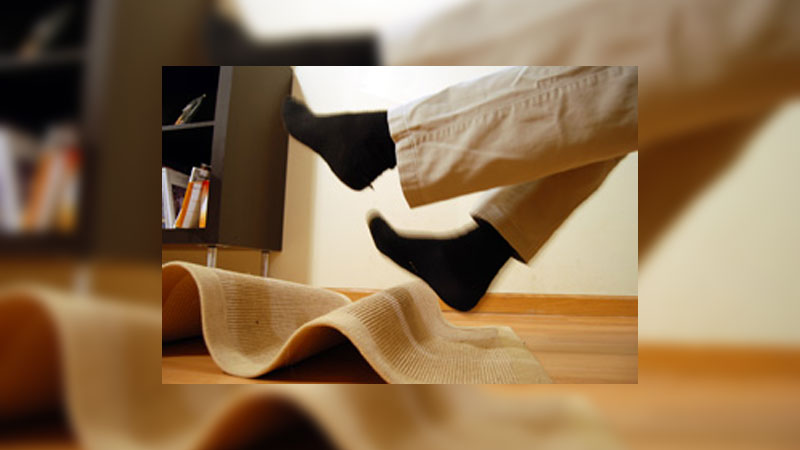
Elderly people who fall may not always be stumbling over things in the dark. A new study suggests most of these falls at home happen when there’s plenty of light.
Falls are a leading cause of disability and diminished quality of life among older adults, but much of the research to date on the underlying causes of these incidents has relied on medical records that don’t illuminate exactly what led to the accident, researchers note in the Journals of Gerontology: Series A.
The researchers examined data from weekly online surveys of older adults to get a detailed picture of what factors contributed to 371 falls reported over a four-year period. The study included 120 people who fell at least once, as well as 38 who did not.
Most falls happened at home, often in the bedroom, the study found.
“Older people generally fall in their common rooms and in situations that seem unlikely for the simple reason that they spend too much time at home (the more you walk, the less you fall, paradoxically; balance, strength and body awareness are better with more activity),” said lead study author Dr. Antoine Piau of Oregon Health & Science University in Portland and the University Hospital of Toulouse in France.
Four out of five falls in the study happened in well-lit areas, suggesting the problem isn’t that people can’t see where they’re going.
Instead, it seems they may be trying to do too much at once, Piau said by email.
“Falls at home may also be common because people in their everyday activities are doing more than one thing at a time without being attentive to their environment such as walking down stairs while carrying a box or phone,” Piau said by email.
Stairways were not a common location for falls, with only seven falls, or 2 percent of the total, occurring on stairs.
Almost 90 percent of falls occurred because people lost their balance, and nearly two-thirds involved a slip or trip as the precipitating factor.
Overall, 119 falls led to an injury or a checkup with a healthcare provider. One in five of these falls, however, didn’t result in treatment or have any impact on walking.
Nineteen falls, or 8 percent, resulted in reduced walking ability.
The study wasn’t designed to prove whether or how specific circumstances cause falls. It also didn’t examine ways to prevent falls or minimize risks of injury.
“Falls happen where people spend most of their time,” said Dr. Eric Larson of Kaiser Permanente Washington in Seattle.
“But in addition to location, there may be circumstances, like the common need to go to the bathroom, especially after waking up during sleep, that contribute to falls,” Larson, who wasn’t involved in the study, said by email. “This is a prime time for falling for a number of reasons – (including) slippery floors and lack of any footwear.”
Staying active can also help, said Cathie Sherrington of the Institute for Musculoskeletal Health at the University of Sydney in Australia.
“An exercise program to enhance balance and strength has been found to prevent falls,” Sherrington, who wasn’t involved in the study, said by email.
When people do fall, they should have their home assessed for potential trip hazards to help avoid another accident, advised Dr. Sharon Straus of St. Michael’s Hospital and the University of Toronto in Canada.
“Falls can result in injuries that impact mobility, even though hospitalization may not be required,” Straus, who wasn’t involved in the study, said by email. “It would be useful for patients to be assessed after a fall to optimize their functional status and address factors that could prevent future falls.”

Filed Under: Infotainment Tagged With: Elderly, stumbling

Submit a Comment


Primary Sidebar


Latest News

Alexander Zverev eases past Jakub Mensik in French Open semifinals

Taylor to face Pili in Croke Park farewell

FIFA bans vuvuzelas from World Cup stadiums

France brush off Ivory Coast loss, call it timely World Cup reminder

Legendary boxer Muhammad Ali’s 10th death anniversary observed

Pakistan

JAAC declared proscribed party ahead of AJK polls on July 27

Fixed tax scheme for small retailers launched to raise Rs 50bn annually

Govt cuts petrol price by Rs 4 per litre, keeps diesel’s unchanged

Bilawal promises GB voters with land and job rights

Iran declares support for Hezbollah with wider peace deal in doubt

More Posts from this Category

Business

SBP’s ‘Go Cashless’ campaign saw Rs 34bn in digital transactions on Eid

Short-term inflation down by 0.56%

Saudi-Pak Business Council shows interest in infrastructure investment

‘Govt, allies united in efforts to craft people-centric budget’

Rupee records gain against US dollar

More Posts from this Category

World

CENTCOM space post signals wider US military footprint

US official delivers Trump’s “good hello” to Putin

NASA lifts ISS evacuation alert after leak

More Posts from this Category


Footer

Home
Lead Stories
Latest News
Editor’s Picks

Culture
Life & Style
Featured
Videos

Editorials
OP-EDS
Commentary
Advertise

Cartoons
Letters
Blogs
Privacy Policy

Contact
Company’s Financials
Investor Information
Terms & Conditions

Facebook
Twitter
Instagram
Youtube

© 2026 Daily Times. All rights reserved.

Manage Consent
To provide the best experiences, we use technologies like cookies to store and/or access device information. Consenting to these technologies will allow us to process data such as browsing behavior or unique IDs on this site. Not consenting or withdrawing consent, may adversely affect certain features and functions.
Functional Always active
The technical storage or access is strictly necessary for the legitimate purpose of enabling the use of a specific service explicitly requested by the subscriber or user, or for the sole purpose of carrying out the transmission of a communication over an electronic communications network.
Preferences
The technical storage or access is necessary for the legitimate purpose of storing preferences that are not requested by the subscriber or user.
Statistics
The technical storage or access that is used exclusively for statistical purposes. The technical storage or access that is used exclusively for anonymous statistical purposes. Without a subpoena, voluntary compliance on the part of your Internet Service Provider, or additional records from a third party, information stored or retrieved for this purpose alone cannot usually be used to identify you.
Marketing
The technical storage or access is required to create user profiles to send advertising, or to track the user on a website or across several websites for similar marketing purposes.
  • Manage options
  • Manage services
  • Manage {vendor_count} vendors
  • Read more about these purposes
View preferences
  • {title}
  • {title}
  • {title}
We use cookies to ensure that we give you the best experience on our website. If you continue to use this site we will assume that you are happy with it.