
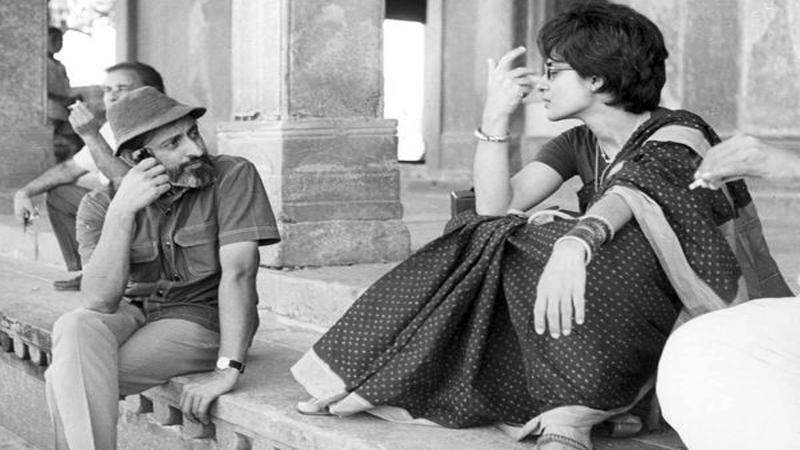
Most film critics and cinema lovers believe that one of the best films made on the Indian Partition is ‘Garam Hawa.’
The film was based on Ismat Chughtai’s short story. However, very few people know that there was another woman behind the film ‘Garam Hawa’. Her name was Shama Zaidi and she was the Art Director of the film.
Garam Hawa was released in 1973 and featured the likes of Balraj Sahni and Farooq Shiekh. The film deals with a Muslim family based in Agra that slowly disintegrates and crumbles under the socio-economic pressures of the Indian Partition.
The family’s patriarch, Salim Mirza, is constantly asked to leave for Pakistan but he resists the pressure. The film serves as a rare glimpse into the post-Partition lives of Indian Muslims.
However, the most outstanding aspect of the film is that it has powerful woman characters and women-centric plots. There is Badar Begum, Salim’s mother, who refuses to move out of her house due to any compulsion. Her one-liners are powerful as well as dramatic. There is Jamila, Salim’s confident wife, who commands attention and respect within the family. She is less emotionally disturbed by the partition and more worried about the everyday practicalities. And last but not the least, there is Amina, the romantic young daughter of the family who is betrayed by her lover and the society at large. The fate of women, particularly the betrayal of Amina, serves as an allegory to the fate of India and the Muslim community itself.
Zaidi wrote the script for ‘Garam Hawa’ on the insistence of Rajinder Singh Bedi, the iconic Urdu playwright and author. She then requested Ismat Chughtai to write a short story to base the film on
One reason that Garam Hawa managed to take such a nuanced and complex take on women is that it was fire-powered by incredible women, along with men. The film is famously based on an unpublished short story by Ismat Chughtai. No wonder the film has a feminist flavour to it.
Zaidi was the art director of the film, which means she planned and designed the visual aspects of the film, the sets and costumes. The film is a period drama and pivots around the traditional Muslim community in Agra. Zaidi carefully crafts a simple but impactful household full of mallow colours and an Islamic ambiance. Her work is artful yet accurate. Partly because she is herself a witness of the Indian Partition but also because she is from the very community that the film deals with.
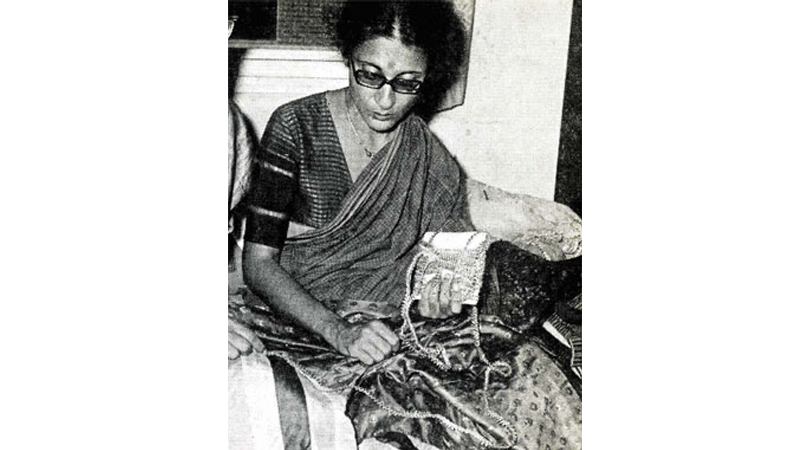
Garam Hawa became a pioneer in what is deemed as a new wave of art cinema in India. It came a short while before Shyam Benegal’s ‘Ankur’ in 1973.
There are very few women filmmakers in India and Pakistan even today, let alone in the 1970s. However, Shama isn’t just a filmmaker. She is a scriptwriter, theater artist, set designer and an art critic for publications like the New Statesman.
Zaidi is the daughter of Bashir Hussain Zaidi, who was elected as a member of the Lok Sabah and became vice hancellor of Aligarh Muslim University. Her mother, Qudsia Zaidi was a close associate of Habib Tanvir, a communist and theatre artist. Habib Tanvir used to visit their house often and influenced the young Zaidi. Both the parents were leftists (or progressives) associated with arts and education. Zaidi inherited this bent of mind from her parents and stayed away from everything mainstream- politics, cinema, and literature. She dabbled in all of them but always from the periphery.
She has made an immense contribution to theatre and has worked with some of the greatest minds in Indian cinema- Kaifi Azmi, Muzaffar Ali, Shyam Benegal, Satyajit Ray and of course MS Sathyu, who is also her husband. She wrote scripts, designed sets and costumes and also contributed to the conceptualization of the films.
Zaidi was educated at the Woodstock School in Mussoorie. After studying at the Delhi University and Miranda House, she left for London. She took a diploma in stage design from the Slade School of Art there. She is married to MS Sathyu, the director of ‘Garam Hawa,’ with whom she collaborated closely on that project. Sathyu is himself a connoisseur of theatre.
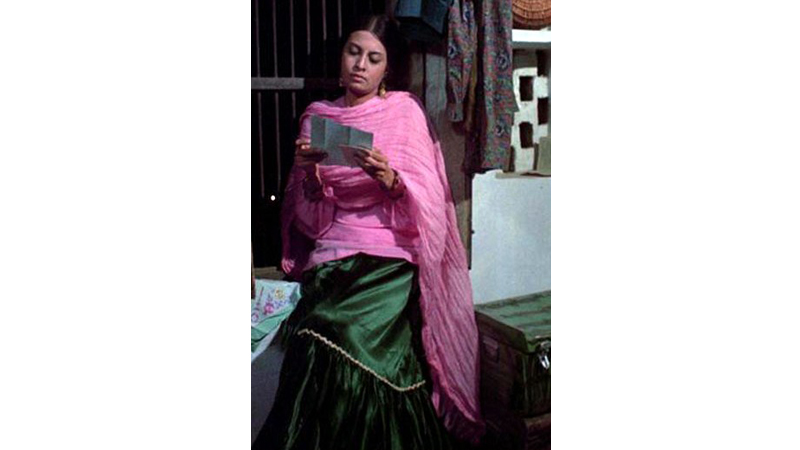
Zaidi wrote the script for ‘Garam Hawa’ on the insistence of Rajinder Singh Bedi, the iconic Urdu playwright and author. She herself confessed that she was doing a stage version of Bedi’s novel, Ek Chadur Maili Si (A stained sheet) when he requested her to write this film.
She then requested Ismat Chughtai to write a short story for this purpose. Eventually, she borrowed a number of Chughtai’s stories and stitched them together in the film. Chughtai’s stories were where the idea of the elderly mother who refuses to leave her family abode came from. Kaifi Azmi, whose verses serve as the opening lines and introduce the major theme of the film, edited her screenplay. He shortened its length.
Zaidi served as the art director on Shyam Benegal’s ‘Manthan’ and ‘Bhumika.’ She wrote the scripts for many of Benegal’s films like ‘Making of the Mahatma,’ ‘Hari Bhari,’ and ‘Susman,’ among others.
Susman was released in 1987 and deals with the struggles of handloom weavers in Indian villages during the rapid industrialisation of India. It has Shabana Azmi and Om Puri in the lead roles.
‘Hari Bhari’ (or fertile) deals with the fertility rights and issues of women and has Shabana Azmi and Nandita Das in the lead roles. The film was released in 2000.
‘Manthan’ was a film about the White Revolution in India and was crowdfunded by 500,000 Indian farmers. It was India’s official entry to the Oscars that year. Bhumika starred Smita Patel in the lead role and was based on the life of the Marathi actress Hansa Wadkar’s life.
Zaidi also served as the art director on Muzaffar Ali’s magnum opus – ‘Umrao Jaan Ada.’ All these films have women in their lead roles and a feminine mystique in their script. Zaidi sticks to realism and refrains from any melodrama.
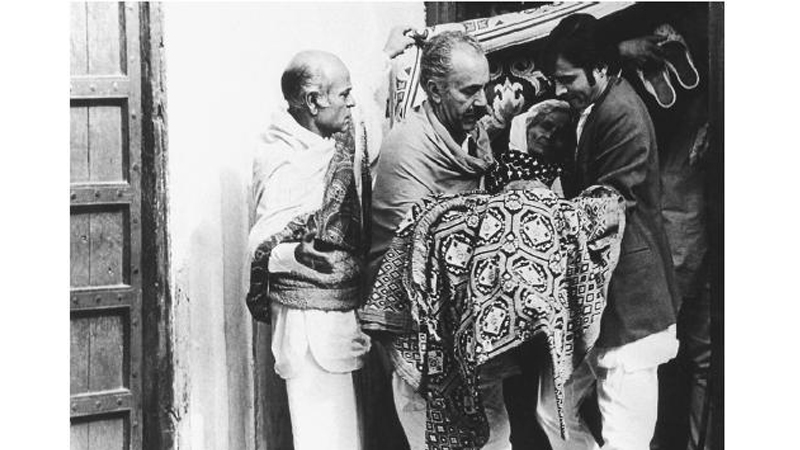
Zaidi designed the costumes of ‘Shatranj Ke Khilari,’ the period drama based on a short story by Munshi Premchand and directed by Satyajit Ray. Zaidi added the aura of 1857 without over-doing the glamour or unnecessarily modernising the screen presence. Her costumes add colour to the screen but don’t steal the attention away from the script. Her work, dialogues, sets, and costumes have an understated classical elegance to them.
However, because of her low-profile and down-to-earth demeanour, Zaidi has remained virtually unknown despite her contributions to the Indian cinema.
So if this August (basically the Independence season), you decide to revisit the cult classic ‘Garam Hawa,’ remember it has the handprints of a left-leaning, multi-faceted, renaissance woman on it.
The writer is based in Lahore and tweets as @ammarawrites. Her work is available on www.ammaraahmad.com
Published in Daily Times, August 2nd 2018.