Almost every Pakistani who is aware of climate change and its impacts recognises that the country is one of the most vulnerable to impacts of climate change globally. Most also believe that Pakistan’s emissions are fairly negligible, compared to other emitters, such as India and China. However, as a growing developing country with rapidly increasing development, Pakistan can do a lot more than just join the pity party of climate change victims.
Despite being the 5th country in the world to establish a separate ministry of Climate Change, thus far, the country has done very little to reduce its own GHG emissions. Developing countries like Indonesia and Vietnam have already begun work on emissions trading schemes (NTS) on a national basis. Pakistan, however, is far from reporting its own emissions within sectors and recognising its own impacts on climate change in the country.
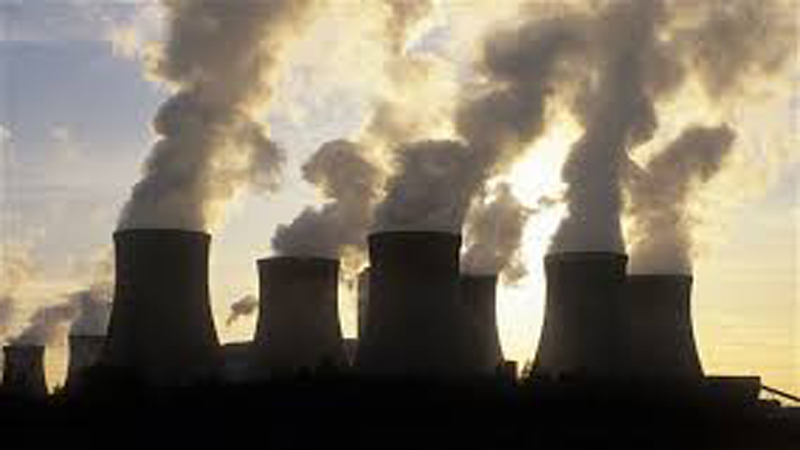
It is important to recognise that from 1994 to 2015, Pakistan’s emissions increased by 123% to 405 mtCO2e (metric tonnes of carbon dioxide equivalents) by 2015. Further, emissions are expected to rise by another 50% by 2030, according to the IPCC. Being an energy-deficient country, Pakistan’s largest contributor to emissions is the power generation sector (46%) which is expected to be producing 898 mtCO2e by 2030. The second largest contributor is agriculture (41%), followed by land-use change and forestry (6%), waste (5%) and industrial processes (2%). These numbers are expected to increase annually by an average of 3.9% of 10 mtCO2e.
With continued talks of increased energy production every election, followed with increased industrial activity through the China-Pakistan Economic Corridor, emissions can be expected to increase at exponential rates. While much interest has been shown towards renewables, the industry is still largely depending on fossil fuels as the staple source of energy. Little to no incentives have been given to industries that wish to consider renewable energy as power source and cost of solar energy still continues to be higher than most can afford. On the other hand, the development of large coal power plants has been used by major political parties in the country as a major winning factor for the next elections. This goes to show that despite Pakistan being a signatory to the Kyoto Protocol and Paris Agreement in 2016, little to no knowledge has been provided to the millions of citizens of the country with regards to information on the environment and climate change.
Pakistan is swift at publishing policy documents, but has not been able to create any sizeable difference to shift mind-sets and actions towards climate-sensitive growth.
This year, again, Pakistan’s largest metropolis, Karachi, continues to face a heat wave claiming lives of at least dozens. With an increase in emissions in the next few years due to coal power plants, the number of deaths should be expected to increase – adding further costs to the country’s dwindling health resources.
Using a Polluter Pay’s Principle, an ideal solution out of these problems is to establish a carbon emissions management system, where large emitters producing more than 20,000 metric tonnes of carbon are taxed for their emissions. This system has already been established in many countries around the world. The revenues accumulated through this taxation can then be used in a variety of climate change adaptation and mitigation measures, to not only save lives, but also coerce large industries to consider the cost of carbon in their investments and planning decisions. Many adaptation strategies can be enforced, such as improving access to water and land resources, developing agri-technology that considers climate change impacts, implementing a diverse cropping system, climate resilient construction and so on. Instead of relying greatly on funds from the Global Climate Fund (GCF), a transparent and fair carbon tax system could provide enough funds for all required adaptation and mitigation measures, including marketing and advocacy. Without a climate adaptation and mitigation strategy, the country will continue to lose billions of dollars after every natural disaster.
Singapore named 2018 as its Year of Climate Action. Hence, starting this year and until 2023, Singapore’s government aims to begin taxing large emitters (those emitting more than 25,000 mtCO2e) by charging them $5 for every metric tonne of carbon emitted. From 2030 and beyond, the government will increase the tax rate to between $10 and $15 to motivate companies to reduce emissions even further. Further, the government of Singapore expects income of up to $1 billion from their carbon tax scheme just within the next 5 years. Many countries and provinces around the world have put in place a carbon trading or taxing scheme to meet their Intended Nationally Determined Contributions (INDCs) as part of the Paris Agreement. Pakistan, on the other hand, is swift at publishing policy documents, but has not been able to create any sizeable difference to shift mind-sets and actions towards climate-sensitive growth.
Ideally, Pakistan should have had a carbon tax or trading scheme in place before the development of thermal power plants and CPEC to push businesses and public companies to become vary of the new global standards against increased emissions. Looking forward, Pakistan’s Ministry of Climate Change needs to look more at quantifiable efforts that can put realistic change in place – starting with the possibility of a carbon tax and trading system. Much of the criticism towards a carbon tax or trading scheme has already been proven wrong throughout the world, as many examples have proven otherwise. Best of all examples is the success of the tax system in Sweden, which has pushed the country’s emissions down by 25%, along with a 60% increase in their GDP. Hence, the idea of decoupling growth from impact on the environment is not one for the books only.
With strong leadership and political will within the Ministry of Climate Change, Pakistan can also use a carbon tax scheme to not only mitigate and adapt to the inevitable impacts of climate change – but also boost its industries through a clean and green economy. It’s about time the country makes headlines for its success in battling climate change, as compared to death tolls to natural disasters, such as floods and heatwaves.