
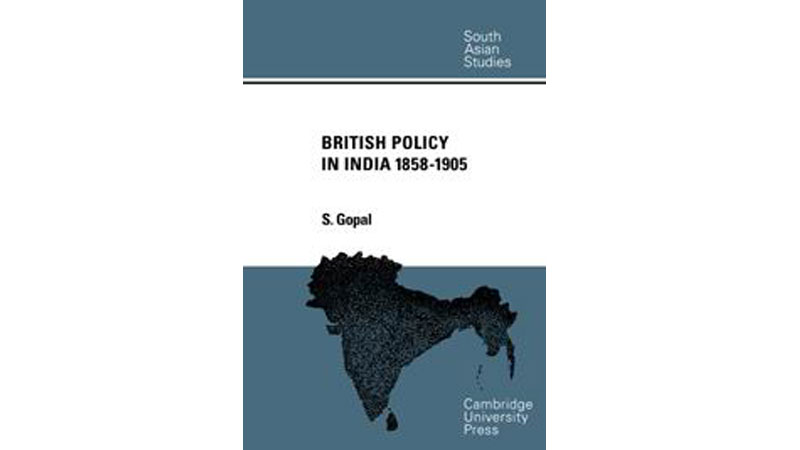
 The first chapter of the book deals with the post war period (1858-1869). Discussion is unbolted with a discourse on the successful end of war of 1857 which was titled by British a large scale ‘mutiny’ even ‘more than a mere mutiny’. Study explored that Bengali troops were mostly Brahmans and Rajputs, and their families were living in Oudh. Concerns prompted Bengali soldiers, when they observed the economic exploitation from British East India Company, landowners and corporate classes. British civil servants and officials were not expecting a violent uprising by the natives.
British had a stern way to implement foreign policy so that the neighbours should only understand it as ‘the decree of fate’
Lord Curzon launched many investigative commissions. He made efforts for police reforms, eliminating the corruption and to promote the economic development. He did the partition of Bengal, the largest Province of India, to improve its developmental process. This politically motivated the Muslims of the East Bengal. As a result, Curzon also faced a huge agitation by the Congress and the Hindu political and corporate classes of West Bengal. He provided a revival to conservatism in India by refurbishing the main features of Lord Mayo’s policies. He proved that a proper administration is continues process. S. Gopal admires the proficient administration of Curzon during 1898-1905. Author concludes with an output saying, “India after 1905, had new interests and objectives and compelled new lines of British policy”.
Published in Daily Times, April 8th 2018.