CHICAGO: The #MeToo movement may be changing work cultures from entertainment to politics, but Guadalupe Hinojosa will still be stepping into a tough world for women when she completes her training as a welder.
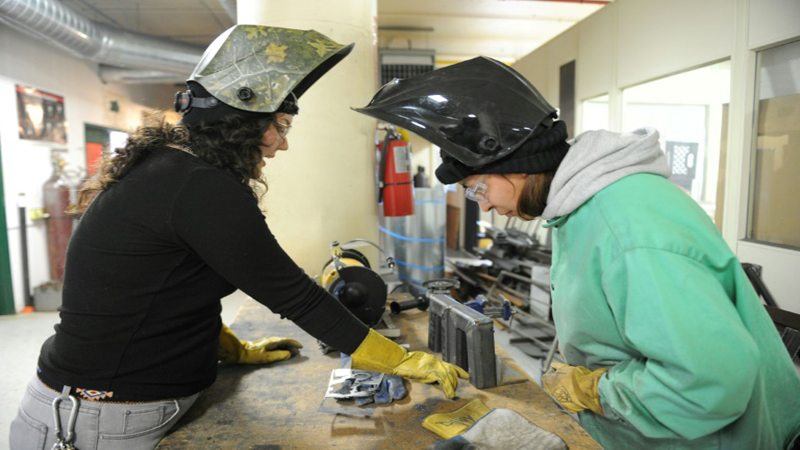
On the third floor of a sprawling red-brick building in Chicago, where mason jars were once manufactured, the 35-year-old moved in a welding helmet between pieces of heavy industrial equipment.
A few weeks into her training at Chicago Women in Trades, an organization that prepares women for construction jobs, the single mother of four and survivor of domestic abuse hopes to land a job that could double her current income.
But that job will come with hardships. What awaits Hinojosa is a male-dominated work environment where women are often treated with outright hostility.
“I already am familiar with, the possibility of what I could be facing,” Hinojosa said. “I’ve just kind of been putting the armor on, trying to prepare myself for the worst.”
On construction sites and in manufacturing plants, blue-collar working women have endured harassment and abuse for decades.
Hinojosa’s teacher Scarlet Burmeister believes all of her students “will face some sort of harassment or gender based discrimination on the job.”
“A lot of them will be the first woman on the shop floor. A lot of them will get stared at and call names, and some of them will end up losing their jobs,” Burmeister told AFP.
As the #MeToo movement against sexual harassment has toppled powerful men in high-profile industries, from movies and media to fashion, the arts and politics, many blue-collar women have remained silent, afraid of destroying careers on which they heavily depend.
Others have spoken out with varying degrees of success. But the wave has raised cautious hopes for change, said Jayne Vellinga, head of Chicago Women in Trades.
“For them to be getting wider attention for these issues that they live with every day… is heartening and makes people hopeful,” she told AFP.