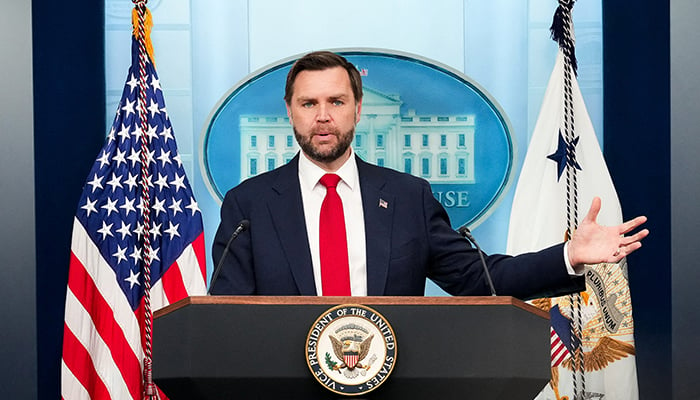
US Vice President JD Vance has said that Israel is losing the battle for public opinion in the United States, describing the shift in American attitudes as a clear and undeniable reality.
Speaking during an interview with popular American podcaster Joe Rogan, Vance said Israel remains a key ally of the United States but acknowledged that it actively seeks to influence American politics.
Read More: JD Vance questions US missile reserves after Iran conflict
When asked whether Israel attempts to shape US political decisions, Vance replied that it does and suggested that Israel has been particularly effective in doing so.
“Israel is losing the public opinion war in America. It is a simple and obvious fact,” Vance said during the conversation, highlighting what he described as changing public sentiment toward the US ally.
His remarks come amid growing debate in the United States over Washington’s relationship with Israel and continued public scrutiny of developments in the Middle East.
Recent polling indicates a noticeable shift in American views. A survey conducted in March found that only 32 percent of Americans held a favourable opinion of Israel, while 39 percent expressed an unfavourable view.
The findings mark a significant change compared with previous years, reflecting a gradual decline in support among sections of the US public.
According to the survey, the sharpest drop in support has occurred among Democratic voters and political independents. Since 2013, favourable views of Israel within these groups have reportedly fallen from 34 percent to 17 percent.
The survey also suggested that younger Americans are increasingly critical of Israel, highlighting a generational shift in public attitudes.
Read More: Iran FM looks to more nuclear talks, but warns US against any attack
Vance’s comments are likely to add to the ongoing discussion surrounding US foreign policy and domestic political debates over support for Israel. While reaffirming the strategic alliance between the two countries, his remarks underscore concerns about changing public perceptions that could influence future political discourse and policymaking in the United States.