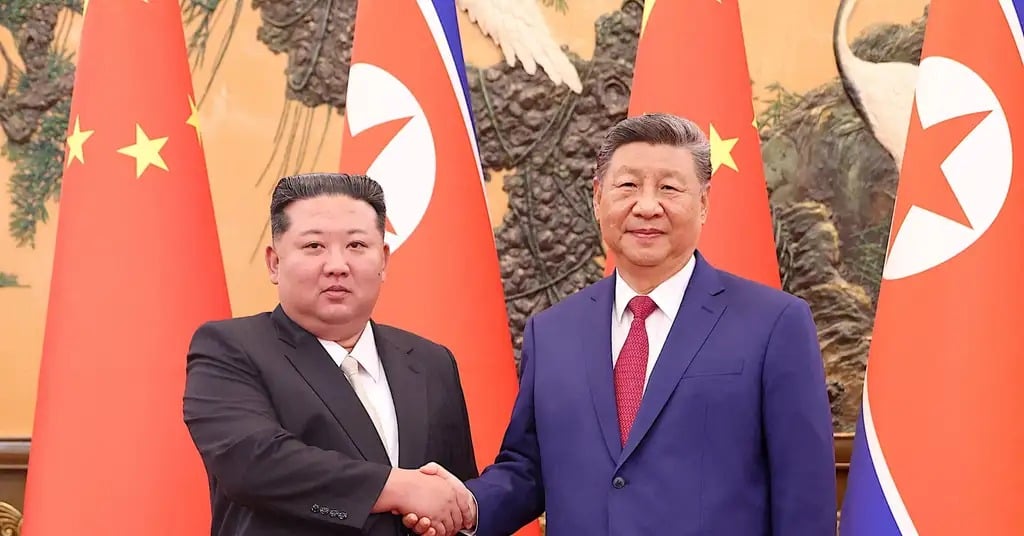
North Korean leader Kim Jong Un is set to welcome Chinese President Xi Jinping to Pyongyang on Monday in a visit that highlights strengthening ties between the two neighbors. The summit comes as Kim projects growing confidence, backed by an expanding nuclear arsenal, closer relations with Russia and limited interest in renewed engagement with the United States.
For Xi, the two-day visit marks his first trip to North Korea in seven years and reflects Beijing’s efforts to strengthen its influence in Pyongyang. The meeting follows a period of increased diplomatic contact, including high-level exchanges and the gradual restoration of passenger rail and air services between the two countries.
Read more : Pakistan extends austerity drive amid rising regional tensions
Since Xi’s previous visit in 2019, North Korea has significantly expanded military and economic cooperation with Russia while continuing to develop its nuclear capabilities despite international sanctions. In recent days, Pyongyang announced plans for a 10,000-ton naval destroyer and reaffirmed its status as a nuclear-armed state, signaling defiance ahead of the summit.
Analysts believe economic cooperation will dominate discussions as North Korea pursues a five-year development plan focused on housing projects and tourism growth. Before the pandemic, Chinese visitors accounted for roughly 90 percent of foreign tourists in North Korea, making tourism a valuable source of revenue that Pyongyang hopes to revive.
Read more : Dar, Araghchi discuss regional security concerns –
Meanwhile, regional observers note that North Korea’s stronger ties with Moscow have reduced its dependence on China and given Kim greater diplomatic flexibility. Increased trade and military cooperation with Russia have strengthened the country’s economic position, allowing Pyongyang to engage Beijing from what many analysts view as a more confident footing.
Despite expectations of closer economic cooperation, North Korea appears unlikely to soften its stance on nuclear weapons. Kim has repeatedly called for expanding the country’s atomic arsenal and continues to present nuclear deterrence as a central pillar of national security, suggesting that the issue will remain a major challenge in regional diplomacy.