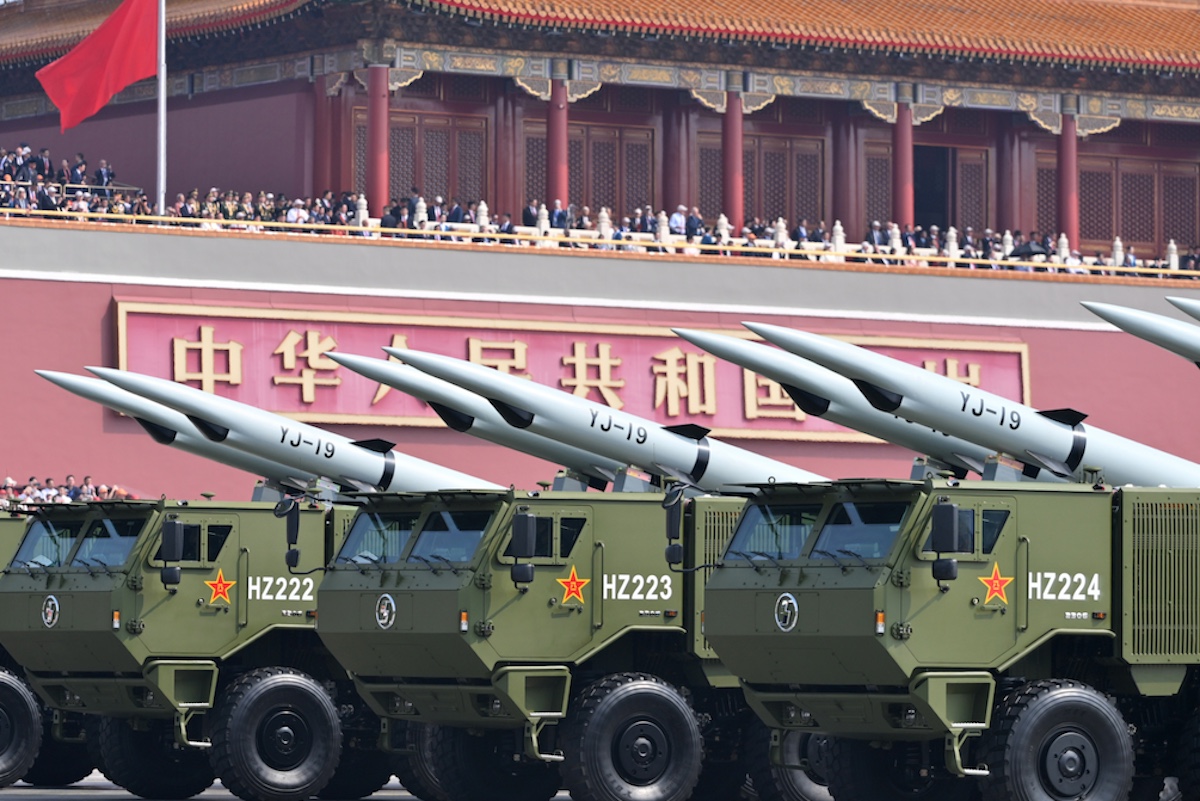
Taiwan plans to expand its anti-ship missile arsenal to more than 1,800 weapons by early 2029 as the island strengthens defenses against a possible Chinese blockade or invasion. The move forms a key part of Taipei’s asymmetric warfare strategy, which focuses on using large numbers of affordable but highly effective weapons to counter China’s superior military strength.
The growing missile force will include US-made Harpoon missiles and Taiwan’s domestically produced Hsiung Feng II and Hsiung Feng III missiles. Military planners believe these weapons can create a powerful “kill zone” across the Taiwan Strait, allowing Taiwan to inflict heavy losses on invading forces before they reach the island’s shores.
Read more : Taiwan rebuffs Trump independence warning
Meanwhile, Taiwan’s parliament recently approved an additional $25 billion in defense spending for US munitions, paving the way for more precision-guided weapons capable of striking Chinese ships and military forces near the mainland coast. Taiwan is also seeking approval for a separate arms package worth up to $14 billion from the United States as it continues to modernize its military capabilities.
Current estimates indicate Taiwan has already received 450 Harpoon missiles, while deliveries of another 400 are expected to begin this year under a $2.4 billion agreement. If shipments remain on schedule, Taiwan will possess around 850 Harpoon missiles by early 2029. Combined with more than 1,000 Hsiung Feng missiles expected to be in service by then, the island’s anti-ship missile inventory could reach approximately 1,850 weapons.
Defense experts argue that mobile missile launchers, drones and dispersed strike systems can help Taiwan survive initial attacks and maintain combat operations. Military officials have pointed to lessons from conflicts in Ukraine and the Middle East, where missiles and drones enabled smaller forces to challenge stronger opponents and preserve their ability to strike strategic targets.
To improve coordination and battlefield effectiveness, Taiwan will establish a new Littoral Combat Command on July 1, bringing together coastal radars, anti-ship missiles and drones under a single structure. Officials say the objective is to sustain resistance long enough for allied support to arrive while complicating any military operation aimed at seizing control of the island.