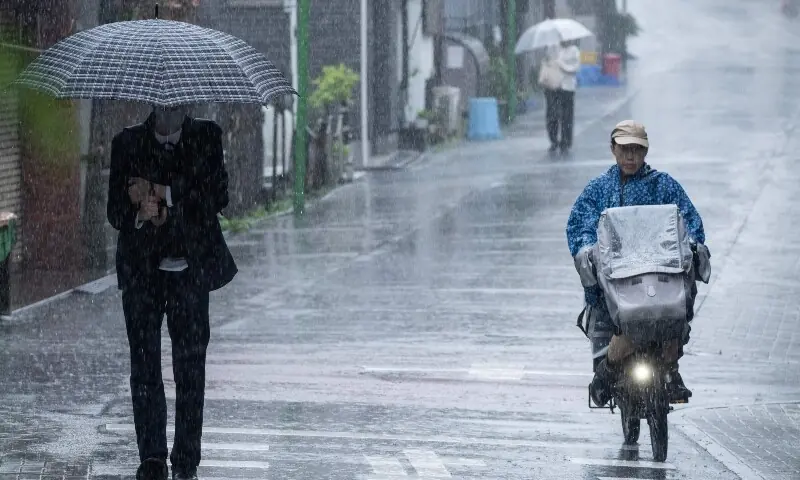
Severe tropical storm Jangmi swept across Japan on Wednesday, bringing heavy rainfall, strong winds and widespread disruption to transportation, businesses and public services, while leaving nearly 60,000 households without electricity.
Read More: Nearly 600,000 advised to evacuate as storm Krosa makes landfall
According to Japan’s Meteorological Agency, the centre of the storm was located about 150 kilometres south of Tokyo and was moving northeast with sustained winds reaching 25 metres per second. Authorities warned that the storm would pass close to eastern Japan’s Pacific coastline, increasing the risk of flooding, landslides and storm-related damage.
【台風6号】屋根が飛ばされる瞬間のドライブレコーダー映像 水戸https://t.co/pgWnKbWYWr
↑NHKが取材した被害の情報・避難所などを地図で確認できます#nhk_video pic.twitter.com/50k9k92U09— NHKニュース (@nhk_news) June 3, 2026
Severe tropical storm Jangmi ripped across Japan, with fierce winds and torrential rain disrupting transport and businesses, and knocking out power for tens of thousands of homes https://t.co/nfKVmHwyjz pic.twitter.com/yIcPCJcQRG
— Reuters (@Reuters) June 3, 2026
Government officials reported that at least 15 people suffered minor injuries as the storm moved across several regions. Authorities also received numerous reports of flooding, fallen trees, debris and landslides affecting communities in different parts of the country.
Cabinet spokesperson Minoru Kihara urged residents to remain vigilant and take precautionary measures, advising people to evacuate early if they felt their safety was at risk. Evacuation advisories were issued for hundreds of thousands of residents across eight prefectures in southwestern, central and eastern Japan.
The severe weather also caused major transportation disruptions. Airlines, including Japan Airlines and All Nippon Airways, cancelled nearly 900 domestic and international flights, affecting around 90,000 passengers. Several rail services were delayed or suspended, including some bullet train routes and commuter lines in the Tokyo metropolitan area.
Industrial operations were also impacted. Toyota Motor temporarily suspended activities at 13 domestic plants before announcing plans to resume production later in the day. Suzuki Motor halted operations at all five of its plants in Shizuoka Prefecture before preparing to restart production as conditions improved.
Images shared on social media showed flooded roads, waterlogged subway stations and powerful waves striking coastal areas. Weather-related terms quickly became trending topics online as residents documented the storm’s effects.
Read More: Calm before the storm for Japan suicides as coronavirus ravages
Authorities continue to monitor Jangmi’s path and have urged residents to follow official guidance as adverse weather conditions persist.