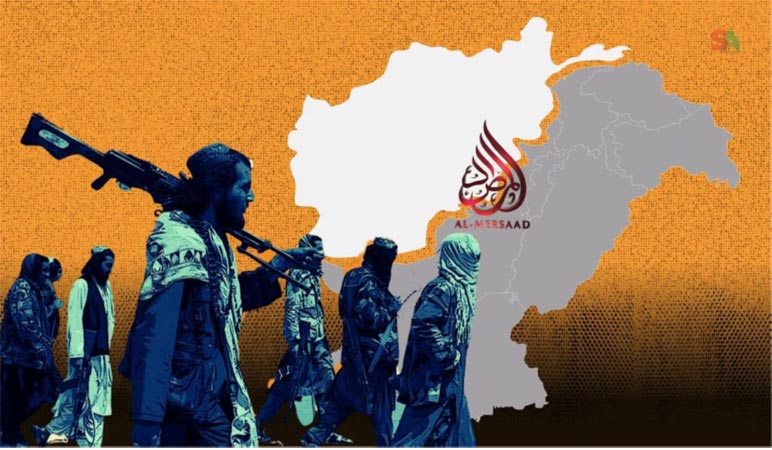
 The rapid evolution of digital media has transformed propaganda into one of the most potent weapons of modern hybrid warfare. In this increasingly contested information environment, Pakistan has become a major target of coordinated disinformation campaigns driven by hostile state and non-state actors.
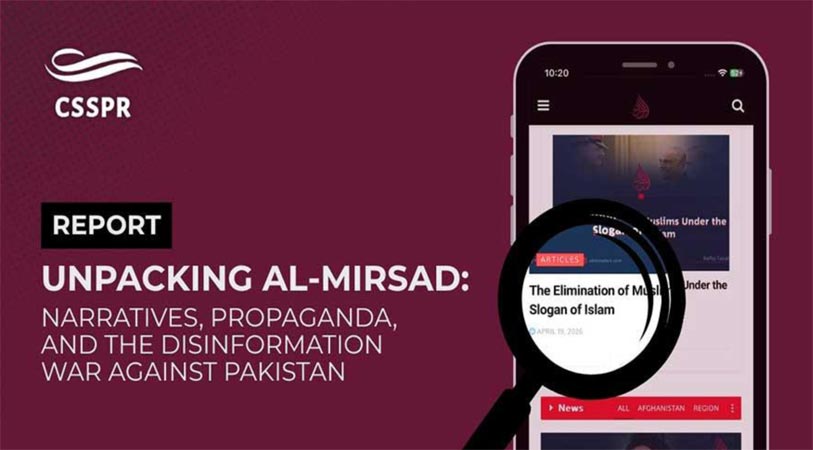
A recent report titled “Unpacking Al-Mirsad: Narratives, Propaganda, and the Disinformation War Against Pakistan,” published by the Center for Security, Strategy & Policy Research, sheds light on one of the most sophisticated propaganda platforms currently operating against Pakistan. Al-Mirsad, allegedly linked to the Afghan Taliban’s intelligence apparatus, has emerged as a structured digital propaganda ecosystem designed to manipulate perceptions, distort realities, and undermine Pakistan’s internal cohesion and international standing.
Genesis of Al-Mirsad
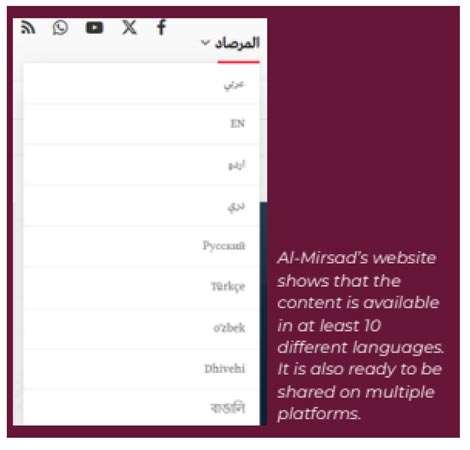
The rise of Al-Mirsad signifies a dangerous shift in the nature of propaganda warfare. Unlike traditional militant propaganda, which relied heavily on localized sermons, pamphlets, and FM radio broadcasts, Al Mirsad employs advanced digital tools, multilingual messaging, artificial intelligence, coordinated social media dissemination, and emotionally charged narratives to influence audiences across borders. The platform operates in multiple languages, including English, Urdu, Pashto, Arabic, Dari, and Hindi, allowing it to target diverse demographics and maximize its regional outreach.
Weaponizing Narratives against Pakistan
At its core, Al-Mirsad functions as a narrative weapon. Its messaging consistently seeks to delegitimize Pakistan’s state institutions, portray the country as anti-Islamic, and frame its counterterrorism efforts as acts of oppression against Muslims. Through carefully crafted ideological content, the platform attempts to present militant violence as justified resistance while simultaneously depicting Pakistan as a destabilizing actor in the region.
This approach reflects a broader strategy of weaponizing religion, ethnicity, and political grievances to weaken national unity and create mistrust between the state and its citizens.
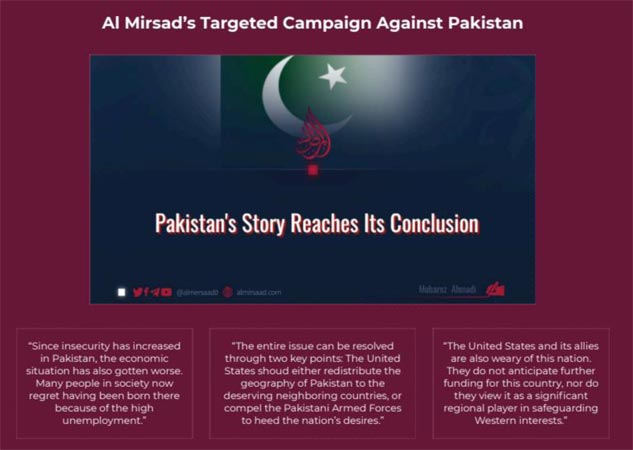
One of the most concerning aspects of Al-Mirsad’s propaganda is its persistent misuse of religious rhetoric. The platform repeatedly invokes Islamic symbolism and historical references to emotionally manipulate audiences. Pakistan’s counterterrorism operations are falsely framed as part of a so-called “crusader alliance,” while militant attacks inside Pakistan are portrayed as legitimate acts of jihad.
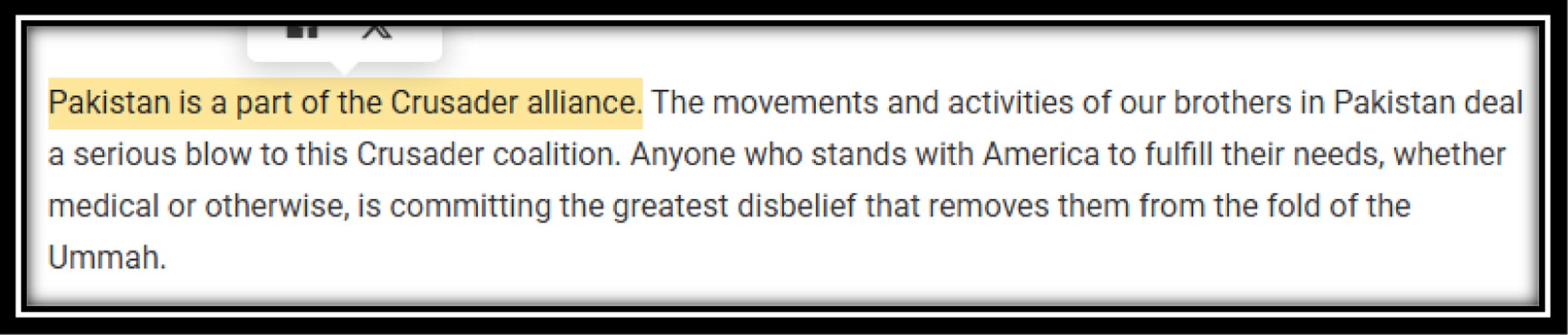
Such narratives are deliberately designed to radicalize vulnerable audiences and provide ideological justification for violence against the Pakistani state.
Delegitimizing State Institutions
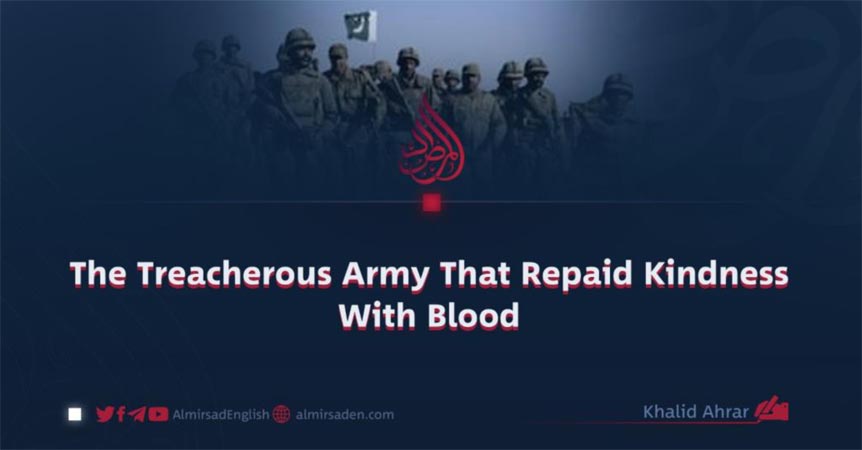
The propaganda outlet also spreads inflammatory accusations against Pakistan’s armed forces and institutions. It labels the country a “military regime,” describes security forces as “cowardly” and “treacherous,” and accuses Pakistan of desecrating Islamic values.
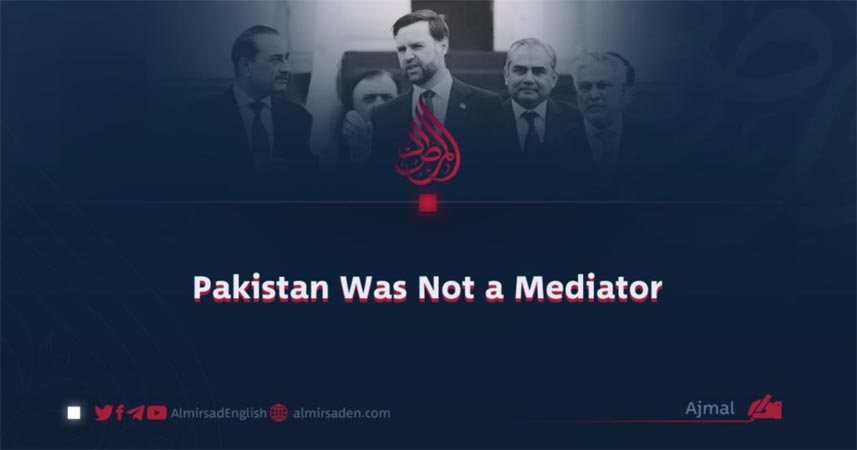
By portraying state institutions as morally corrupt and religiously illegitimate, Al-Mirsad attempts to erode public trust and create divisions within society. This information warfare strategy aligns closely with the objectives of militant organizations that seek to destabilize Pakistan from within. The platform actively seeks to drive wedges between Pakistan and its regional partners. For instance, while Pakistan was facilitating talks between Iran and the U.S. in early 2026, Al-Mirsad published fabricated content claiming “Pakistan Was Not a Mediator” to downplay the country’s diplomatic relevance.
The platform strategically frames Pakistan as the principal source of instability in the region while deliberately ignoring the role of militant sanctuaries and extremist violence emanating from Afghanistan. Such selective narrative construction allows Al-Mirsad to portray the Afghan Taliban as victims and defenders of Islam while shifting blame entirely onto Pakistan.
Exploiting Ethnic & Regional Fault Lines
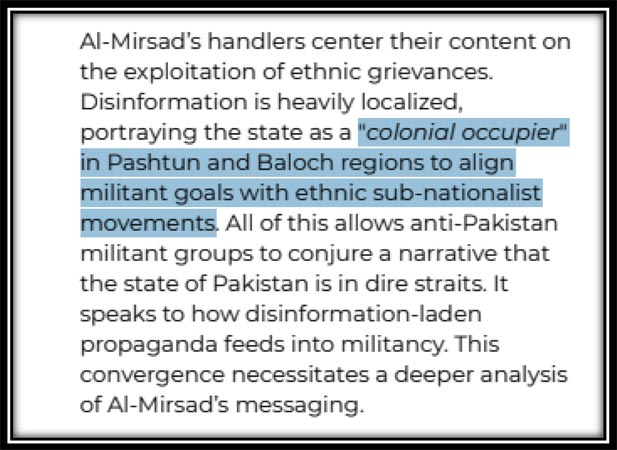
Another important dimension of Al-Mirsad’s propaganda is the exploitation of ethnic and sub nationalist sentiments. The platform frequently portrays Pakistan as a “colonial occupier” in Pashtun and Baloch regions, attempting to merge militant narratives with ethnic grievances. Such messaging is intended to amplify internal fault lines and foster resentment against the federation. In doing so, Al Mirsad contributes to a broader hybrid warfare campaign aimed at weakening Pakistan’s national cohesion by exploiting identity politics and regional insecurities.
This strategy is particularly dangerous because it attempts to merge separatist rhetoric, militant propaganda, and emotional identity-based narratives into a single anti-state discourse. By manipulating local grievances and presenting them through ideological lenses, the platform seeks to normalize anti-state sentiment among susceptible audiences.
Targeting Pakistan’s Strategic Partnerships
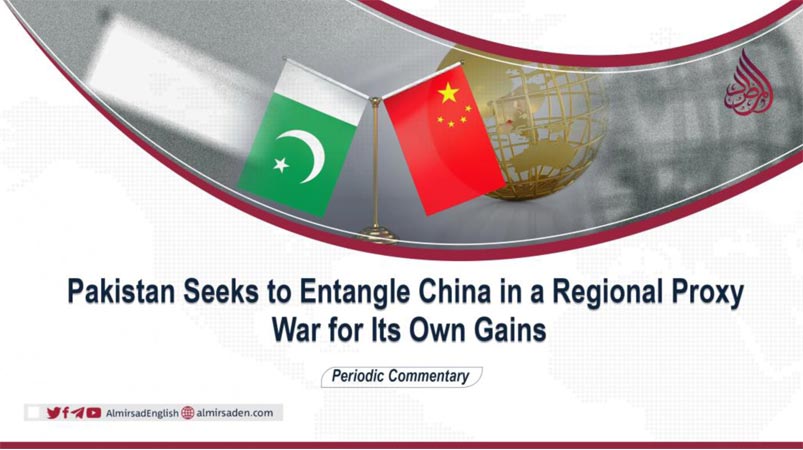
The platform also aggressively targets Pakistan’s foreign relations, particularly its strategic partnership with China. Through false and misleading narratives, Al-Mirsad attempts to portray Pakistan as an unreliable security partner incapable of protecting Chinese interests associated with the China-Pakistan Economic Corridor. It spreads fabricated claims that Pakistan supports militant groups targeting Chinese nationals and seeks to create fears regarding instability in CPEC-related regions. Such narratives are clearly aimed at undermining investor confidence and damaging one of Pakistan’s most critical strategic relationships.
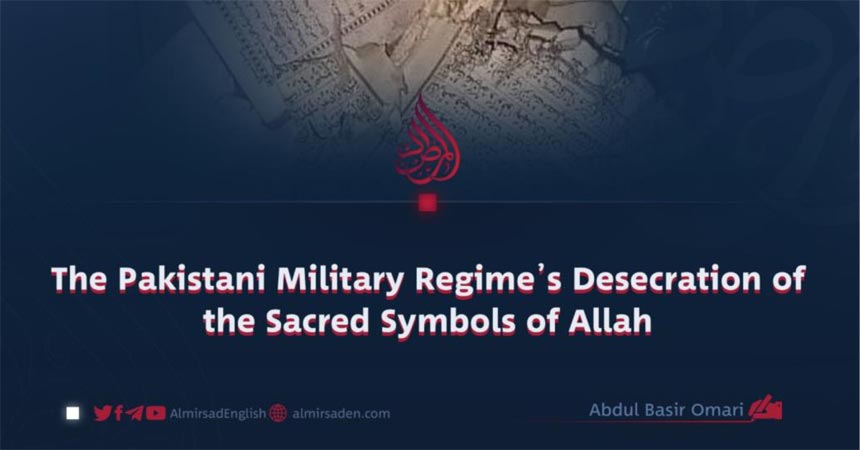
In addition to targeting China, Al-Mirsad also attempts to damage Pakistan’s relations with the broader Muslim world. By falsely portraying Pakistan as anti Islamic and aligned with foreign agendas, it seeks to isolate the country diplomatically and morally within Muslim societies.
Historical Revisionism & Conspiracy Narratives
Equally alarming is Al-Mirsad’s reliance on historical revisionism and conspiracy theories. The platform challenges the legitimacy of the internationally recognized Durand Line and promotes distorted interpretations of regional history to advance anti Pakistan narratives.

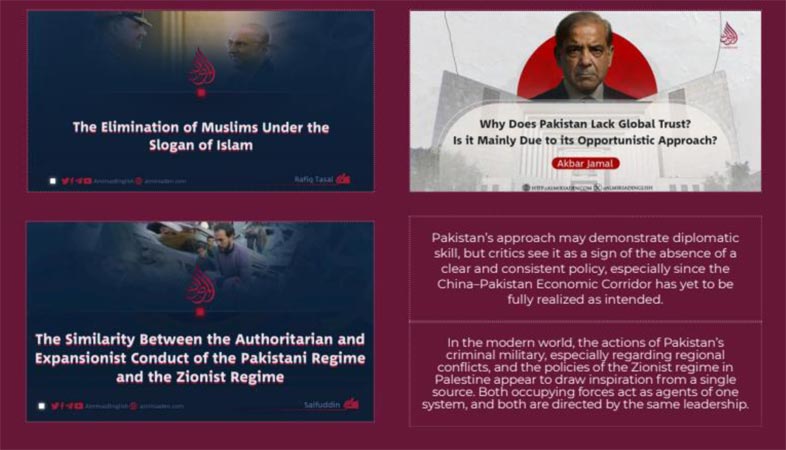
It also circulates bizarre conspiratorial claims, including allegations that Pakistan is working against Muslim interests globally or that foreign actors are attempting to transform the country into a “Christian state.” While such claims may appear irrational, they are strategically crafted to provoke emotional reactions and reinforce ideological polarization.
The use of selective history, exaggerated symbolism, and emotionally loaded language enables Al-Mirsad to present complex geopolitical realities in simplistic binaries of “Islam versus enemies.” This manipulation of historical memory is a central feature of modern extremist propaganda.
Digital Evolution of Propaganda Warfare
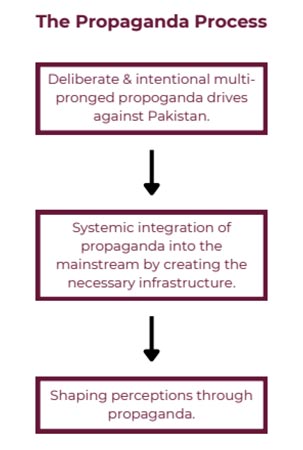
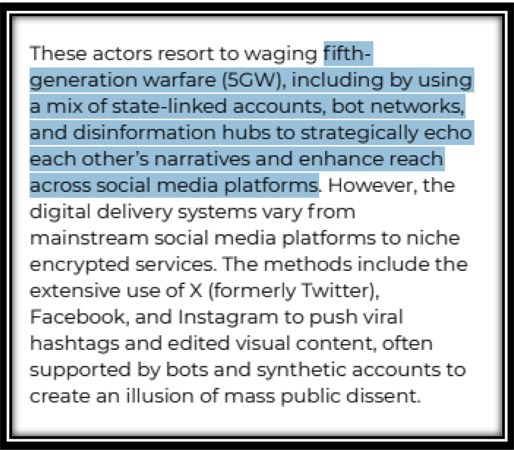
The growing sophistication of Al-Mirsad reflects a broader transformation in modern propaganda warfare. Digital platforms, artificial intelligence, deepfakes, bot networks, and coordinated online campaigns have dramatically increased the speed and reach of disinformation operations. In this environment, propaganda no longer remains confined to isolated extremist circles. Instead, it rapidly penetrates mainstream discourse through social media amplification, manipulated visuals, and algorithm-driven engagement tactics.
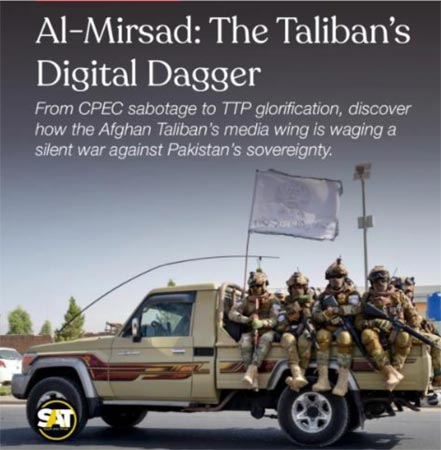
Modern propaganda warfare is no longer merely about spreading lies; it is about shaping perceptions, manufacturing confusion, and eroding trust in institutions. The digital battlefield has effectively transformed smartphones and social media feeds into instruments of psychological and ideological warfare.
Recommendations to Counter Al-Mirsad Propaganda
Building a Strong Strategic Narrative
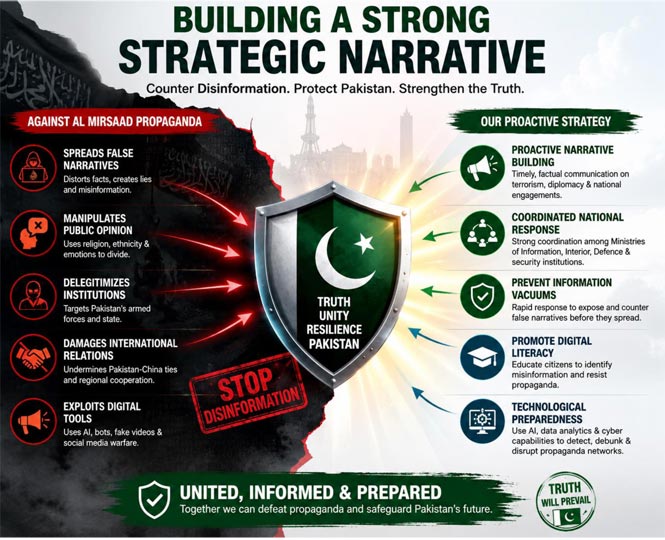
Countering such propaganda requires a comprehensive and proactive national strategy. Reactive responses alone are insufficient in an era where false narratives can spread globally within minutes. Pakistan must adopt a multi-dimensional approach that combines strategic communication, technological preparedness, digital literacy, and institutional coordination.
First, Pakistan needs to strengthen its strategic narrative infrastructure. State institutions should proactively communicate factual information regarding counterterrorism operations, regional diplomacy, and Pakistan’s engagements with Afghanistan. Silence or delayed responses create information vacuums that hostile actors quickly exploit. A coordinated communication mechanism involving the Ministries of Information, Interior, Defence, and relevant security institutions can play a crucial role in countering disinformation before it gains traction.
Strengthening Fact-Checking & Digital Verification
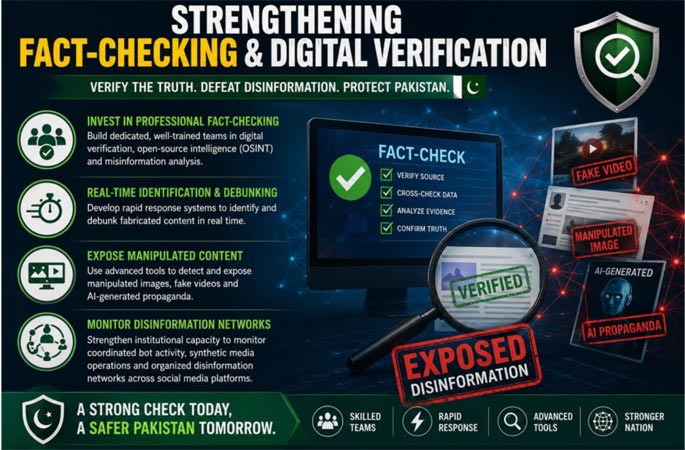
Second, investment in professional fact-checking mechanisms has become essential. Dedicated teams trained in digital verification, open-source intelligence, and misinformation analysis should be established to identify and debunk fabricated content in real time. Rapid response systems capable of exposing manipulated images, fake videos, and AI-generated propaganda can significantly reduce the effectiveness of hostile information campaigns.
Pakistan must also develop institutional capacities to monitor coordinated bot activity, synthetic media operations, and organized disinformation networks operating across social media platforms.
Promoting Digital Literacy & Public Awareness
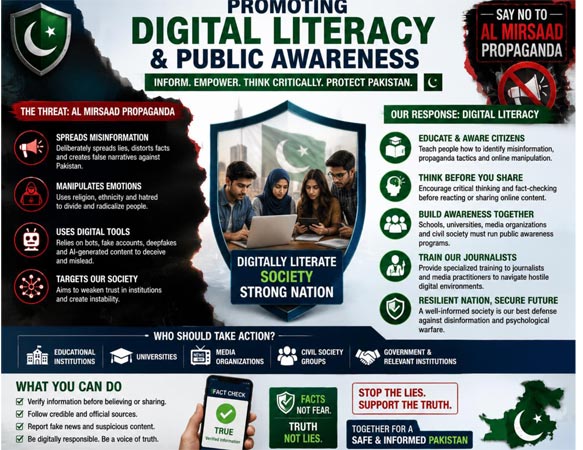
Third, digital literacy must become a national priority. Educational institutions, universities, media organizations, and civil society groups should collectively work toward educating citizens about misinformation, propaganda tactics, and online manipulation. Public awareness programs can help individuals critically evaluate online content instead of emotionally reacting to sensationalized narratives.
Journalists and media practitioners should also receive specialized training to operate effectively in increasingly hostile digital environments dominated by misinformation and psychological operations.
Enhancing Cyber & Technological Capabilities
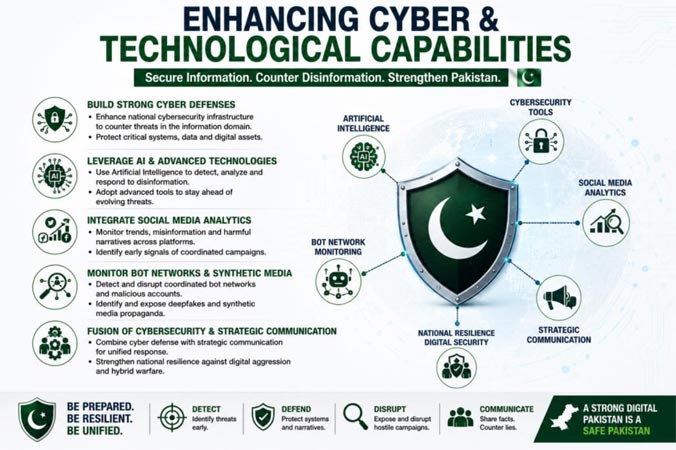
Fourth, Pakistan must enhance its cyber and technological capabilities to counter emerging threats in the information domain. Artificial intelligence, cybersecurity tools, and social media analytics should be integrated into national counter-disinformation frameworks. Monitoring coordinated bot networks and detecting synthetic media campaigns will become increasingly important as hostile actors continue to adopt advanced technological methods.
The fusion of cybersecurity and strategic communication capabilities can significantly strengthen Pakistan’s resilience against digital aggression and hybrid warfare tactics.
Encouraging Research & Policy Development
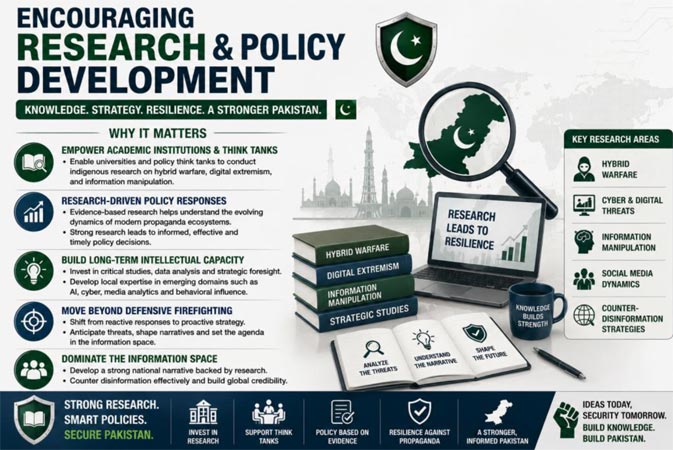
Finally, academic institutions and policy think tanks should be empowered to conduct indigenous research on hybrid warfare, digital extremism, and information manipulation. Research-driven policy responses are critical for understanding the evolving dynamics of modern propaganda ecosystems. Pakistan must move beyond defensive firefighting and develop long-term intellectual and strategic capacities to dominate the information space.
Final Words
Al-Mirsad is not merely a media outlet; it is a weapon of cognitive warfare. By distorting facts and fabricating news, it seeks to alter the behavior and perceptions of the Pakistani public. The fight against such a “sinister propaganda effort” requires a sophisticated, systematic integration of technology, diplomacy, and public awareness. Pakistan must treat the digital space as a vital front of its national security strategy to ensure the integrity of its information environment and the stability of the state.