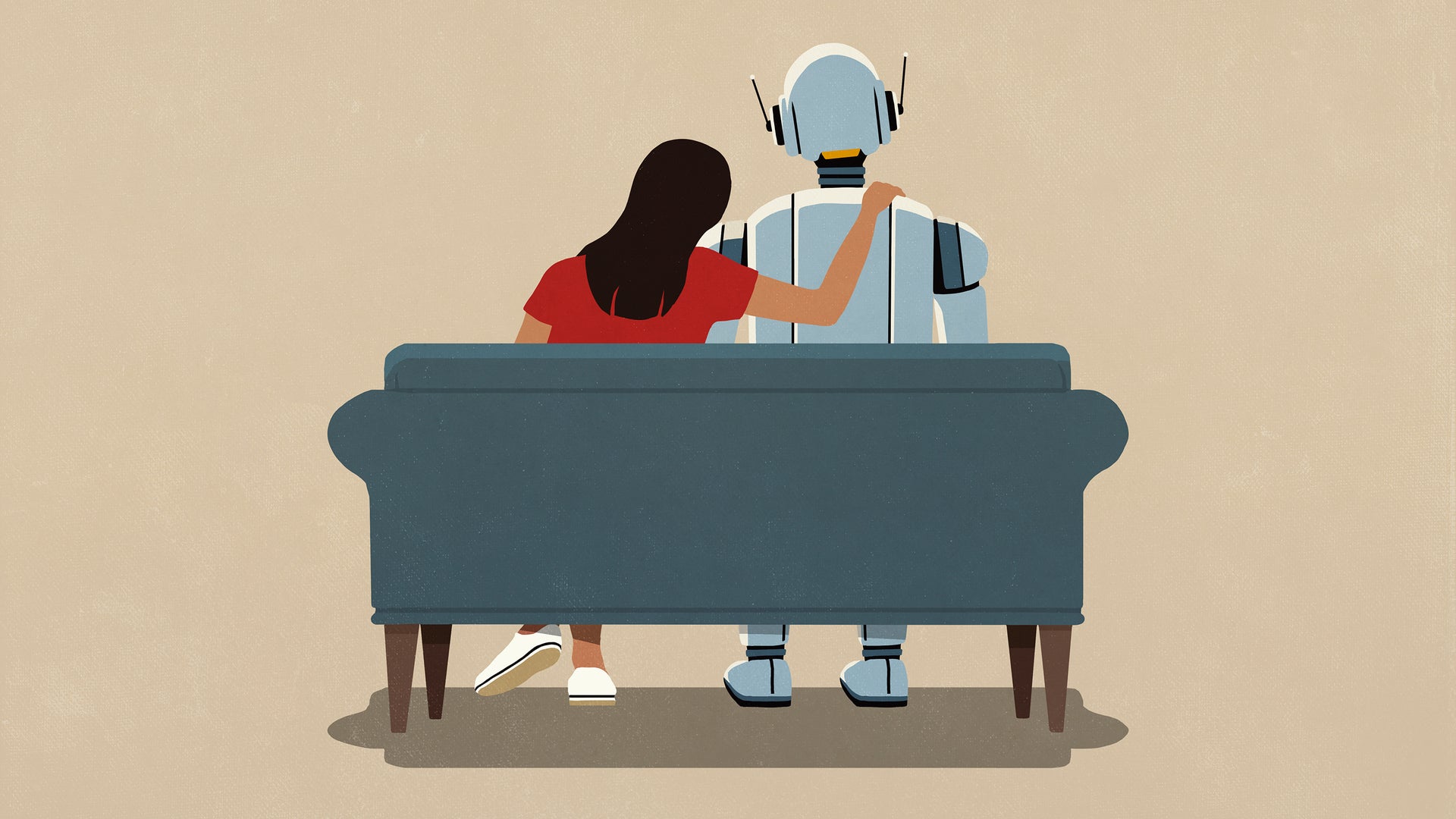
A growing number of young people across Europe are turning to artificial intelligence (AI) chatbots for emotional support and discussions about personal issues, according to a recent Ipsos BVA survey commissioned by France’s privacy watchdog CNIL and insurer Groupe VYV.
Read More: Using AI for emotional advice linked to anxiety, depression: Study
The survey, conducted in early 2026 among 3,800 respondents aged 11 to 25 across France, Germany, Sweden and Ireland, found that nearly one in two young Europeans have used AI tools to talk about intimate or sensitive matters. About 51% of respondents said it was “easy” to discuss mental health or personal concerns with a chatbot, slightly higher than the 49% who said the same about healthcare professionals and 37% who said the same about psychologists.
Despite this, close personal relationships remain the most trusted source of support. Around 68% of respondents said it was easy to discuss issues with friends, while 61% felt comfortable talking to parents.
The findings highlight both the growing reliance on AI and rising concerns over youth mental health. Nearly 28% of respondents met the threshold for suspected generalized anxiety disorder, underscoring the scale of emotional strain among young people.
The survey also showed that AI use is now widespread, with about 90% of participants reporting prior experience with AI tools. Many users described chatbots as a “life adviser” or “confidant,” citing their constant availability and non-judgmental responses as key reasons for engagement.
However, experts caution against over-reliance on AI for emotional support. Psychologists warn that while large language models can generate helpful responses, they are not a substitute for human relationships or professional mental healthcare. Concerns have also been raised about the limitations of AI in understanding complex emotions and the risk of users substituting chatbots for real-world support systems.
Read More: China’s DeepSeek releases long-awaited new AI model
Researchers emphasized that although AI can provide information and guidance, emotional wellbeing still depends heavily on human connection and professional care, warning that excessive reliance on chatbots could deepen feelings of isolation.