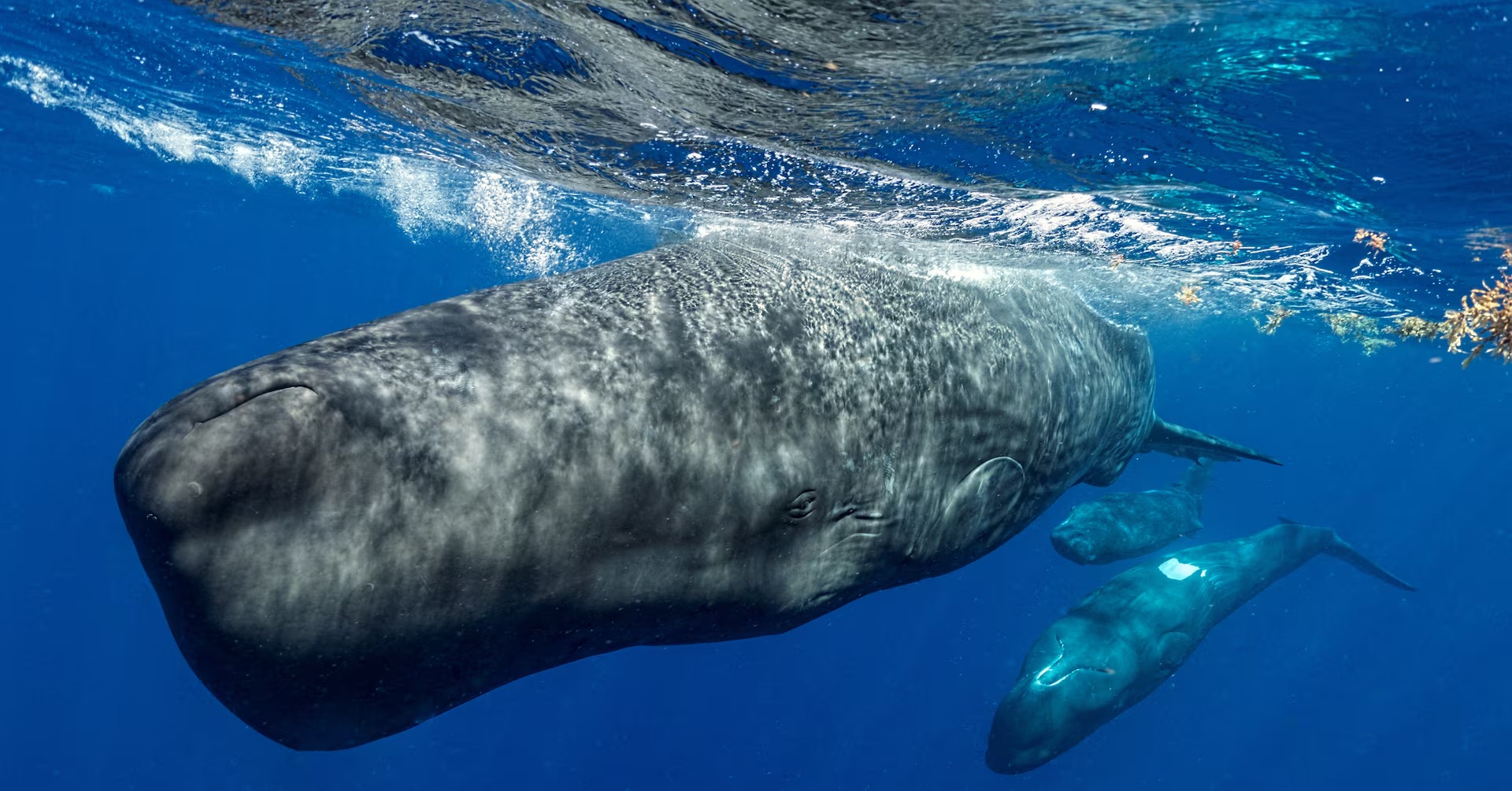
Scientists have developed an autonomous underwater robot that tracks sperm whale conversations in real time, marking a major step forward in marine research and ocean monitoring technology. The system allows researchers to follow whale communication patterns more closely than ever before, instead of relying only on delayed or partial data.
Previously, researchers could only reconstruct whale movements after the fact using tagging systems or stationary sensors, which often lost contact when whales dived deep or travelled long distances. However, the new underwater glider changes this approach by actively following whales through their vocal signals.
Read more : Pakistan Navy commissioned its first Hangor-class submarine in China
The system detects sperm whale clicks and patterned sequences known as “codas,” which scientists believe play a key role in communication and coordination. Once the robot identifies these sounds, it automatically adjusts its navigation path to follow the whales in real time.
According to David Gruber, the glider uses hydrophones to detect whale vocalizations and then steers itself toward the source using an automated navigation system. He explained that the robot operates like a quiet explorer, continuously listening while moving through the ocean.
Read more : The World’s Largest Underwater Cave With Mayan Mysteries …
Unlike traditional methods, which depend on temporary tags or boat-based sensors, the new system can continuously update its path while remaining underwater. This allows scientists to stay with the same whale or group for extended periods, potentially tracking behavior patterns for months at a time.
Furthermore, researchers say the technology could transform understanding of sperm whale social behavior, including how mothers teach calves vocal patterns and how whales respond to human activity such as shipping noise or offshore construction. However, challenges remain in pinpointing exact whale locations and maintaining uninterrupted communication with the glider.