 In the backdrop of Pakistan’s key role in the 2026 selection process for the UN Secretary-General, experts and policy makers here on Monday called for a wide ranging transparent national strategy, institutional reforms, and global coalition-building to ensure the appointment of first-ever woman Secretary-General of the United Nations.
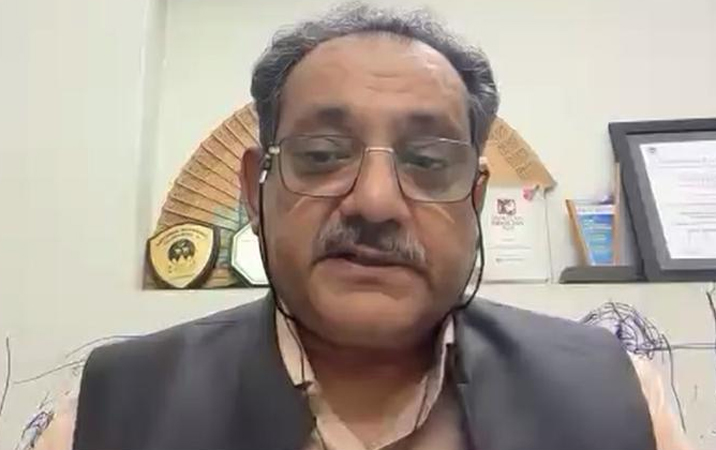
The call was made at a webinar, titled: “One for 8 Billion: Advancing Women’s Leadership in the UN Secretary General Selection”, hosted jointly by Sustainable Development Policy Institute and Southern Voice, said a press release.
Shaista Parvez Malik, the Convener of Parliamentary Taskforce for SDGs and Member of the National Assembly, highlighted that the issue is fundamentally about ‘power and process, not merit’.
She urged stakeholders to move beyond advocacy and develop a concrete, time-bound action plan to influence the 2026 selection.
She suggested formulating a coordinated roadmap involving the Government of Pakistan, diplomatic missions, and UN representatives to actively support a female candidate and ensure transparency in the selection process.
Dr Shafqat Munir, SDPI Deputy Executive Director (Policy), emphasized that the primary barrier to women’s leadership at the UN is not lack of capable candidates but the entrenched gender profiling of roles within the global system.
Citing the example of United Nations Economic and Social Commission for Asia and the Pacific under Dr Shamshad Akhtar, he noted that women leaders across UN systems, particularly in the Asia-Pacific region, have demonstrated strong leadership.
Dr Munir suggested shifting from gender-based assumptions to a systematic profiling of leadership roles, alongside broader UN reforms to dismantle structural biases in decision-making processes.
Emphasizing sustained advocacy combined with institutional reform, he said that while global momentum for a woman Secretary-General is growing, achieving this milestone will require coordinated action at national, regional and international levels.
Humaira Mufti, the Secretary for National Commission on the Status of Women, underscored the need for alignment with Pakistan’s official foreign policy before launching advocacy efforts.
She suggested that Pakistan must identify and formally endorse strong female candidates while simultaneously engaging regional blocs such as the G77, OIC, and Asia-Pacific groupings to build consensus.
She noted that success would depend on sustained diplomatic lobbying, resource mobilization, and early engagement given the narrow timeline leading up to mid-2026.
Dr Humaira Ashfaq, the Chairperson of Department of Urdu, at International Islamic University, Islamabad, focused on long-term structural change through education.
She suggested comprehensive curriculum reforms to include women leaders’ contributions, creation of inclusive classroom environments that encourage female participation, and institutionalized mentorship programmes to prepare women for leadership roles.
She also stressed the importance of addressing the “hidden curriculum” of societal attitudes and behaviours that limit women’s advancement.
Ayesha Naeem, SDPI Researcher, presented SDPI’s study, titled: “1for8 Billion: Advancing Gender Inclusive Leadership in the Campaign for UN Secretary General”.
The study identified the lack of transparency in the UN Secretary-General’s selection process and the dominance of UN Security Council’s permanent members as major structural barriers.
It suggested key reforms, including limiting backroom decision-making, ensuring multiple candidates are presented to the General Assembly, and advocating for a single non-renewable term to reduce political dependence on powerful states.
During the question-hour session, the speakers also highlighted Pakistan’s strategic opportunity as a current member of the UN Security Council to influence the process.
The participants urged the government to leverage its position to advocate for gender parity, mobilize support among non-permanent members, and push for procedural reforms that enhance accountability.