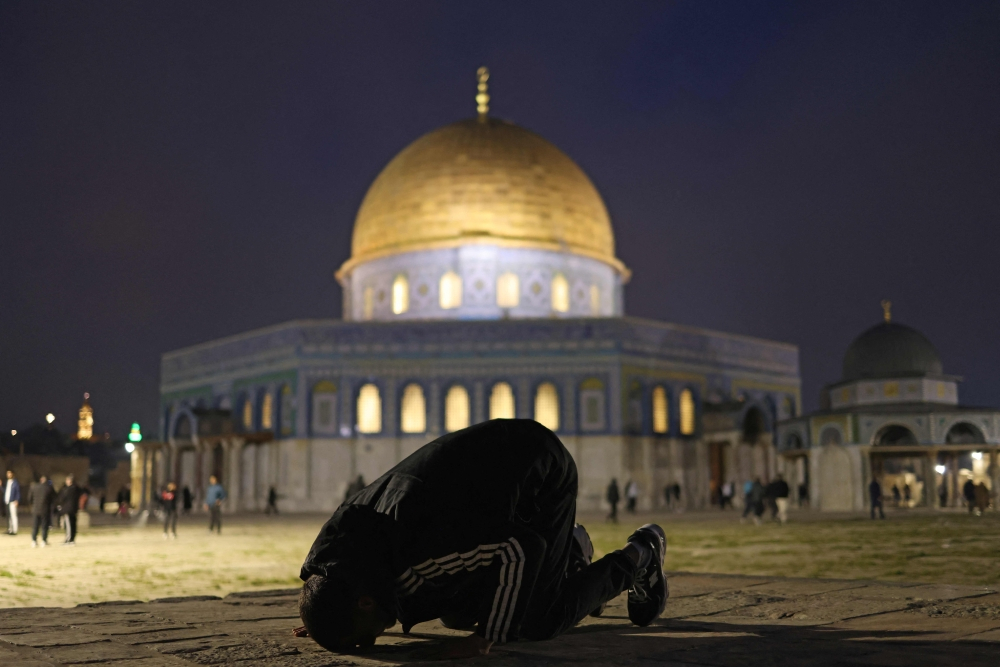
JERUSALEM: The Al-Aqsa Mosque reopened to Muslim worshippers on Thursday, ending a 40-day closure imposed by Israel. The reopening allowed hundreds of Palestinians to access the holy site for the first time in weeks.
Read More: Pakistan condemns Israeli minister storming Al–Aqsa
Located within the Old City, Al-Aqsa Mosque is one of the holiest sites for Muslims and remains central to Palestinian aspirations, with East Jerusalem envisioned as the capital of a future independent state. Israel, however, claims the entire city as its undivided capital.
Witnesses described deeply emotional scenes as the gates reopened alongside the morning call to prayer. Worshippers poured into the compound, offering prayers and prostrations, with many visibly moved by the restored access. Large congregations
BREAKING: Al-Aqsa Mosque reopens after a 40-day closure by Israel. Worshippers flocked to the Jerusalem holy site early this morning after authorities lifted weeks-long restrictions.
🔴 LIVE updates: https://t.co/dSJLNb8MrH pic.twitter.com/UQRuSc0o9n
— Al Jazeera English (@AJEnglish) April 9, 2026
performed the Fajr prayer, marking the first collective worship at the mosque since its closure.
The shutdown had begun on February 28, when Israeli authorities restricted entry to mosque staff and officials from the Jerusalem Islamic Waqf. Other Palestinians were forced to pray in smaller mosques across the city. During this period, Israeli National Security Minister Itamar Ben-Gvir visited the compound on April 6, drawing international attention and criticism.
Authorities also prevented Muslims from holding Eid al-Fitr prayers at Al-Aqsa this year, the first such restriction since Israel’s occupation of East Jerusalem in 1967, highlighting the tensions surrounding access to the holy site.
The reopening is being seen as a temporary easing of restrictions, with worshippers and local leaders calling for continued respect for religious access.
Read More: Pakistan condemns storming of Al–Aqsa Mosque by Israeli forces
The event underscores the sensitive status of Jerusalem and the ongoing disputes over its control, while providing a moment of relief for Palestinians who consider Al-Aqsa a central part of their spiritual and national identity.