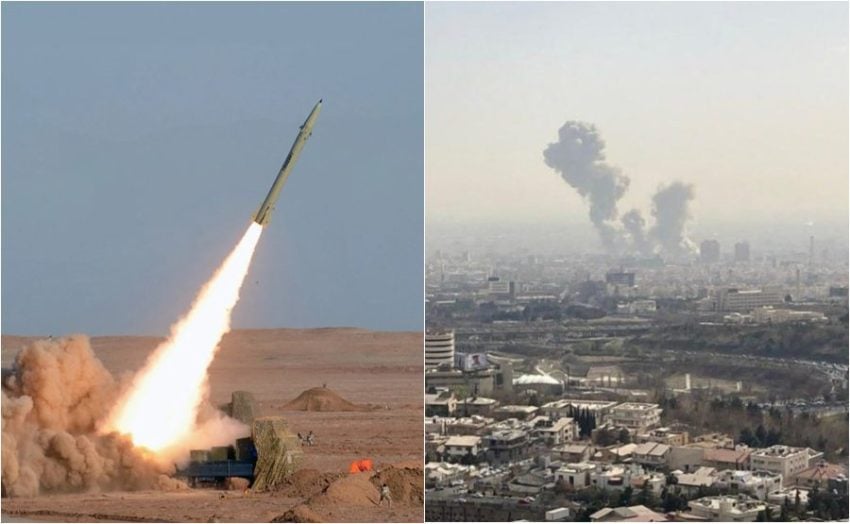
Tehran/Tel Aviv — Iran launched missile strikes on Tel Aviv, including projectiles carrying cluster warheads, in what it described as retaliation for the killing of senior Iranian official Ali Larijani, according to state media.
Read More: Iran missile barrage triggers explosions across Tel Aviv
Israeli authorities said the attack killed at least two people overnight, bringing the total death toll in Israel since the escalation began to 14. Officials also accused Iran of repeatedly deploying cluster munitions, which disperse smaller explosives over a wide area and are difficult to intercept.
IRAN CLAIMS STRIKE ON ISRAELI INTELLIGENCE HUB IN Tel Aviv AMID ESCALATING MISSILE WARFARE
Tehran says a precision missile hit facilities linked to Mossad, but extent of damage remains unverified as both sides trade conflicting narratives in intensifying conflict… pic.twitter.com/Igm3Fg2RlY
— Washington Eye (@washington_EY) March 17, 2026
In Iran, a projectile landed near the Bushehr Nuclear Power Plant but caused no damage or casualties, Tehran told the International Atomic Energy Agency. IAEA chief Rafael Grossi urged maximum restraint to avoid the risk of a nuclear incident.
The conflict has intensified following the reported killing of Iran’s Supreme Leader Ali Khamenei and other senior officials in earlier strikes. Iran also confirmed the death of Larijani, a key adviser and former parliament speaker, along with his son and deputy in a separate attack.
Iran’s newly appointed leader Mojtaba Khamenei has rejected calls for de-escalation, stating that it is not the time for ceasefire negotiations.
Meanwhile, Donald Trump criticised allied nations for their reluctance to assist in securing shipping routes through the Strait of Hormuz, although he later said US forces no longer required such support.
Read More: Iranian missiles strike central Israel, Tel Aviv impacted
The war has had a growing regional and global impact, with thousands reported killed in Iran and hundreds more across neighbouring countries. Oil prices have surged sharply, raising concerns about inflation and economic disruption worldwide.
Air travel has also been severely affected, with airlines cancelling or rerouting flights due to security risks, while humanitarian agencies warn of worsening food insecurity if the conflict continues.