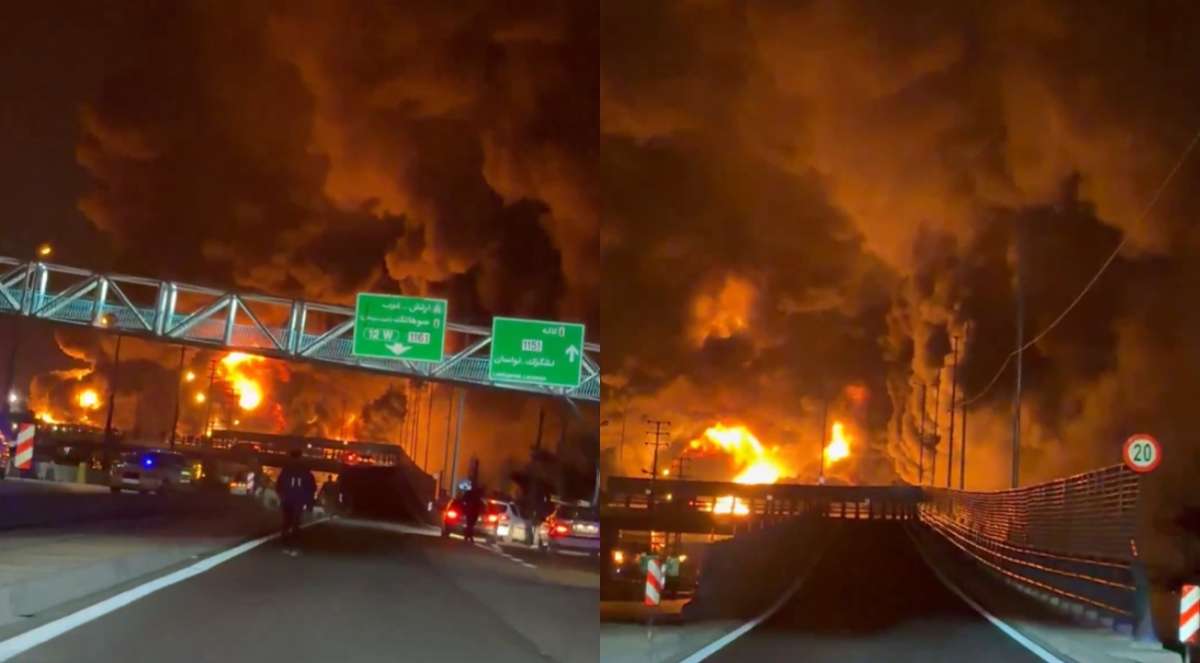
Residents of Tehran woke up to an unusually dark morning on Sunday as thick black smoke from burning oil depots covered the sky across the Iranian capital. The smoke followed Israeli air strikes targeting fuel storage facilities in and around the city during the ongoing regional conflict. With sunlight blocked by the heavy smoke clouds, many residents initially believed it was still nighttime. People across the city switched on lights inside homes and vehicles to navigate through the unexpected darkness.
The massive smoke clouds drifted across Tehran, a sprawling metropolis normally home to more than 10 million residents. Even by mid-morning, vehicles driving along Valiasr Street, one of the city’s main north-south roads, still required headlights due to poor visibility. The thick smoke mixed with grey rain clouds, further darkening the atmosphere and creating a gloomy environment across large parts of the city. Witnesses described the situation as surreal as daylight remained dim long after sunrise.
Read more : Saudi Arabia criticises Iran over regional attacks
Israeli authorities confirmed that their forces targeted several fuel storage facilities in Tehran that were allegedly used to support military infrastructure. Reports indicated that four oil depots and a petroleum logistics site were struck during the operation. Local officials said at least six people were killed and around twenty others injured at one of the impacted sites. Flames continued burning and crackling at some locations more than twelve hours after the air strikes.
Meanwhile, emergency workers and security forces moved across the city to manage the situation and maintain public safety. Personnel directing traffic wore protective coats and masks due to the presence of toxic fumes released by the burning fuel. Health officials warned that the smoke contained harmful substances including hydrocarbons and chemical oxides that could irritate eyes and cause breathing problems. Authorities therefore urged residents to stay indoors and avoid unnecessary outdoor exposure.
Read more : Trump demands Iran surrender as Tehran refuses, tensions escalate …
The powerful explosions damaged nearby buildings and shattered windows in surrounding neighborhoods. Even areas located several kilometers away from the depots reported fuel residues mixed with rainwater collecting on balconies and streets. Tehran’s governor Mohammad Sadegh Motamedian said fuel distribution in the capital had been temporarily disrupted due to the attacks. To manage supplies, authorities limited fuel purchases to 20 litres per vehicle while long queues formed at petrol stations.
Despite the tense situation, daily life in Tehran gradually resumed as some residents returned to work and shops reopened across the city. The conflict, which began after United States and Israeli strikes on Iran last weekend, has significantly affected the region’s stability. Although many residents initially fled the capital during the early days of the war, most people have now remained in the city. Officials estimate that about 100,000 people have left Tehran since the latest escalation began.