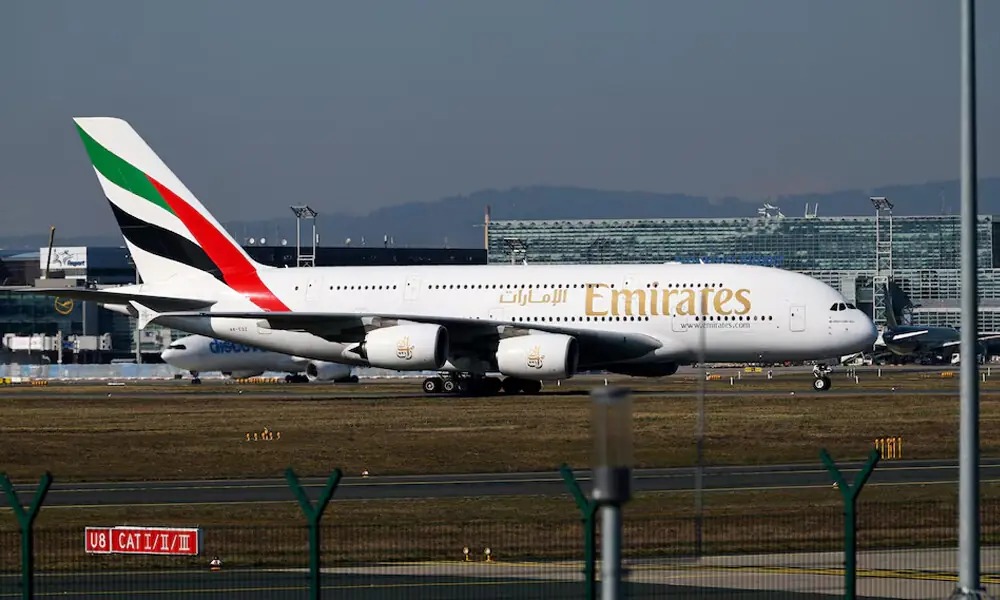
Emirates and Etihad Airways resumed limited flights from the United Arab Emirates on Friday, operating to key global cities, though ongoing missile threats continue to disrupt air travel and create uncertainty for passengers. Authorities are prioritizing safety while managing evacuation operations amid regional conflict.
Most Middle Eastern airspace remains closed due to missile and drone concerns since the US-Israel war against Iran began, forcing governments to arrange charter flights and secure limited commercial seats to evacuate tens of thousands of travellers safely.
Read more : PM directs embassies in Gulf to assist stranded citizens amid ME …
Etihad announced a limited flight schedule through March 19, connecting Abu Dhabi with 25 destinations including London, Paris, Frankfurt, Delhi, New York, and Toronto. Meanwhile, Emirates operates reduced flights to 82 destinations, allowing transit passengers only if their connecting flights are confirmed.
Dubai airport, normally the world’s busiest, saw passenger traffic almost double from Wednesday to Thursday but remained at only 25% of typical levels. Qatar’s Doha hub remains mostly closed, although a few relief flights are being arranged from Oman and Saudi Arabia.
The aviation disruption has significantly impacted Europe-Asia routes, where Emirates, Qatar Airways, and Etihad normally carry a large share of passengers. From February 28 to March 5, over 25,000 of 44,000 scheduled flights in the Middle East were cancelled, highlighting the conflict’s effect on global air traffic.
Read more : Gulf tensions rise after Qatar intercepts planes
Rising oil prices have pushed jet fuel costs to record highs, with Singapore fuel reaching $225 a barrel before easing slightly. The surge has hit airline shares worldwide, while passengers have faced high costs and chaotic travel conditions trying to leave the region.