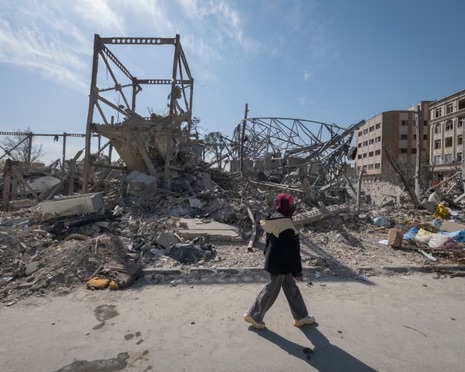
The Middle East conflict intensified Thursday as Iran targeted Kurdish guerrilla groups in Iraq, following reports that the United States seeks to arm Iranian Kurdish fighters to infiltrate Iran. Israel simultaneously launched fresh strikes on Tehran, widening the war across the region. The violence has disrupted global shipping and energy markets, while civilian populations in Gulf nations face growing panic and uncertainty.
Lebanon has also suffered from the escalation, with Israeli strikes hitting Hezbollah positions in Beirut, leaving buildings in rubble and thick smoke rising over the city. A pre-dawn drone strike killed senior Hamas official Wassim Atallah al-Ali and his wife in Beddawi, highlighting the cross-border spread of hostilities and increasing civilian casualties in conflict zones.
Read more : Middle East war causes 145 Pakistan flights cancellation sixth day
Iranian officials warned Kurdish groups against any action, with Ali Larijani, secretary of Iran’s Supreme National Security Council, stating that separatist factions would not be tolerated. Iranian attacks killed members of exiled Kurdish organizations in Iraq, signaling Tehran’s determination to suppress any threats to its territorial security amid rising US involvement.
The war has drawn international attention, with Australia deploying aircraft to the theatre and Canadian Prime Minister Mark Carney indicating possible military engagement. NATO member Turkey also became involved after intercepting an Iranian missile, which reportedly targeted a British base in Cyprus, prompting the summoning of the Iranian ambassador.
Read more : Oil prices jump as Middle East conflict threatens supply –
Naval confrontations have intensified the conflict, with a US submarine sinking an Iranian warship off the coast of Sri Lanka, killing at least 87 personnel and leaving dozens missing. Iran condemned the attack as a maritime atrocity, while the country’s internet capacity remains at only one percent, isolating its population during the escalating crisis.
Energy infrastructure and maritime routes have been severely affected, with Iran claiming to close the Strait of Hormuz, disrupting a fifth of global crude oil flow. Tankers were hit, oil spilled, and flights cancelled, causing tourism losses across the Gulf. Economists warn that the conflict may trigger a prolonged period of global economic instability, with international markets facing uncertainty over energy supply and trade routes.