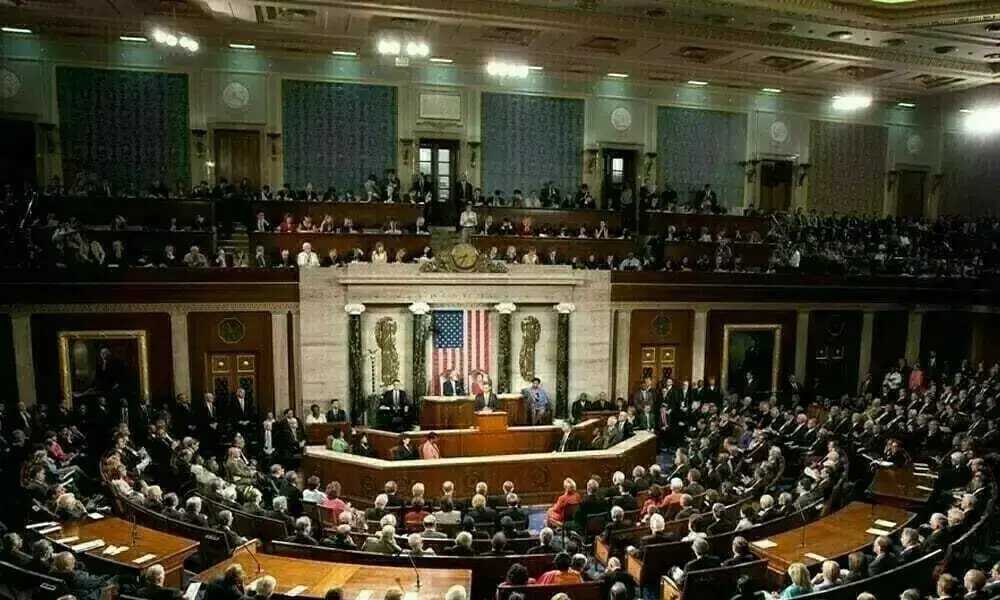
The US Senate is set to vote on a resolution aimed at limiting President Donald Trump’s authority to continue military strikes on Iran. The bipartisan measure would require withdrawal of US forces unless Congress approves further action, marking the first legislative test of support for a war launched without explicit congressional authorization. Analysts say the vote is likely to fail due to Republican support for the president.
The resolution, introduced by Democrat Tim Kaine and Republican Rand Paul, comes five days into a conflict that has killed Iran’s Supreme Leader Ali Khamenei and several senior officials, while US troops have also been killed in Iranian strikes and drone attacks. Democrats argue Trump bypassed Congress and offered inconsistent explanations for the military campaign.
Read more: Pakistanis at remote border scramble to leave Iran
Senate Republicans, holding a 53-47 majority, largely back Trump’s decision, though some warn their support could weaken if the conflict expands or prolongs. Democrats would need at least four additional Republican votes to pass the measure, and at least one Democrat has already opposed it. Even if passed, Trump could veto the resolution, requiring a nearly impossible two-thirds congressional override.
Lawmakers voiced concern over the campaign’s scope and duration. Classified briefings warned that the operation may last weeks and could require emergency Pentagon funding to replenish weapons stockpiles. The measure invokes the 1973 War Powers Act, limiting unauthorized conflicts to 60 days and forcing Congressional votes on ongoing military engagements.
Read more: Strikes in Tehran prompt Pakistani nationals to cross Taftan border
Democrats acknowledge the resolution’s slim chance of success but insist it is crucial to compel lawmakers to publicly state their position on the war. Meanwhile, governments worldwide continue evacuating citizens affected by the escalating Middle East conflict, with cities such as Dubai and Riyadh drawn into regional instability.