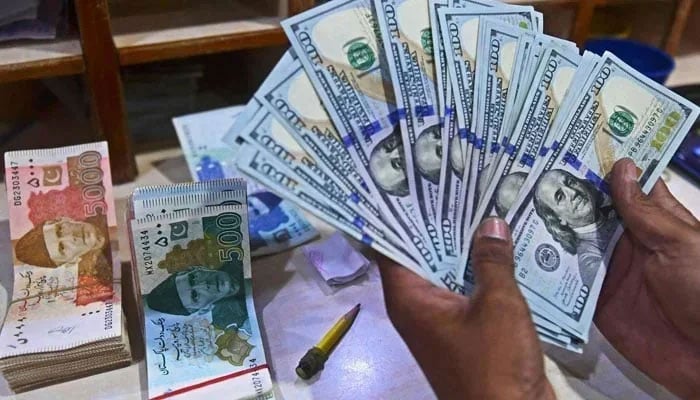
Pakistan could face a remittance shortfall of up to $3 billion if the escalating Middle East conflict persists, analysts warn, raising concerns about pressure on the rupee and the country’s fragile external balance.
Read More: Middle East tensions disrupt Pakistan’s sea trade
Shahid Anwar, senior director at the Institute of Cost and Management Accountants of Pakistan, said remittance inflows may decline by 10% to 15% or more if instability in Gulf countries deepens. “A 15% decline would mean a shortfall of around $3 billion, widening the current account deficit and putting additional pressure on the rupee,” he said.
The warning comes as tensions in the region intensify following US and Israeli strikes on Iran and Tehran’s subsequent response. Gulf states host millions of Pakistani workers, making the region a critical source of foreign exchange. Disruptions to travel, employment and financial channels could directly affect household incomes across Pakistan.
According to the State Bank of Pakistan, remittances rose 11% year-on-year to $23.2 billion during the first seven months of FY26. The central bank has projected total inflows of $41.2 billion for the fiscal year, supported by seasonal Eid-related transfers.
Between July and January, Pakistan received $10.88 billion — nearly 47% of total remittances — from Gulf countries. Saudi Arabia contributed $3.89 billion, while the United Arab Emirates sent $4.78 billion. Oman, Qatar, Kuwait and Bahrain accounted for a combined $2.2 billion.
Analysts caution that higher oil prices and shipping disruptions, particularly around the Strait of Hormuz, could further strain Pakistan’s economy. Brent crude has surged above $82 per barrel, raising the prospect of a larger import bill and renewed inflationary pressure.
Read More: War spirals in Middle East as Israel strikes Hezbollah
Anwar noted that even a limited conflict would reverberate through households and businesses for months, testing Pakistan’s economic resilience at a time when stability has been supported by remittances and external financing.