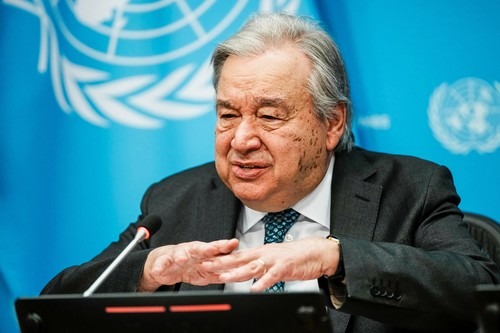
António Guterres described the war in Ukraine as “a stain on our collective conscience” during a Security Council session marking four years since Russia’s full-scale invasion. He renewed calls for an immediate and unconditional ceasefire, stressing that continued fighting deepens human suffering. Moreover, he urged global leaders to take concrete steps that would reduce tensions and create space for meaningful diplomacy.
Read more : UN chief warns rule of force replacing rule of law
Referring to Russia’s invasion, Guterres warned that the conflict represents a serious violation of international law with far-reaching consequences. He said the world has witnessed cascading impacts that extend beyond the battlefield, affecting regional stability and global security. In addition, he highlighted that any lasting solution must respect Ukraine’s sovereignty, independence, and internationally recognized borders.
According to figures shared during the session, more than 15,000 civilians have been killed in Ukraine since the war began, while over 41,000 people have suffered injuries. Among the casualties were approximately 3,200 children, underscoring the devastating impact on families and communities. Consequently, he called on member states to fully fund humanitarian aid to support displaced populations and war-affected civilians.
Read more : Strong, proactive: Pakistan outlines expectation for next UN chief
Furthermore, Guterres warned that ongoing military activity poses direct risks to the safe operation of Ukraine’s nuclear facilities. He cautioned that instability around such sites could lead to catastrophic consequences if safety measures fail or are disrupted. Therefore, he urged all parties to prevent escalation and immediately halt actions that could endanger nuclear security.
While acknowledging diplomatic efforts by the United States and other international actors, he emphasized that words alone are not enough to end the conflict. Instead, he said practical measures must follow to reduce hostilities and build trust between the parties involved. At the same time, he appealed for renewed commitment to peaceful negotiations that prioritize civilian protection.
In closing, the UN chief repeated his demand for a full and unconditional ceasefire as the first step toward a just and lasting peace. He urged the global community to end the cycle of destruction, suffering, and loss of life. Ultimately, he stressed that only sustained diplomatic engagement and coordinated international support can bring stability and restore hope for millions affected by the war.