 Pakistan conducted a series of overnight airstrikes in eastern Afghanistan on February 22, 2026, targeting the provinces of Nangarhar and Paktika. The primary context of these strikes is a sharp escalation in cross border tensions driven by a recent surge in terrorist attacks within Pakistan.
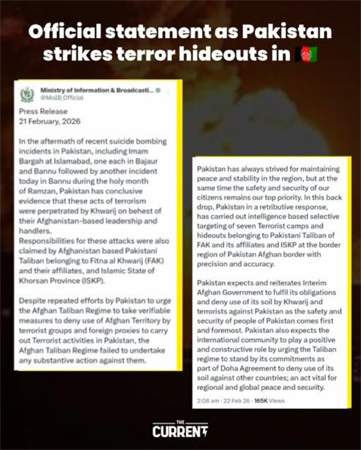
In a press release, Pakistan’s information ministry said the overnight strikes involved “intelligence-based selective targeting of seven terrorist camps” and described them as a retributive response to recent terrorist attacks inside Pakistan.
Reason Behind Retaliation
n Terror Safe Haven on Afghan soil: Retaliation for Suicide Attacks: Islamabad described the operation as a “retributive response” to a wave of violence, most notably the February 6 suicide bombing at a Shia Mosque in Islamabad that killed 31 worshippers.

n Targeting Terrorist Groups: Pakistan’s Ministry of Information stated the “intelligence-based” operations targeted seven camps and hideouts belonging to Tehreek-e-Taliban Pakistan (TTP), also referred to by state authorities as Fitna al-Khawarij and Islamic State – Khorasan Province (ISKP), which claimed responsibility for the February 6 mosque attack.
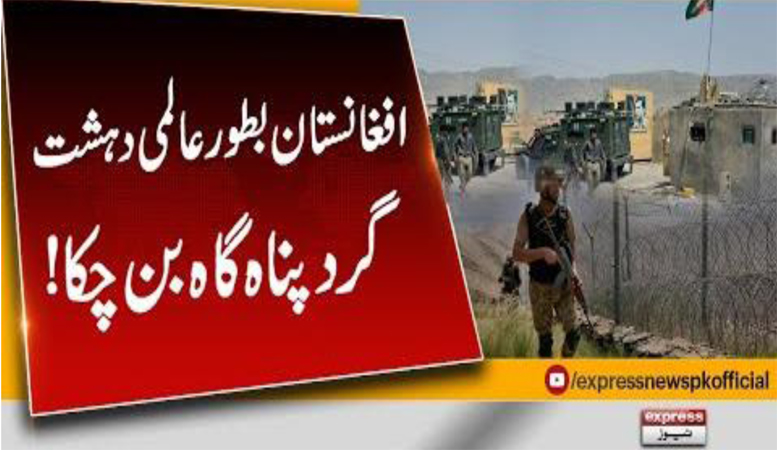
n Terror Safe Haven on Afghan soil: Pakistan maintains it has “conclusive evidence” that recent attacks were orchestrated by Afghanistan-based leadership. Officials had issued multiple warnings in the weeks prior, stating they would not hesitate to strike across the border if the Taliban failed to curb terrorist activity.
Talking to foreign media outlets recently, Defence Minister Khawaja Asif has said that Pakistan will again strike targets inside Afghanistan if terrorism emanating from that country continues. He has suggested that India and the Afghan Taliban are working in cahoots, waging a ‘proxy war’ against Pakistan.

Impact and Responses
n Pakistan’s Claim: Officials stated that at least 70 to 80 terrorists were killed in the precision strikes.
n Afghanistan’s Claim: The Taliban-led government reported at least 18 civilian deaths, including women and children, and stated that the strikes hit homes and a religious school (madrassa).
n Pakistan’s Counter Response: Information Minister Attaullah Tarar said Pakistan had “conclusive evidence” that the recent attacks, including a suicide bombing that targeted a Shiite Mosque in Islamabad and martyred 32 worshippers this month, were carried out by terrorists acting on the “behest of their Afghanistan-based leadership and handlers.”

Taliban regime is trying to distort the facts by fabricating civilian victimhood rhetoric. Terrorists based in Afghanistan are in habit of using civilians especially women as human shield. Pakistan says terrorist violence has surged since the return of the Afghan Taliban to power and accuses the Afghan authorities of failing to act against the TTP, also known as the Pakistani Taliban, which it says operates from Afghan sanctuaries.

n Fragile Ceasefire: These strikes occurred despite a Qatar-mediated ceasefire established in October 2025 following previous deadly border skirmishes.

n Indian Sponsorship to Terror Proxies: Pakistan has long alleged that India uses Afghan soil to sponsor “terror proxies” to destabilize the country. These claims have intensified following the recent air strikes in Afghanistan.
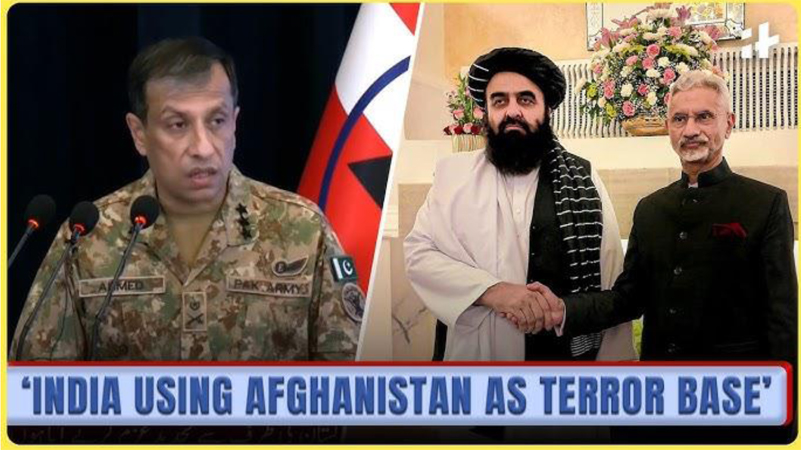
n Funding and Logistics: Pakistan’s MOFA and military authorities claim to have “irrefutable evidence”- including bank transactions and audio clips-showing Indian intelligence (RAW) funding groups like Tehreek e-Taliban Pakistan (TTP) and the Baloch Liberation Army (BLA).

n Operational Base: Islamabad asserts that India has “activated assets” within Afghanistan to orchestrate attacks including recent suicide attacks in Islamabad and KP, which they link to an “Indian proxy web”.

n Diplomatic Cover: Officials claim Indian missions along the Pakistan-Afghanistan border have historically served as hubs for sponsoring militant activity.
n Taliban’s Unnatural Tilt Towards India:
n Embassy Upgrade: In January this year, India officially upgraded its “technical mission” in Kabul to a full-fledged embassy, led by a Chargé d’Affaires.

n Ministerial Visits: Afghan Foreign Minister Amir Khan Muttaqi made a significant visit to New Delhi in October 2025, marking the first high-level ministerial engagement since the 2021 takeover. Mysteriously, Taliban troops triggered border skirmishes with Pakistan precisely during Mutaqi’s visit to India.
Growing linkage between Afghan Taliban and New Delhi is a natural point of concern for Pakistan. Irresponsible accusatory statements of Mullah Mutaqi and timing of coordinated border attacks from Afghanistan have reflected very badly on bilateral ties of Kabul and Islamabad. Followed by surging terrorism and undeniable linkage with banned anti-Pakistan outfits (TTP- BLA); Afghan Taliban have stamped their questionable intentions towards Pakistan by joining the Indian chorus.
n Recognition of Sovereignty: In a joint statement that deeply rattled Islamabad, the Taliban referred to “Jammu and Kashmir, India,” implicitly supporting India’s territorial stance-a sharp departure from traditional Taliban rhetoric.
Strategic and Economic Decoupling from Pakistan
n Alternative Trade Routes: The Taliban is actively promoting Iran’s Chabahar Port as a primary trade hub to bypass Pakistan’s Karachi Port.
n Budgetary Support: India’s 2026-27 Union Budget reportedly earmarked roughly $13 million for assistance to Afghanistan, a signal of sustained financial engagement.
n Investment Invitations: The Taliban has invited Indian firms to explore mining and infrastructure projects, seeking to replace Pakistan as its primary development partner.
Security Posturing
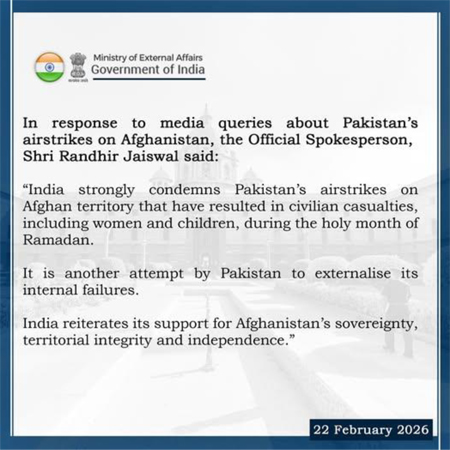
n Alignment Against Airstrikes: Following Pakistan’s February 22, 2026 strikes, India issued a statement supporting Afghanistan’s sovereignty. This alignment is seen by Pakistan as a “double-squeeze” strategy designed to pressure its western border.
n Refusal to Act on TTP: Despite intense pressure from Islamabad, the Taliban maintains that terrorism in Pakistan is an “internal matter” and has largely ignored demands to crack down on TTP hideouts.
Why it is viewed as “Unnatural”
The tilt is considered “unnatural” because it unites two historically hostile entities: a secular, Hindu nationalist Indian government and a hardline Islamist Taliban regime. Analysts suggest this is a marriage of convenience: the Taliban seeks legitimacy and economic independence from Pakistan, while India aims to counter Pakistani influence and protect its $3 billion in historical investments in the region.
Present Scenario: Possible Unfolding

The 22 February 2026 airstrikes by Pakistan into Afghanistan represent a major escalation that has pushed bilateral ties to their most precarious state since the Taliban’s return to power. Possible unfolding for Pak-Afghan relations include:
1. Military Escalation and Retaliation
n Cycles of Retaliation: The Afghan Ministry of Defence has vowed a “calculated and appropriate response”, which may lead to direct border skirmishes or counter-strikes.
n Increased Border Militarisation: Both nations have already begun deploying reinforcements to key border zones. Continued strikes could lead to a permanent, high-readiness military posture along the 2,600-km frontier.
2. Collapse of Diplomatic and Mediated Efforts
n Failure of Third-Party Mediation: Analysts suggest these strikes signal the failure of previous mediation by Qatar, Turkey, and Saudi Arabia. A “costly stalemate” is a likely outcome as trust between Kabul and Islamabad reaches a new low.
n Diplomatic Downgrade: Afghanistan has already summoned the Pakistani ambassador to protest the “violation of sovereignty”. This could progress toward a formal suspension of diplomatic ties or the closure of key embassies.
3. Economic and Humanitarian Hardships
n Trade Blockades: Further border closures for trade- similar to those seen in October-would disproportionately impact the Afghan economy, which already faces significant losses due to previous suspensions.
n Refugee Repatriation Pressure: Pakistan may intensify its crackdown on illegal Afghan nationals and accelerate deportations as a form of non-military pressure.
4. Internationalization of the Dispute
n Doha Agreement Pressure: Pakistan is calling on the international community to hold the Taliban accountable for their Doha Agreement commitments to prevent Afghan soil from being used for terrorism.
n Dangerous Status – Quo: Firm Message delivered through air strikes from Pakistan side reflects the running out of patience amid loss of precious human lives. Non-flexible and incurable obsession of Afghan
Taliban with anti-Pakistan terrorist groups sponsored by Indian state actors remains a “Clear and Present Danger” to the regional peace as well as very fragile bi lateral equation.