 The Federation of Pakistan Chambers of Commerce and Industry (FPCCI), in collaboration with Ipsos, has officially launched the Index of Transparency and Accountability in Pakistan (iTAP). This inaugural indigenous survey provides a scientific benchmark for measuring public trust, transparency, and accountability across the nation’s public institutions.

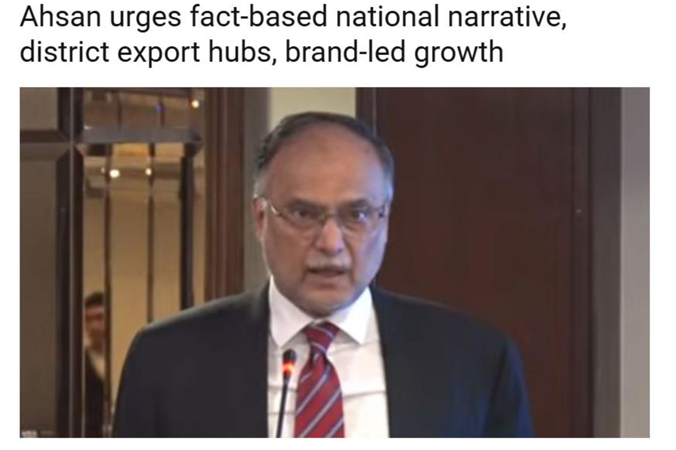
The launch ceremony, held at the FPCCI Capital House, was attended by Chief Guest Mr. Ahsan Iqbal, Federal Minister for Planning, Development and Special Initiatives, alongside Mr. Atif Ikram Sheikh, President FPCCI, and Mr. Mian Zahid Hussain, Chairman of the FPCCI Policy Advisory Board.
Bridging the Perception-Experience Gap
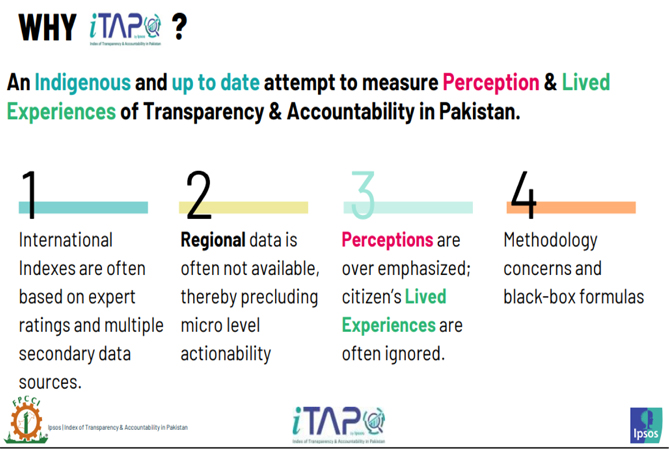
The core objective of iTAP is to address the limitations of international governance indices, which often rely on “black-box” formulas and expert opinions rather than ground-level realities.
While global rankings frequently place Pakistan low on transparency, iTAP reveals a significant disconnect between what citizens believe and what they actually experience.
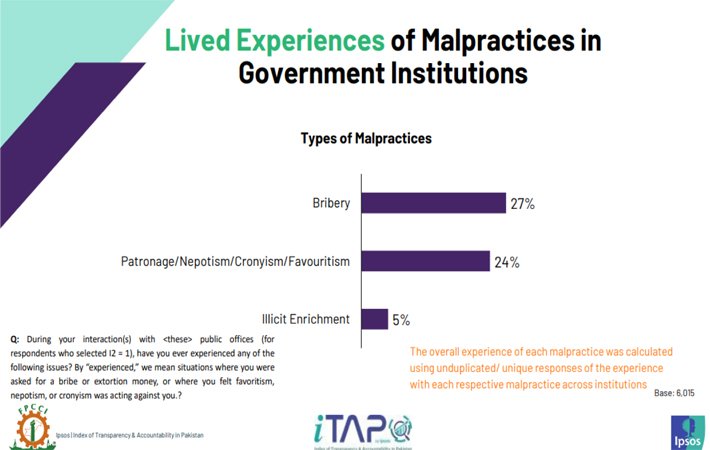
Key findings from the data include:
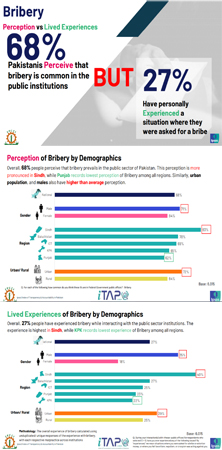
Bribery:
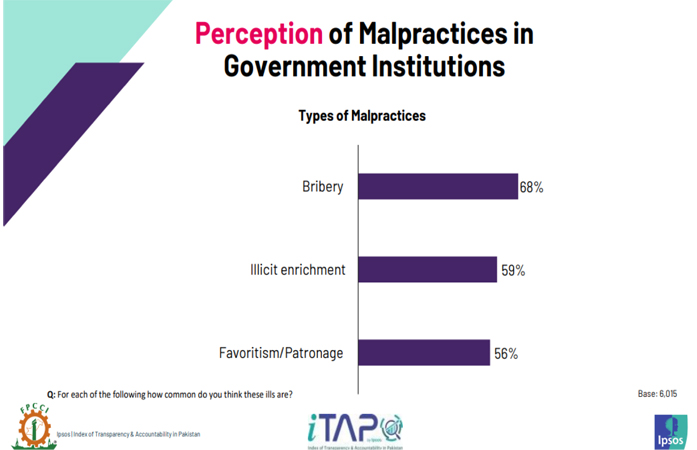
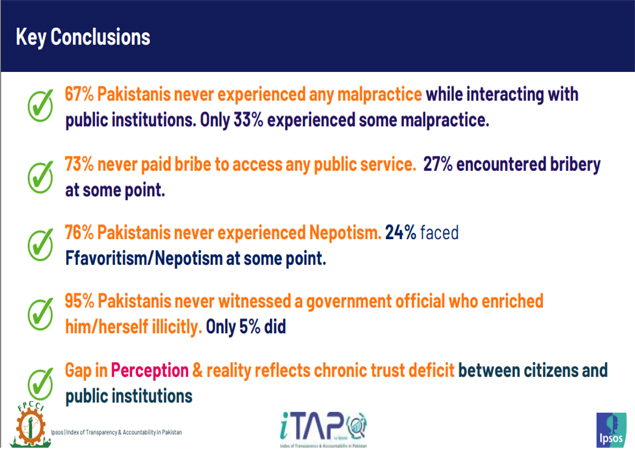
While 68% of Pakistanis perceive bribery as common, only 27% reported actually being asked for one.
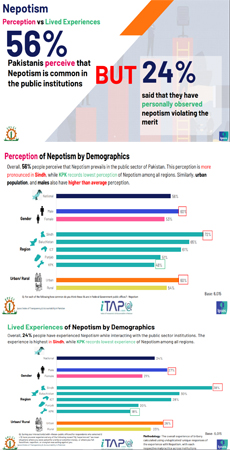
Nepotism:
56% perceive it as widespread, yet only 24% have personally encountered it.
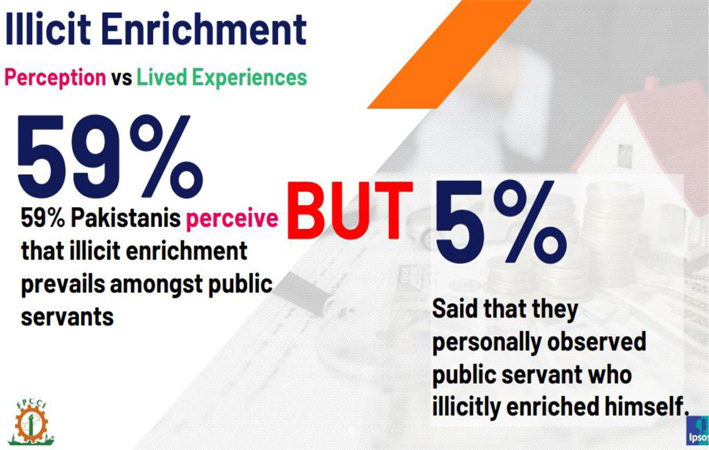
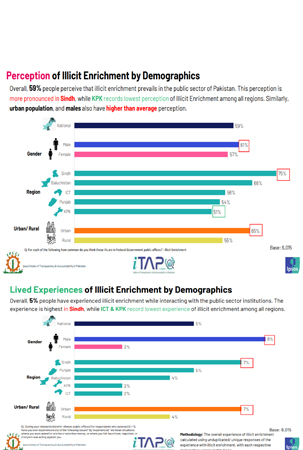
Illicit Enrichment:
59% believe it is prevalent, but only 5% personally know an official who has illicitly enriched themselves.
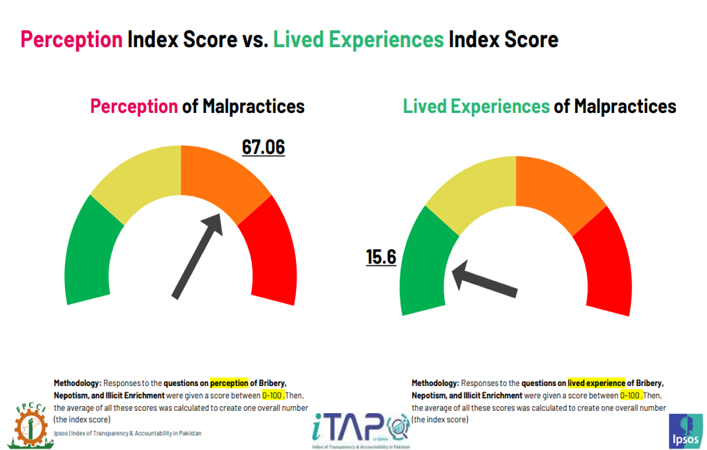
Remarkably, the survey found that 67% of Pakistanis reported no experience with any corruption malpractice during their interactions with public institutions. This results in a stark contrast between the Perception Index Score (67.06) and the Lived Experience Index Score (15.6).
Institutional Performance and Service Delivery
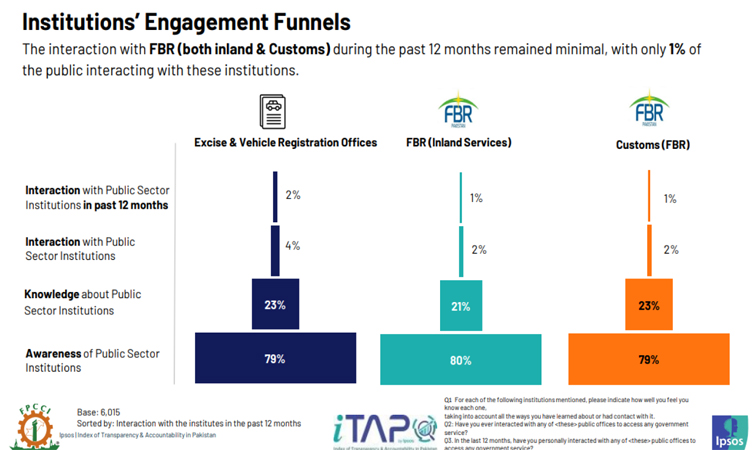
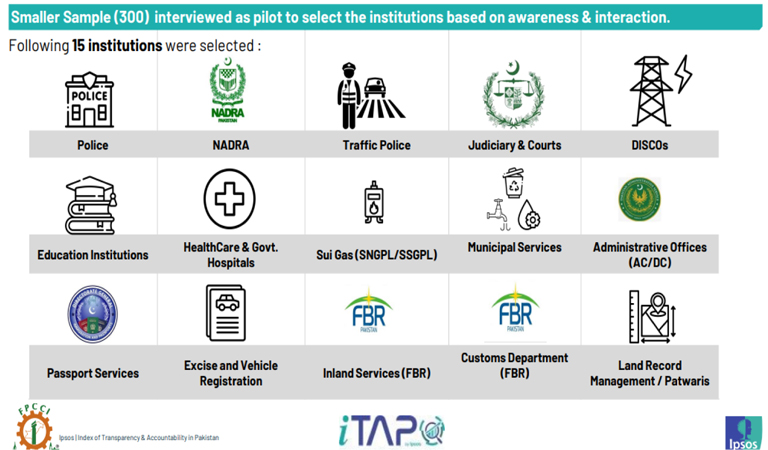
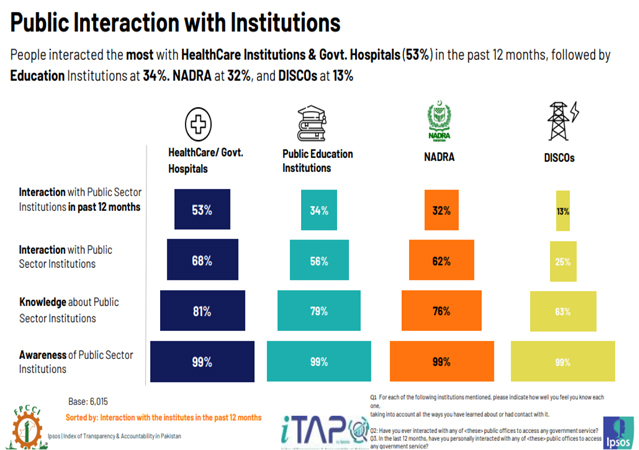
The survey evaluated 15 key institutions based on public interaction.
Results highlighted significant successes in service delivery and digitalization:
Top Performers:
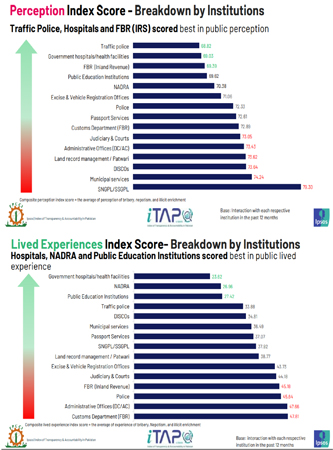
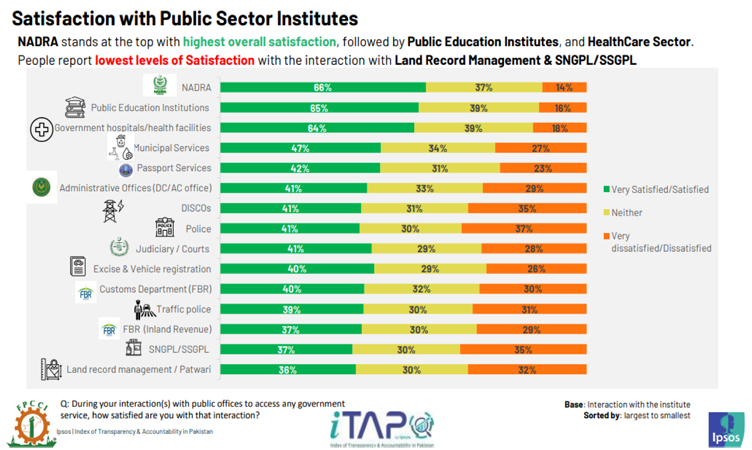
NADRA holds the highest satisfaction rating, while Government Hospitals and Public Educational Institutions were rated best in terms of the actual experience of transparency.
Perception Leaders:
Traffic Police and the FBR (Inland Revenue) scored highest in terms of positive public perception.
Visibility:
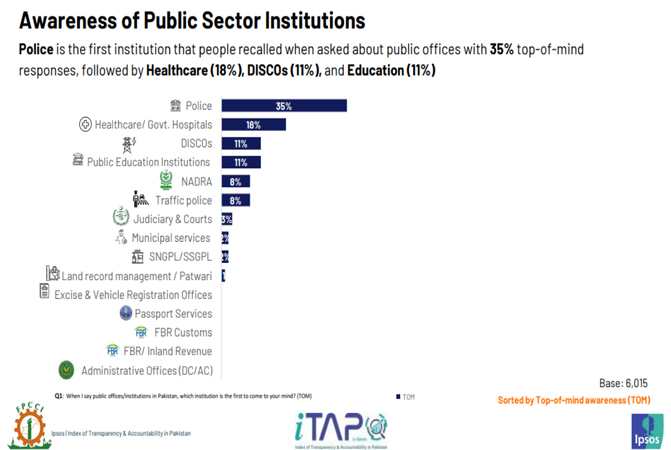
The Police remain the most “top-of-mind” institution, which disproportionately shapes national perception despite varying levels of direct interaction.
Methodology and Scope
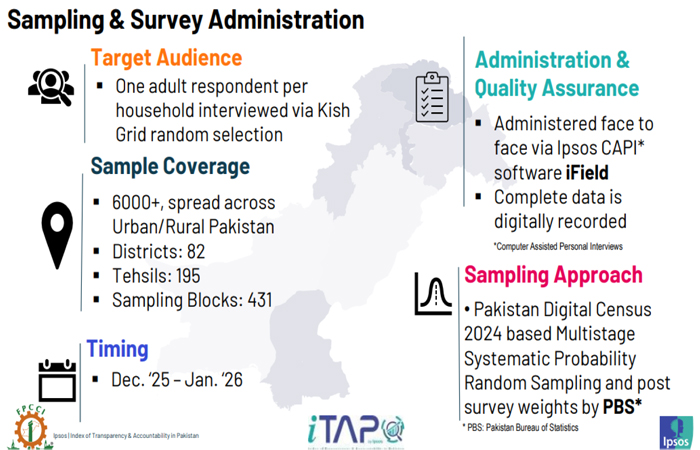
The iTAP survey is one of Pakistan’s largest governance-focused studies. Conducted between December 2025 and January 2026, the study utilized a sample of 6015 respondents across 82 districts.
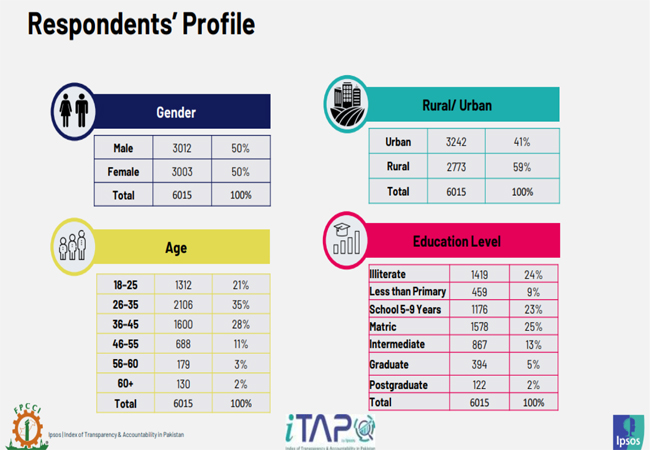
To ensure technical rigor, FPCCI and Ipsos collaborated with the Pakistan Bureau of Statistics (PBS), utilizing the 2024 Digital Census for sampling and ensuring a 50/50 gender split across urban and rural populations.
The Path to Reform
The index highlights a “chronic trust deficit” and a significant awareness gap.
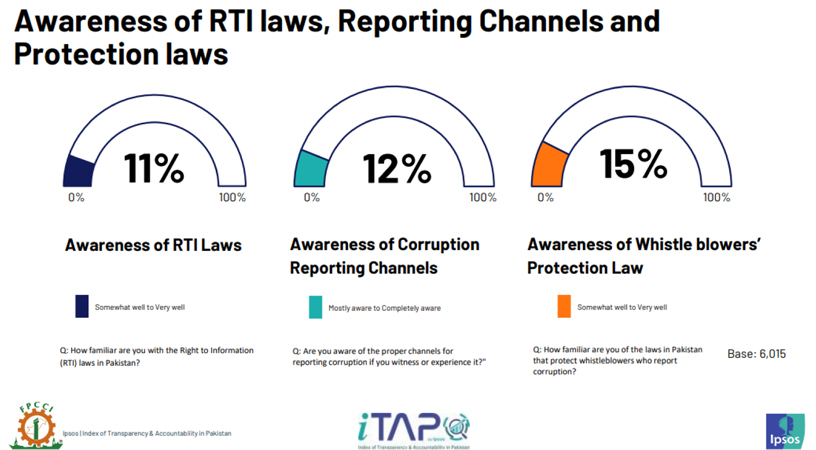
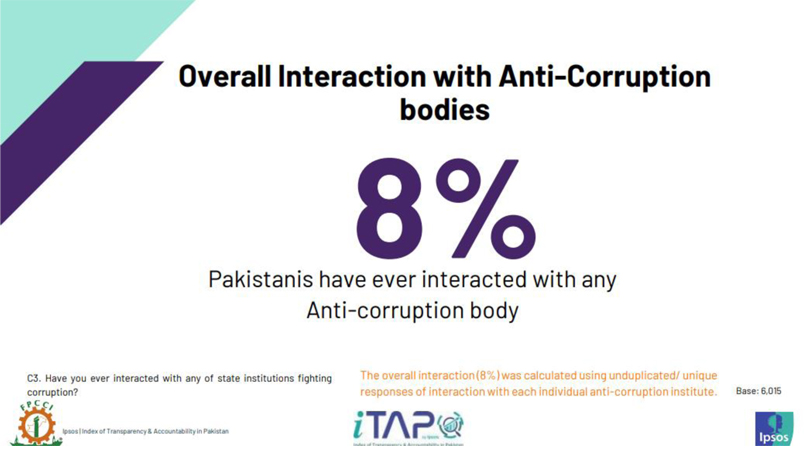
Only 11% of citizens are aware of Right to Information (RTI) laws, and only 8% have ever engaged with anti corruption bodies like NAB or the FIA.
Federal Minister Ahsan Iqbal emphasized that “what gets measured gets improved,” noting that iTAP serves as a vital tool for evidence-based reform.
The findings suggest that recent digitalization and the reduction of human interference in public offices are yielding results, though public perception lags behind these structural improvements.
Strengthening communication and bridging this perception-reality gap now emerges as the next frontier for improving Pakistan’s investment outlook and institutional integrity.