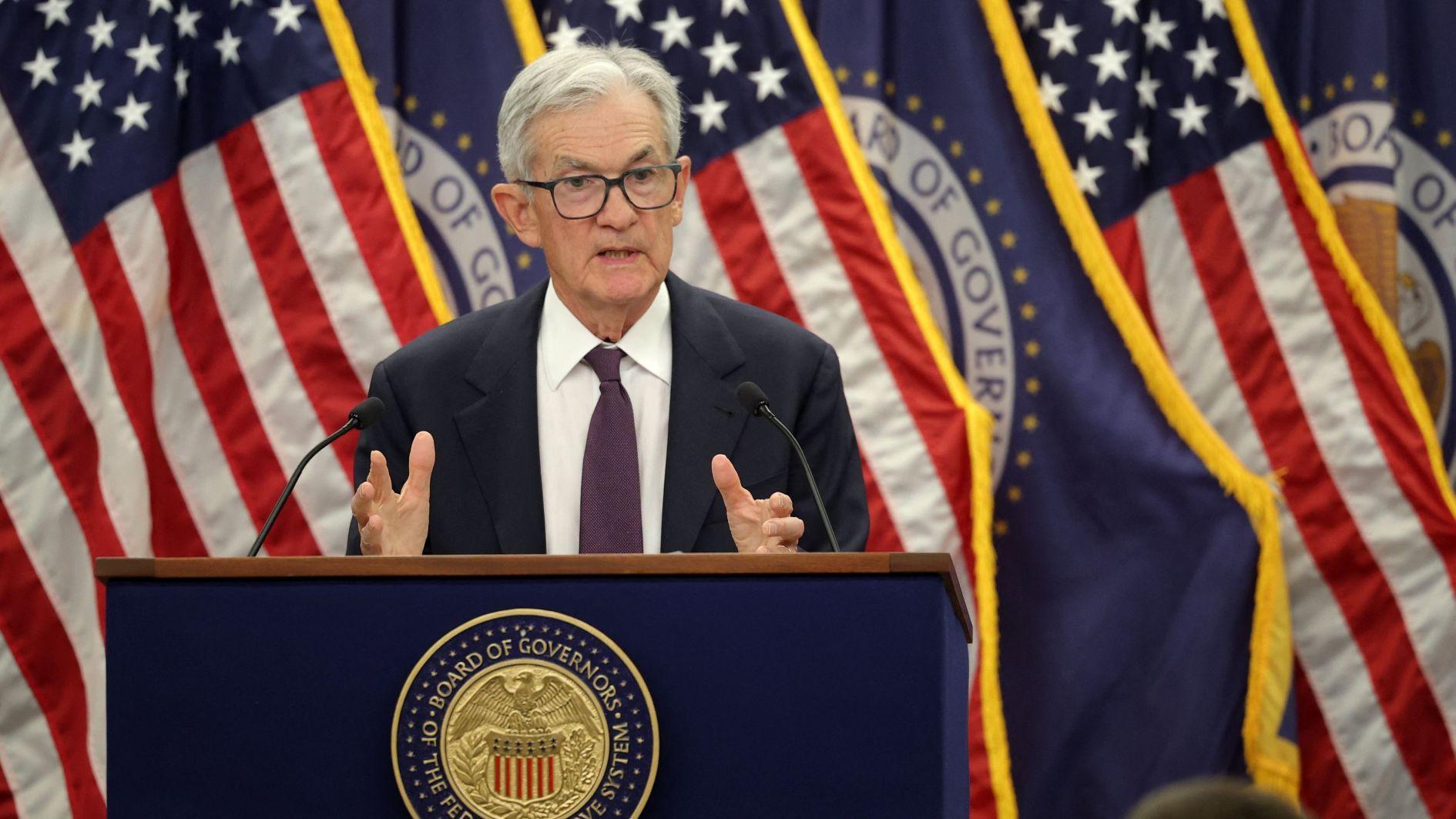
The US Federal Reserve held interest rates steady on Wednesday, resisting pressure from President Donald Trump to implement cuts. In a 10-2 vote, the central bank maintained the federal funds rate at 3.50–3.75%, citing solid economic growth and stabilizing unemployment.
Read More: Dollar faces pressure but remains dominant in global finance
The Federal Open Market Committee (FOMC) highlighted that economic activity is “expanding at a solid pace” and noted early signs of stabilization in the labor market. Two members, Stephen Miran and Christopher Waller, dissented, favoring a quarter-point rate cut. Waller is viewed as a potential successor to Fed Chair Jerome Powell.
Jerome Powell has thoroughly debunked Trump’s lies.
Inflation remains high, and the purchasing power of the public is still under pressure. No hype, just the cost Americans continue to bear.
The federal funds rate stays at 3.50%-3.75%, and the reasons are clear:
• Trump’s… pic.twitter.com/yexggXq8RZ
— Marcos Crypto (@MarcosBTCreal) January 29, 2026
Powell, speaking at a press briefing, emphasized that the Fed would remain guided by economic data rather than political pressure, amid Trump’s ongoing efforts to influence the central bank. These include attempts to remove Fed Governor Lisa Cook and investigations into Powell over a renovation project at the Fed headquarters. Powell called the legal challenge surrounding Cook “perhaps the most important legal case in the Fed’s 113-year history” and stressed the institution’s independence.
Economists described the current stance as a “stalemate,” with policymakers balancing concerns over inflation, labor market weakness, and global economic uncertainty. Powell indicated that future rate adjustments would depend on economic developments, noting that a weakening labor market or cooling inflation could shift the balance toward cuts.
Financial markets widely expect the Fed to keep rates unchanged at least until its June meeting. Powell’s term ends in May, raising attention on how his successor might influence monetary policy and whether the Fed can continue to pursue its dual mandate of price stability and maximum employment independently of political interference.
Read More: Gold surges past $5,200 as dollar slides to four-year low
Analysts will be closely watching whether the new leadership can build consensus for further easing and how it navigates the ongoing tension between economic policy and political pressure.