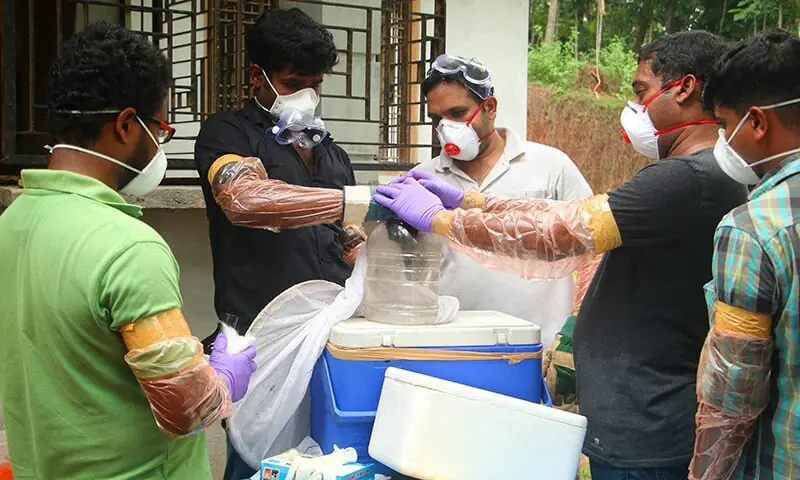
NEW DELHI: Indian authorities have confirmed two cases of the deadly Nipah virus in West Bengal, saying swift action ensured the infections were contained without further spread.
Read More: Nipah virus spreads in West Bengal, 100 quarantined
The Ministry of Health said enhanced surveillance, laboratory testing, and field investigations were carried out, which helped in the timely containment of the cases. Officials added that 196 individuals who had contact with the patients were traced and tested, all of whom were found to be negative.
An outbreak of the deadly Nipah virus in India’s West Bengal state has sparked concern in parts of Asia, with some tightening screening measures at airports.
Thailand has started screening passengers at three airports that receive flights from West Bengal. Nepal has also begun… pic.twitter.com/g6TfZB2PCt— Tony Leachon MD (@DrTonyLeachon) January 28, 2026
Global health authorities are on high alert as a deadly #NipahVirus outbreak emerges in #India’s West Bengal. WHO today warns the virus carries a 40–75% #fatality rate and poses a potential #pandemic risk.
India has issued a nationwide alert, calling for enhanced #surveillance… pic.twitter.com/VJF3D5rW6U
— Shenzhen Daily (@szdaily1) January 28, 2026
The ministry did not provide further details about the two infected patients but assured that public health measures were in place and the situation was under constant monitoring.
Nipah virus, which spreads from animals to humans, has no approved vaccine and carries a high fatality rate ranging from 40 to 75 percent, according to the World Health Organization. Symptoms include high fever, vomiting, respiratory infection, and, in severe cases, seizures and inflammation of the brain that can lead to coma.
Fruit bats are considered the natural carriers of Nipah and are the most likely source of outbreaks. In India, the first Nipah outbreak was reported in West Bengal in 2001. Subsequent outbreaks have occurred, including one in Kerala in 2018 that resulted in 17 deaths, and another in 2023 with two fatalities.
The virus was first identified in Malaysia in 1998, following transmission among pig farmers. While rare, outbreaks of Nipah are highly dangerous due to its high mortality rate and potential for human-to-human transmission.
Read More: “Super flu” virus detected in Pakistan amid global surge
Indian health authorities reiterated the importance of early detection, strict monitoring, and community awareness to prevent the spread of Nipah, particularly in regions where fruit bats are prevalent.