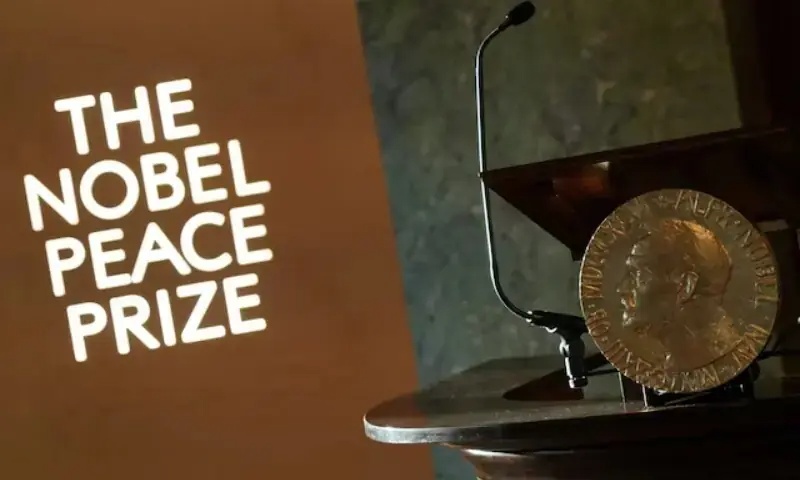
The Nobel Peace Prize remains inseparably linked to the individual or organisation that wins it, though the physical medal can be gifted, sold, or donated, the Norwegian Nobel Committee said on Friday.
Read More: Trump accepts Nobel medal from Venezuelan opposition leader
The statement came a day after Venezuelan opposition leader Maria Corina Machado handed her Nobel medal to US President Donald Trump. The White House released a photograph showing Trump holding the gold-coloured medal in a frame, with officials saying he intends to keep it.
“The Nobel Prize and the Laureate Are Inseparable.”
Read the full press release from the Norwegian Nobel Committee here:https://t.co/YLGniNg6lq
— Nobel Peace Center (@NobelPeaceOslo) January 16, 2026
Machado’s Nobel award also includes a diploma and prize money of 11 million Swedish crowns (approximately $1.19 million). The Nobel Committee clarified that while the medal, diploma, or prize money can be transferred or sold, the recognition itself remains permanently associated with the laureate.
“Regardless of what may happen to the medal, the diploma, or the prize money, it is and remains the original laureate who is recorded in history as the recipient of the prize,” the committee said.
The five-member panel added that the medal and diploma serve as physical symbols of the award, but the honour and recognition remain “inseparably linked” to the laureate. The committee also noted it does not comment on a laureate’s actions after the award is announced.
Giving away or selling Nobel medals is not unprecedented. In 1943, literature laureate Knut Hamsun gave his medal to Nazi propaganda minister Joseph Goebbels. In 2022, Nobel Peace laureate Dmitry Muratov sold his medal for $100 million to fund aid for Ukrainian refugee children through UNICEF. In 2024, the widow of former UN Secretary-General Kofi Annan donated his 2001 Nobel Peace Prize medal and diploma to the UN office in Geneva.
Read More: Laszlo Krasznahorkai wins 2025 Nobel Prize in Literature
The Nobel Foundation’s statutes impose no restrictions on what a laureate may do with the physical award, ensuring recipients have full discretion over the medal, diploma, or prize money.