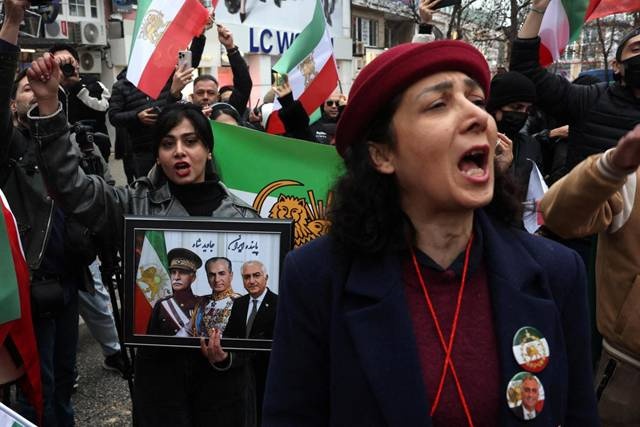
TEHRAN: Protests in Iran have subsided following a week-long crackdown by security forces and a prolonged internet blackout, monitors said Friday, a week after the largest demonstrations in years erupted over economic grievances and government policies.
Read More: Iran protests kill over 2,500, Trump pledges ‘help’
The unrest, which began with a shutdown of Tehran’s bazaar on December 28, escalated from January 8 into widespread demonstrations calling for an end to the clerical system that has governed Iran since 1979. Authorities responded with a “brutal” suppression campaign, deploying heavily armed security patrols, checkpoints, and blocking online communications to prevent coordination and mask the scale of the crackdown.
REPORTER: Did Arab and Israeli officials convince you to not strike Iran?@POTUS: “Nobody convinced me — I convinced myself. You had, yesterday, scheduled, over 800 hangings. They didn’t hang anyone. They cancelled the hangings. That had a big impact.” pic.twitter.com/VLFJCriM43
— Rapid Response 47 (@RapidResponse47) January 16, 2026
The internet blackout has now lasted over 180 hours, exceeding restrictions imposed during protests in 2019, according to monitoring group Netblocks. Rights organisations estimate that up to 20,000 people have been arrested, although Iranian security officials cited by Tasnim news agency reported approximately 3,000 detentions.
The US Treasury announced sanctions targeting Iranian officials, including Ali Larijani, secretary of Iran’s Supreme Council for National Security. Russian President Vladimir Putin held talks with Iranian President Masoud Pezeshkian in what the Kremlin described as efforts to facilitate de-escalation.
⚠️ Update: Metrics show a very slight rise in internet connectivity in #Iran this morning after the 200 hour mark. However, overall connectivity remains at ~2% of ordinary levels and there is no indication of a significant return. pic.twitter.com/evVey3NMjp
— NetBlocks (@netblocks) January 17, 2026
Reza Pahlavi, the US-based son of Iran’s late shah, called for renewed protests on social media and expressed confidence that the Islamic republic will eventually fall. Meanwhile, the White House indicated that “all options remain on the table” but appeared to have temporarily stepped back from military intervention, following diplomatic efforts by Saudi Arabia, Qatar, and Oman to allow Iran to demonstrate goodwill.
Read More: From Prices to Power: What Iran’s Protests Really Mean
Despite the suppression, new verified videos showed bodies in Tehran morgues, highlighting the human cost of the crackdown. At the UN, Iranian-American journalist Masih Alinejad said “all Iranians are united” against the clerical system, while Iran’s UN representative accused Washington of exploiting the unrest for geopolitical purposes.