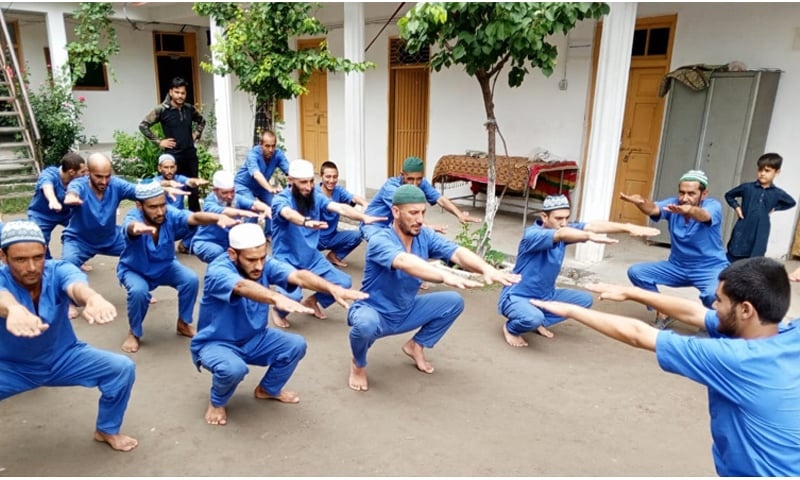
LOWER DIR: A government-run rehabilitation centre for drug addicts in Balambat has become a key source of support for patients and their families, who are urging the provincial government to provide funds and permanent facilities to strengthen its services. The centre currently operates out of a rented building, limiting space and resources despite increasing demand.
Read More: Rehabilitation centre for drug addicts opened
Relatives of patients told reporters in Timergara that dozens of individuals from Dir, Chitral and Bajaur were undergoing treatment under trained supervision. They said the centre lacked adequate capacity and equipment, and called on the Khyber Pakhtunkhwa government to allocate land for a purpose-built facility and ensure financial aid through Zakat and Baitul Mal.
They noted that private centres in the region charged high fees, pushing low-income families toward the government facility. They praised the staff for round-the-clock engagement in rehabilitation and counselling, but stressed that improved infrastructure could further enhance outcomes.
Rehabilitation Officer Nisar Ahmad said 32 patients were currently enrolled, and that since 2021 more than 2,000 individuals had completed rehabilitation at the Balambat centre. He said the 90-day programme included detoxification, medical care, psychological counselling, religious instruction and social reintegration activities.
Indoor games, national day celebrations and vocational training — including electrical work and cooking — were integral to the treatment plan to help patients re-enter society. Staffing currently includes a psychologist, religious teacher, medical technician, warden, clerical personnel, a cook, driver and security guards.
Read More: Ghani visits transformation child rehabilitation centre
However, officials highlighted financial constraints, noting the centre paid Rs70,000 in monthly rent and spent Rs7–8 million a year on food and medicines. The centre also lacks its own vehicle and is in need of a permanent medical officer and specialist psychologist.
Families and staff appealed to the provincial social welfare department to secure long-term sustainability of the facility, calling it a vital resource for combating drug addiction in the region.