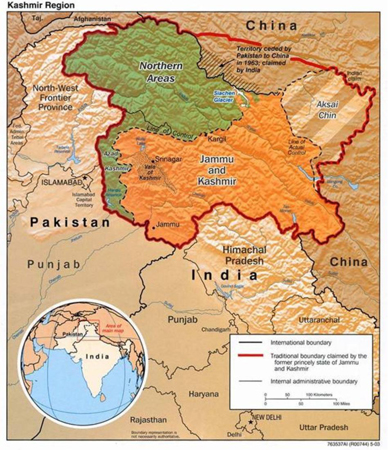
 Strategic importance of Azad Jammu Kashmir (AJK) in the region is beyond any doubt. It is rightly considered as base camp for illegally Indian occupied Jammu and Kashmir (IIOJK). Current status of AJK and its alignment with Pakistan is powerful endorsement of Two Nation Theory which led to the partition of sub-continent in 1947.
Besides this; AJK’s peace, sovereignty and gradual development always redirect attention across LOC towards IIOJK where Kashmiri masses are encountering state sponsored oppression and human rights violations.
Development in AJK: Strategic Impact

The AJK government deliberately pursued a welfare-first governance model, focusing on, new hospitals and basic health units became operational, addressing long-standing gaps in emergency care and maternal health in far flung districts. education saw Parallel the investments in construction and rehabilitation of schools, easing overcrowding and improving learning environments for thousands of students.
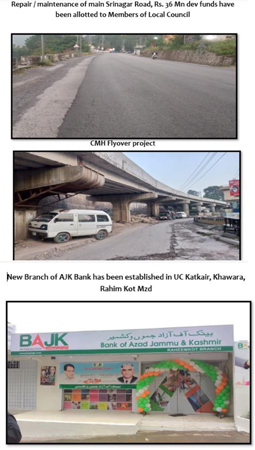
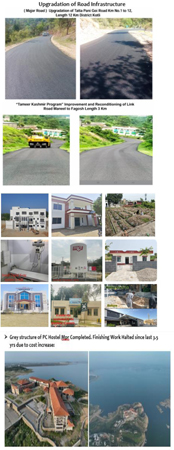
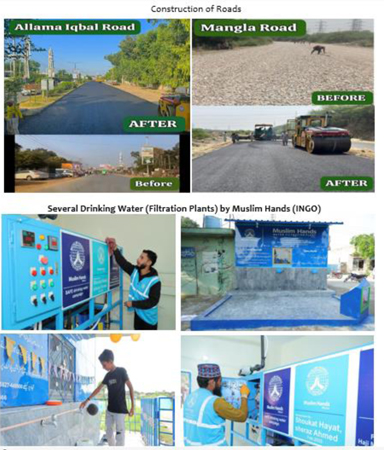
Infrastructure development remained a cornerstone of the year’s agenda, newly built and rehabilitated roads connected isolated communities to markets and services, while water supply schemes and filtration plants enhanced public health and resilience against climate stress.
Federation – AJK Cohesion
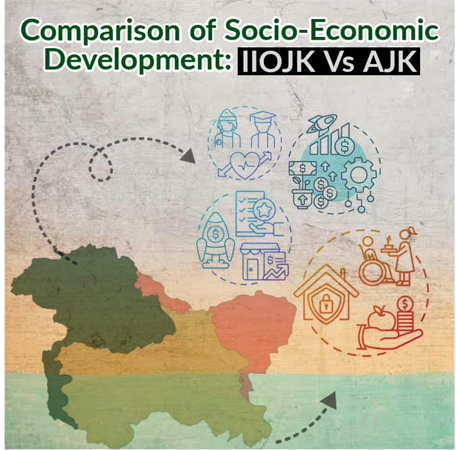
These gains were enabled by close coordination with the Federal Government of Pakistan, whose technical, financial and administrative support proved decisive. As in previous years, federal facilitation translated policy commitments into on-ground impact affirming Islamabad’s enduring role in AJK’s development and stability.
Comparison with IIOJK
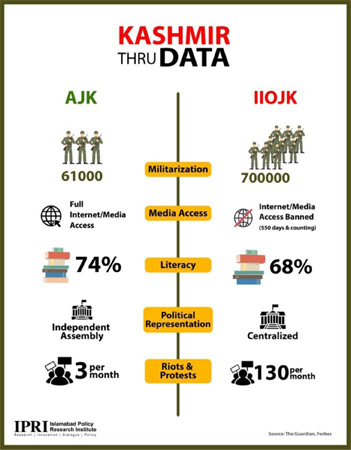
In contrast, the situation across the Line of Control presented a stark divergence. Indian Occupied Jammu & Kashmir (IIOJK) remained gripped by restrictions, reports of human rights violations and civic paralysis, with Kashmiri civilians repression.
The contrast highlighted the developmental and governance asymmetry between the two regions, reinforcing AJK’s narrative of inclusion, investment and institutional functioning.
AJK’s 2025 experience stands as a case study showing that governance which delivers can outpace disruption, restore confidence and neutralize politics rooted solely in agitation.
Deliverance and Institutional Stability
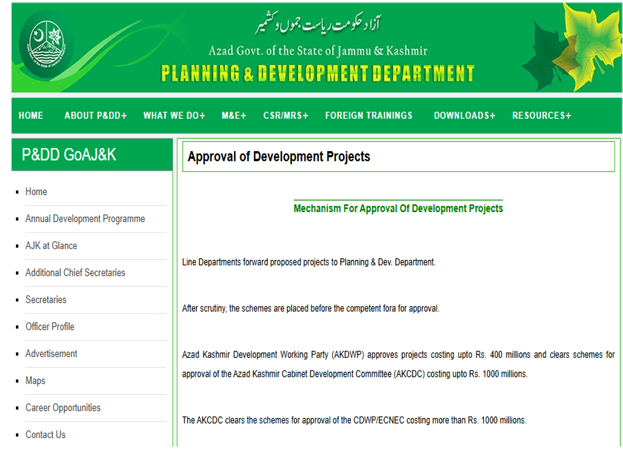
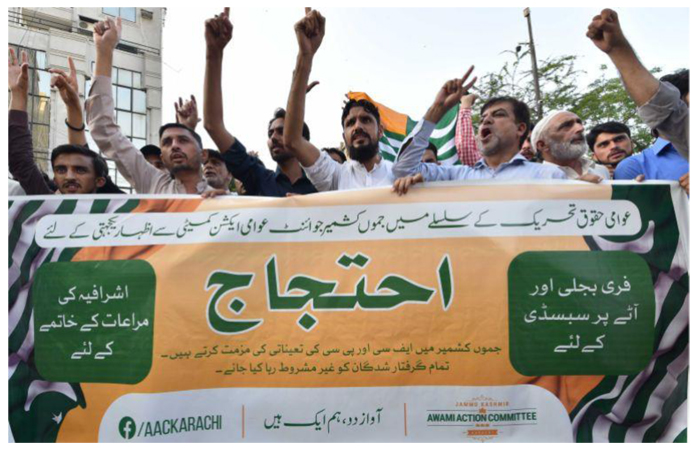
Despite sustained political pressure and repeated agitation by pressure groups such as the Joint Awami Action Committee (JAAC), Government of Azad Jammu and Kashmir (AJK) delivered tangible development outcomes in 2025, reinforcing public trust and institutional credibility. From remote mountainous settlements to urban centers, a series of people-centric projects transformed access to healthcare, education, water and connectivity underscoring a governance model focused on service delivery rather than confrontation.
Joint Awami Action Committee (JAAC): Rhetoric and Chaos
Throughout 2025, JAAC intensified its propaganda campaign particularly on social media aimed at discrediting state institutions and undermining public confidence.

Yet the continuity of development projects and their visible benefits blunted these efforts. Far from derailing governance, government’s delivery-focused approach demonstrated that sustained welfare outcomes are the most effective rebuttal to agitation-driven politics.
n JAAC Rhetoric Dealt with Performance:
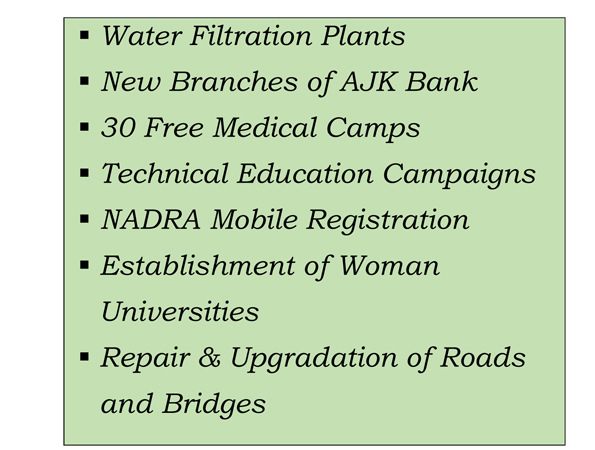
While JAAC intensified its criticism before and after official disclosures, often amplifying rhetoric through social media campaigns, the continuity of development projects and visible public benefits gradually diluted the credibility of agitation-driven narratives.
n Transparency and Dialogue:
The AJK Prime Minister’s detailed press briefing on progress made against JAAC’s charter of institutional demands underscored transparency and accountability, clarifying what had been completed, what was underway, and what required lawful sequencing.
n Smooth Transition and Constructive Engagement Despite a limited tenure, Prime Minister Faisal Rathore adopted a pragmatic and conciliatory approach, reaffirming the government’s commitment to meeting agreed demands with JAAC through constitutional, legal and procedural channels to ensure sustainability and avoid future governance complications.
Final Word: Stability, Resilience and Prosperity
For Kashmiri youth and the wider public, the year 2025 offered a clear lesson that despite constraints, protests and polarized narratives, state remained engaged in improving the quality of life. The development surge in AJK not only marked a policy success but also reaffirmed a broader principal that stability, cooperation and institutional continuity are prerequisites for prosperity.
Successful accomplishment of various development projects is strong evidence that AJK government continued steady journey on the path of welfare during 2025. Contrary to this public centric approach; IIOJK is under constant state sponsored oppression and deprived of fundamental human rights. In this scenario, governance approach in AJK provides a logical comparison with IIOJK underscoring the plight of Kashmiri masses suffering the worst oppression under BJP regime.