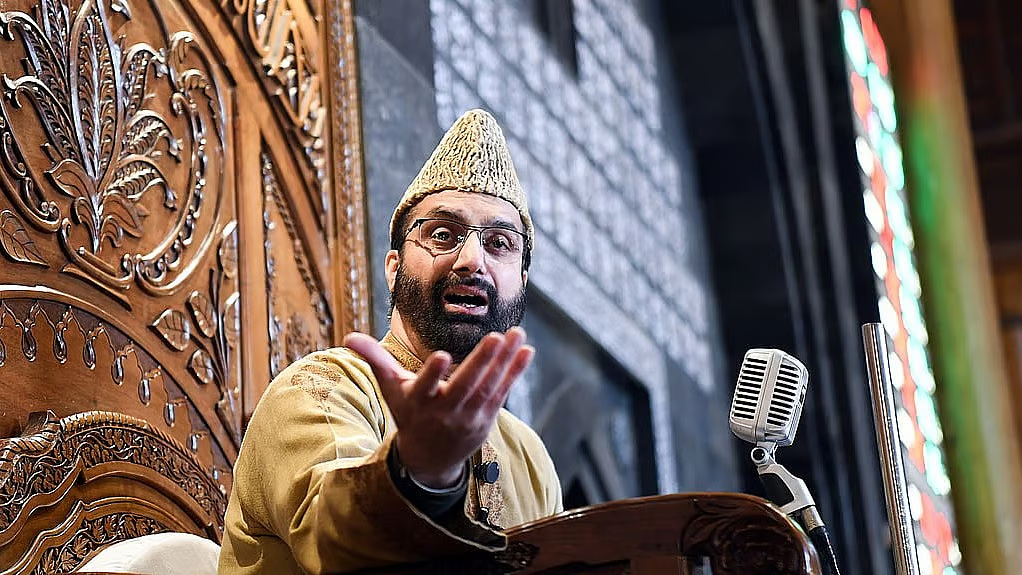
The long-running conflict in India-held Kashmir remains unresolved and volatile, despite major political changes introduced in 2019. This assessment was made by Mirwaiz Umar Farooq, the region’s chief cleric, in a statement marking the first Friday of the new year.
Mirwaiz said that while authorities project calm, the underlying reality is one of uncertainty and suppressed tension. He argued that enforced silence is often mistaken for acceptance, even as trust between Kashmiris and New Delhi continues to erode.
Read More: UN sounds alarm over human rights crisis in Kashmir
The Hurriyat leader said he was once again barred from delivering Friday prayers at Srinagar’s historic Jama Masjid. He described such restrictions as symbolic of a wider clampdown on public expression and political dissent in the region.
According to Mirwaiz, Kashmiris face a growing sense of hopelessness and an existential crisis. He pointed to fears of demographic change following the revocation of constitutional protections, the downgrading of the region’s status, and alterations to laws governing residency and land.
I meet you on the first Friday of the year not in Jama Masjid, as the Mirwaiz should, but on social media, as I have once again been put under arrest!
As another year begins and we look forward to it, painful memories of 2025 stay with us.
It was a year marked by tragedy and… pic.twitter.com/3ZmMq7P0sX— Mirwaiz Umar Farooq (@MirwaizKashmir) January 2, 2026
Reflecting on his past engagement with Indian leaders, Mirwaiz reiterated his commitment to dialogue as the only sustainable path to peace. He recalled discussions with former prime ministers Atal Bihari Vajpayee and Manmohan Singh, saying his approach remains rooted in reconciliation and non-violence.
He stressed that meaningful peace is still possible if there is genuine willingness to engage in the spirit of humanity and democracy. Kashmiris, he said, remain hopeful despite repeated setbacks and prolonged uncertainty.
Mirwaiz also referred to the trauma of 2025, describing it as a year marked by tragedy and fear. He cited the Pahalgam attack and a subsequent India–Pakistan conflict as reminders of how fragile stability in the region remains.
Read More: Pakistan reaffirms support for Kashmiris’ struggle six years on
He warned that dissent is increasingly criminalised, with limited space for political activity or independent media. With many leaders detained or restricted, Mirwaiz said social media has become one of the few remaining channels for communication.
Overall, his statement underscored that lasting peace in Kashmir will require dialogue, trust-building, and respect for fundamental freedoms.