
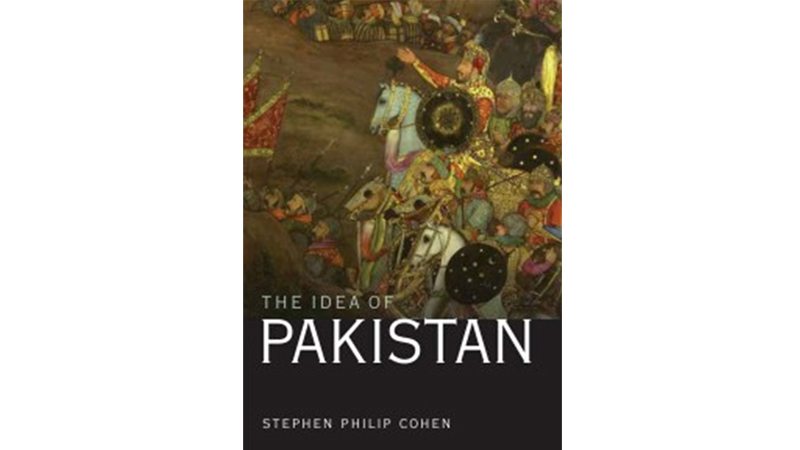
Cohen is America’s leading expert on South Asia. What he says in this book, which came out in 2004, is still relevant to the quandary facing Pakistan today.
Stating that early on Pakistan fell into the grip of an oligarchy comprising the army, the civil service, and the feudal lords, Cohen reminds us that Aristotle regarded oligarchy as the evil twin of aristocracy.
While Jinnah’s vision for Pakistan was that of a secular state, Iqbal’s vision was suffused with religious overtones. Over time, the tension between these two visions was exploited by various groups to push their own agenda.
Governor-General Ghulam Muhammad, a former civil servant, deposed the democratically-elected prime minister in 1953, striking the first of many mortal blows on democracy. He acted in connivance with the army chief General Ayub Khan. The US looked the other way, anxious to enlist Pakistan into the Cold War.
In 1954, the US provided Pakistan hardware and munitions to raise five-and-a-half army divisions and ten air force squadrons. This strengthened the position of the army-dominated military in the political establishment, and led to Ayub’s coup in 1958. Three more coups would occur as history unfolded.
Cohen presents three conflicting visions for the future of Pakistan: a state for the Muslims of South Asia, an Islamic state, and a democratic state.
The first vision fell apart in 1971 with the secession of East Pakistan. At partition in 1947, Pakistan accounted for two-thirds of the Muslims in South Asia. Now it accounts for only one-thirds, negating the main tenet of the two-nation theory.
Of course, this has not bothered the ideologues from calling for a plebiscite in Kashmir. Cohen rightfully says that the relentless pursuit of Kashmir has done more damage to Pakistan than any other single issue. Elsewhere, he has argued that Kashmir is just a symptom of a bigger problem between the two siblings.
Over time, “Pakistan has adapted to changing strategic circumstances,” Cohen observes, “by ‘renting’ itself out to powerful states,” such as the US, Saudi Arabia and now China. This strategy has not yielded any clear benefits to Pakistan
Recognising the disparity in conventional forces, Pakistan has adopted the strategy of waging a covert war in Kashmir, in addition to building nuclear weapons. It has armed, trained and funded guerillas that operate in Kashmir as ‘freedom fighters.’
Since the Afghan-Soviet war ended in 1989, these groups have embraced the use of terror for political gains and have even attacked targets in India. Cohen traces their terrorist ideology to Maudoodi’s writings, but this appears to be a weak inference since the latter never supported terrorism.
The second vision is that of an Islamic state. There is no unique interpretation of an Islamic state, since there are numerous sects and sub-sects within the Islamic faith. The pursuit of this vision is fraught with danger since any brand of Islam that comes into power would seek to impose itself over the others.
The third vision is that of a democratic state. Such a state would provide civil and human rights to the citizens. A democratically-elected government would determine national security strategy and defense policy. The army would not determine who would be elected to public office. That would appear to be the ideal end-state. But it is doubtful whether the Pakistani military with its oversized political agenda will ever let this vision come to pass.
Cohen rightfully critiques militarism and describes how it has harmed national security. The army, at 600,000, is 50 percent greater in size than it was during the 1971 war, when half of the country was lost. By diverting resources from social, political and economic development, it has compromised national security, a fact acknowledged by the Abbottabad Commission.
Ironically, the West has often supported militarism in Pakistan. Samuel Huntington of Harvard called Field Marshal Ayub Khan a Solon after the great Athenian lawgiver. Nixon praised General Yahya for giving him the opening to China. Reagan and Thatcher praised General Zia for being a bulwark of freedom against the USSR. Bush praised General Musharraf for his role in the war on terror.
Over time, “Pakistan has adapted to changing strategic circumstances,” Cohen observes, “by ‘renting’ itself out to powerful states,” such as the US, Saudi Arabia and now China. This strategy has not yielded any clear benefits to Pakistan.
Cohen presents six scenarios of the future: (1) continuation of the status quo, which involves rule by the oligarchy, now known as the Establishment, (2) liberal, secular democracy, (3) soft authoritarianism, (4) an Islamist state, (5) divided Pakistan and (6) postwar Pakistan.
These scenarios, while intuitively plausible, represent Cohen’s personal opinions. They lack the rigor that would have come from using cross-impact matrices of driving factors or a Delphi process involving multiple experts. He also seems to assign probabilities to the scenarios but the methodology is unclear.
He notes that American policy toward Pakistan has always given short-term gains priority over long-term concerns. This is no longer feasible, since ignoring the long term could have grave consequences.
While discussing the ebb and flow of the tide in American-Pakistani ties, Cohen does not explore the reasons why the tide has always been at a flood when a Republican administration has been in power in the White House and a military dictatorship in Islamabad and at ebb otherwise.
Currently, terrorism has zoomed to the top of the American agenda but it needs to be given a long- term preventive quality, not just a short-term military quality. He says the US should incent the government of Pakistan to increase the share of its expenditures that go for education, especially primary education, by reducing military aid if a minimum amount is not spent on education.
In Cohen’s view, the army remains the biggest threat to democracy in Pakistan, not corrupt politicians. Elsewhere, he has called it the largest political party. Even when it is not in power, it has unlimited access to the government’s budgetary and foreign exchange resources and dominates the nation’s foreign policy. These points are amplified in Aqil Shah’s book, Army and Democracy, which is also a great read.
The Idea of Pakistan covers a lot of ground. However, by the time one gets to the end, many questions remain unanswered. For example, Cohen says the Pakistani army is long on memory and short on foresight, but he does not discuss why that is the case or whether it will ever change. In addition, by presenting a scenario where the oligarchy continues to rule as the most probable scenario, he seems to be endorsing Pakistan’s recidivist militarism. He says it is improbable that liberal democracy will take hold in Pakistan. Just a couple of decades ago, the same had been said of Latin American and Eastern Europe where democracy is now widespread.
The book’s implicit hypothesis is that Pakistan’s insecurities have led to military rule. But why is that not true of India, since it has security problems with Pakistan and China, and has to contend with numerous separatist movements?
Cohen does not rely on surveys or polls to enrich his analysis, nor does he provide a cross-country comparison. Despite all these limitations, the book is a classic and a must-read.
The writer has written “Rethinking the National Security of Pakistan.” He can be reached at [email protected]
Published in Daily Times, November 19th 2017.