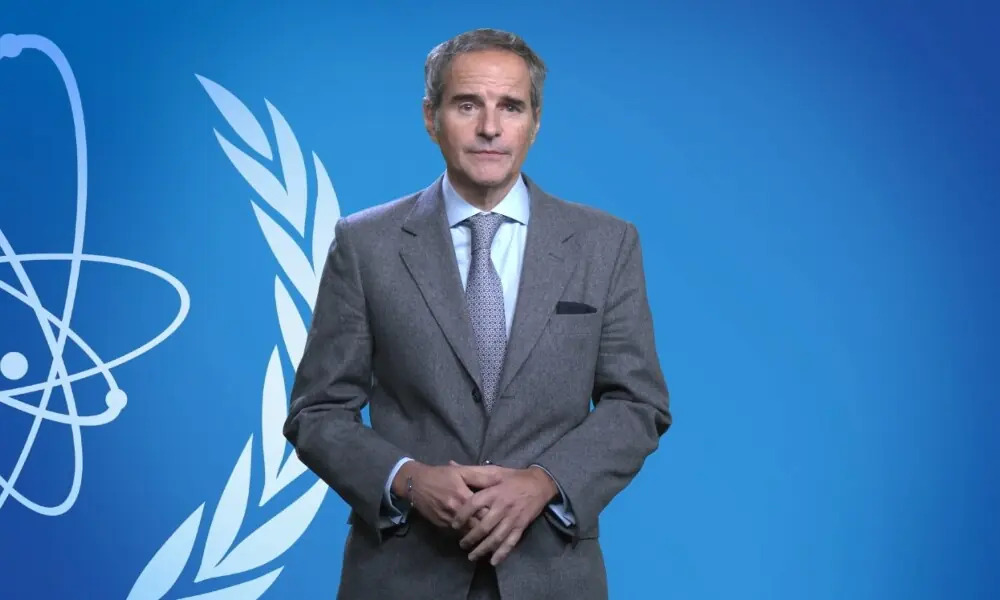
International Atomic Energy Agency (IAEA) Director General Rafael Mariano Grossi has praised Pakistan’s cancer-fighting efforts. He highlighted the country’s 21 cancer hospitals and trained medical professionals. Grossi also emphasized the importance of Pakistan’s partnership in the IAEA’s global #RaysOfHope initiative.
Grossi noted that over 100,000 people die of cancer annually in Pakistan, while global deaths have exceeded 10 million. He explained that the IAEA is providing radiotherapy machines, research, training, and education worldwide. He called Pakistan’s progress in cancer care “steady and commendable,” reflecting strong government commitment.
Read more: Iran officially ends Cairo nuclear deal with IAEA
The IAEA chief also lauded the Pakistan Atomic Energy Commission (PAEC) for establishing modern oncology institutes. He praised the training of professionals in nuclear medicine, radiotherapy, and chemotherapy services. Grossi added that these efforts are helping widen access to life-saving diagnostic and treatment facilities.
IAEA Director General Rafael Mariano Grossi commends Pakistan’s efforts to combat cancer through the Pakistan Atomic Energy Commission, highlighting its nationwide network of 21 cancer hospitals and trained professionals.
Pakistan remains committed to strengthening its…
— Ministry of Foreign Affairs – Pakistan (@ForeignOfficePk) December 24, 2025
During his visit, Grossi met Prime Minister Shehbaz Sharif to discuss expanding peaceful nuclear cooperation. He reaffirmed IAEA’s support for Pakistan’s civil nuclear energy program. Grossi specifically mentioned progress on the Chashma Nuclear Power Plant Unit-5 (C-5) as an example of Pakistan’s advancement.
Read more: Iran halts IAEA cooperation amid renewed UN sanctions
The IAEA chief shared his appreciation on social media after meeting PAEC Chairman Dr. Raja Ali Raza Anwar. He emphasized Pakistan’s steady growth in nuclear technology for medicine and energy. Moving forward, Pakistan aims to further enhance cancer care and civil nuclear capacity with IAEA collaboration.