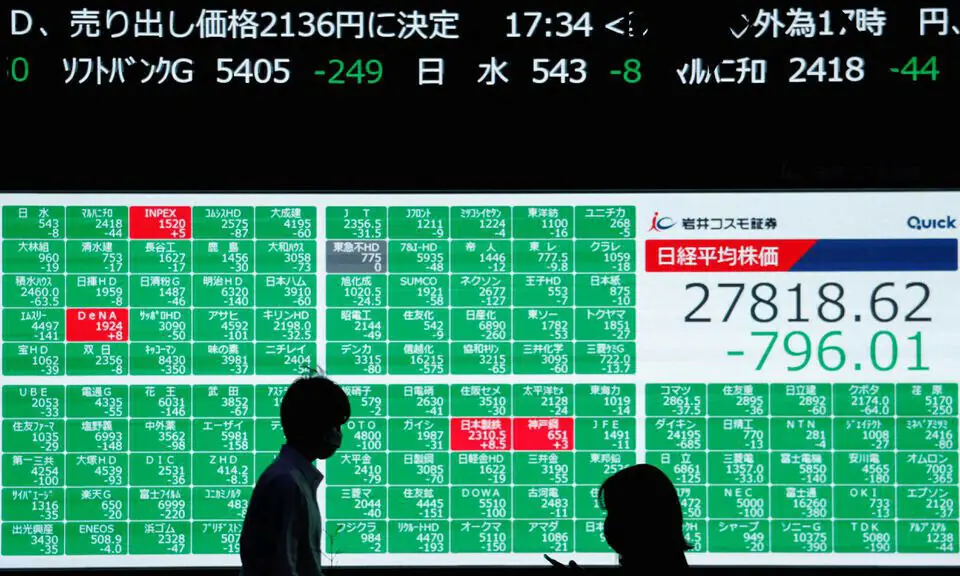
Global markets are showing early signs of potential disruption across Japan, the United States, and Europe, with implications for currencies, policy, and investor flows in the months ahead. Analysts say these shifts, while subtle, could have significant ripple effects.
Read More: Global markets disrupted after CME outage
In Japan, the low-yield environment has made the yen central to global liquidity. Investors borrowing in yen and investing elsewhere could face sudden market stress if the Bank of Japan hints at tightening. Japanese institutions have already been selling U.S.
Treasury bills, a trend that could accelerate as carry trades unwind. Meanwhile, Japan is opening to foreign capital, encouraging investment in artificial intelligence, defence, and advanced manufacturing, potentially adding further volatility to the yen.
In the United States, the Federal Reserve recently cut interest rates by 25 basis points, but political pressure and questions about its independence are creating uncertainty. Markets are reacting not just to economic data but to the possibility that the Fed may become more closely aligned with White House priorities. Disinflation and a softening labor market are progressing, yet investor confidence hinges on the perceived autonomy of monetary policy.
Europe is also facing challenges. The U.S. National Security Strategy has highlighted perceived weaknesses in European governments, altering the trans-Atlantic dynamic. Investors may now factor in a longer-term political risk premium, complicating monetary policy efforts by the European Central Bank.
Regionally, Pakistan’s rupee is supported by a new IMF facility, keeping reserves above $20 billion, while the Indian rupee faces pressure from structural trade and oil market dynamics. The British pound sees temporary rallies, but these are tempered by political uncertainty and fragile gilt markets.
Read More: Global market demands ethical business practices: IOE head
Overall, traders and policymakers are closely watching these subtle shifts, which could reshape global liquidity, cross-asset flows, and currency valuations in the coming months.