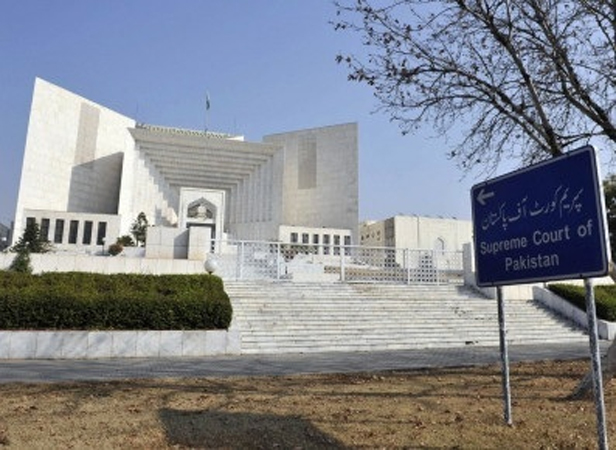
 The Supreme Court of Pakistan has ruled that compelling an individual to undergo a DNA test is a clear violation of fundamental rights, declaring that such an order infringes upon personal dignity and cannot be made part of the legal process.
In a significant judgment, the apex court set aside the directives of the Lahore High Court and the Special Judge Anti-Corruption Pakpattan, which had required a citizen, Khalid Hameed, to undergo a compulsory DNA test. The Court held that forcing a person to take a DNA test in matters such as paternity disputes or alleged tampering with documents constitutes a blatant violation of fundamental rights.
According to the approved written judgment authored by Justice Muhammad Hashim Khan Kakar, DNA testing is a highly sensitive, private procedure and can only be mandated in specific criminal cases-particularly those involving rape or sexual offences-where the law explicitly requires it. The Court observed that no such legal ground existed in the present case.
The judgment further noted that the private complaint filed by the petitioner was originally related to allegations of forgery and corruption. Questions of paternity or lineage were not directly connected with the case. The Supreme Court clarified that crimes such as forgery must be proven through evidence and documentary record, not through DNA testing.
Citing Articles 9 and 14 of the Constitution, the Court reiterated that personal liberty and privacy are fundamental rights of every citizen. Forcing an individual into a medical procedure without consent is unlawful, malicious, and contrary to human dignity. The judgment added that raising unnecessary doubts about a person’s paternity not only harms the individual but also causes social stigma and mental anguish for the mother and the entire family.
The Supreme Court emphasized that an order compelling a DNA test amounts to a violation of “personal dignity” and cannot be incorporated into legal proceedings. The Court noted that it has repeatedly stressed the importance of respecting citizens’ private lives in previous rulings.
The Supreme Court directed the Special Judge Anti-Corruption Pakpattan to proceed with the case strictly in accordance with the law, without the requirement of a DNA test.
Meanwhile, Supreme Court has acquitted Amjad Ali, who had been serving a life sentence in a murder case, after converting his jail petition into an appeal. The apex court ruled that the prosecution failed to prove the charges against the accused beyond reasonable doubt and noted several inconsistencies and doubts in the case record that could not be overlooked. According to the judgment authored by Justice Irfan Saadat Khan, with Justice Naeem Akhtar Afghan and Justice Malik Shahzad Ahmad Khan on the bench, the Court found the prosecution’s case unreliable.
Amjad Ali had originally been sentenced to death by the trial court, a sentence later converted into life imprisonment by the Lahore High Court. He was accused of killing Ashfaq Ali, the husband of Hamia Dina Bibi, in 2011 by striking him with the butt of a rifle. The Supreme Court highlighted a number of key deficiencies in the evidence. The incident occurred at night, yet the FIR, eyewitness statements, and site plan contained no mention of any source of light, making identification in the dark doubtful. While the FIR stated that a single blow was inflicted, the post-mortem report recorded two injuries. Eyewitnesses later altered their statements to align with the medical report, which the Court deemed unreliable.
A crucial witness – the accused’s wife, Tasbiha Bibi – was never produced in court, despite having a central role in the events. The Court held that withholding the best possible evidence warranted drawing an adverse inference against the prosecution. It was also noted that both parties had a history of enmity; witnesses admitted that Amjad Ali had previously allegedly abducted the complainant’s other daughter, Nabeha Nadia, indicating longstanding tension. Given this background, the Court said it was improbable that the accused would visit the complainant’s home at night simply to take his wife. The recovery of the rifle was also declared inconsequential, as no bloodstains were reported on the weapon, making the recovery unreliable.
The Supreme Court concluded that the prosecution’s case was riddled with doubts and contradictions. Even a single reasonable doubt, it said, must benefit the accused. Granting the benefit of doubt, the Court acquitted Amjad Ali and ordered his immediate release, provided he is not required in any other case.