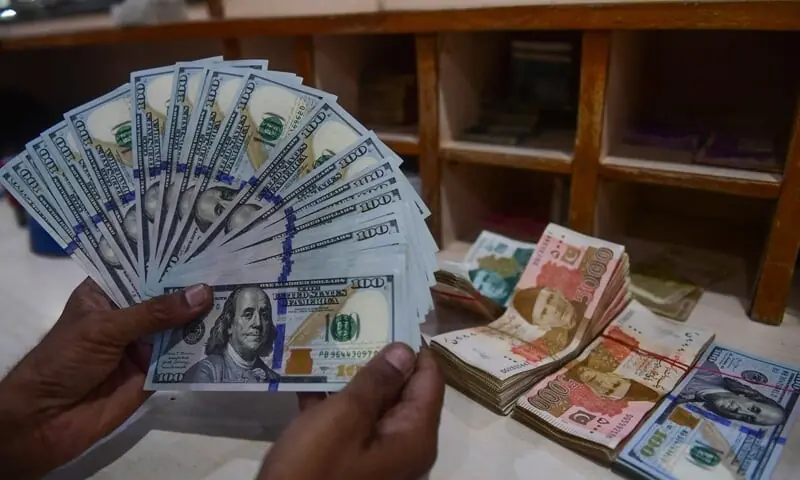
ISLAMABAD: Pakistan’s current account deficit has widened sharply in recent months, driven by surging imports and stagnant exports, raising concerns over the sustainability of the country’s external position. The growing imbalance is exerting pressure on the rupee, even as robust remittances continue to keep foreign exchange markets liquid.
The State Bank of Pakistan (SBP) has tightened restrictions on individual dollar purchases to stabilize the currency. However, exporters argue that a managed exchange rate has weakened their international competitiveness, and a gradual devaluation is necessary to protect market share.
Read More: Pakistan’s current account deficit widens over 250%
The rupee’s overvaluation risk is further highlighted by India’s recent currency depreciation, which has sharpened regional competitiveness concerns. Data from the first four months of the current financial year shows the current account deficit at $733 million, nearly 3.5 times higher than last year’s $206 million.
Imports have risen 10 percent to $24.92 billion, while exports increased by just 4.8 percent to $13.66 billion, expanding the trade deficit to $11.26 billion. Despite a 9.3 percent rise in remittances to $12.96 billion, the deficit trend continues to intensify.
Analysts note that Pakistan’s structural weaknesses, including heavy import reliance and a weak export base, underpin the chronic deficit. Textile exporters stress that aligning the exchange rate with industrial competitiveness and adopting a productivity-led, export-oriented growth model are crucial for sustainable improvement. They warn that artificial management of the rupee risks eroding export performance and causing future economic instability.
Read More: Current account posts $112 million deficit in Oct
Policy options remain limited: interest rate cuts and lower energy costs could help support exporters, while import curbs may face public backlash. Many economists argue that unless the rupee adjusts gradually, pressure on exports and the overall economy will continue, highlighting the delicate balance between stabilizing the currency and maintaining export competitiveness.