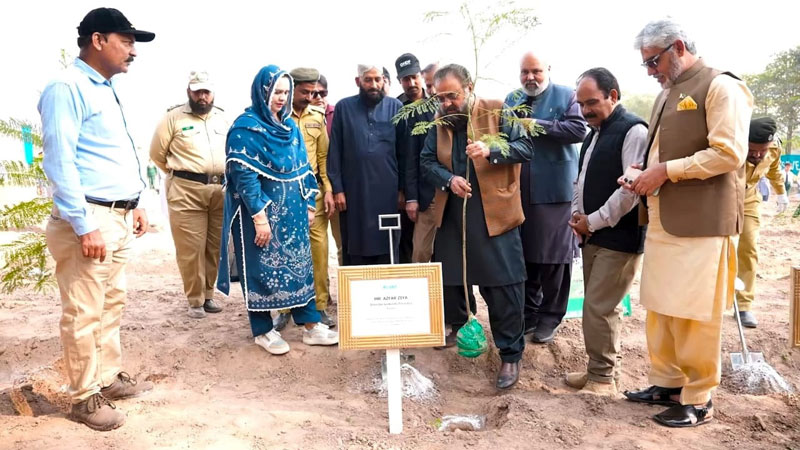
 In an extraordinary triumph for climate resilience and environmental governance, the Punjab Forest Department has officially achieved 102% of the Monsoon Tree Plantation Campaign (MTPC) 2025 target, marking the highest monsoon plantation achievement in the province’s recorded history. This unprecedented success comes despite widespread floods in riverine and Bela forests-conditions under which such a feat was once thought impossible.
The campaign, carried out under the Green Vision of Chief Minister Punjab, Ms. Maryam Nawaz Sharif, and the dynamic leadership of the Senior Minister Punjab, Marriyum Aurangzeb has set a national benchmark of efficiency, climate commitment, and public-sector excellence.
A Historic Achievement in Pakistan’s Forestry Sector
With a target of 20.719 million plants, the Punjab Forest Department surpassed expectations by successfully planting 21.074 million saplings, achieving a remarkable 102% completion rate – the first time in the history of Punjab that such a massive monsoon plantation target has been exceeded.
This monumental achievement spans:
21,667 acres of afforestation
1380 km of linear plantation
Major contributions through the Chief Minister Plant for Pakistan Initiative, desert ecosystem restoration, woodlots, assisted natural regeneration, and plantations along canals, highways, and public lands.
Leadership That Transformed Momentum into a Movement
Chief Minister Maryam Nawaz Sharif’s clear and uncompromising vision for a greener, climate-secure Punjab served as the backbone of the campaign. Her direction emphasized:
Expansion of green cover
Climate resilience for vulnerable communities
Restoration of riverine and desert ecosystems
Public engagement and local stewardship
Under the Senior Minister’s strategic guidance, the department operated with military-grade precision – mobilizing field formations, community networks, volunteers, and digital monitoring tools.
Their leadership didn’t just oversee a plantation drive – they inspired a climate movement across the province.
Battling Floods, Reviving Forests: A Story of Grit
One of the most compelling elements of this year’s success is the department’s resilience in the face of large-scale monsoon floods that damaged riverine and Bela forest zones. These areas traditionally contribute some of the largest numbers to monsoon plantations, but even reduced accessibility could not dampen the determination of Punjab’s forest teams.
Despite difficult terrain, washed-out tracks, and extended river flooding:
Field teams still planted hundreds of thousands of saplings in Bela forests
Private-land woodlots overshot expectations with millions of plants
This year’s performance has proven that Punjab’s forest workforce is capable of delivering national-scale climate action under any circumstances.
Largest Monsoon Target in Provincial History
This was not a routine campaign.
It was the biggest monsoon plantation target ever assigned to any provincial forest department in Pakistan’s history – and Punjab didn’t just meet it; Punjab exceeded it.
Such performance has elevated Pakistan’s visibility in global climate forums, particularly ahead of COP30, where Punjab is expected to present its success as a model for sub-national climate action.
In addition to these landmark efforts-achieved entirely through Punjab’s own ADP allocations without any federal funding, the province is now set to deliver the biggest plantation milestone in its Punjab Province history, completing a record 50 million saplings during 2025-26, including 30 million plants to be planted during the Spring Tree Plantation Campaign 2026.