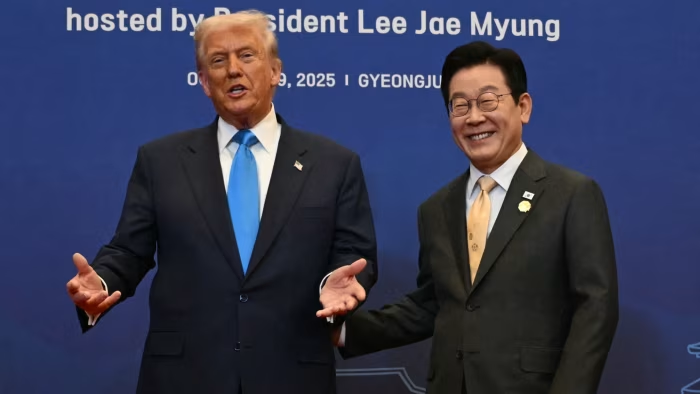
The United States and South Korea unveiled a major trade agreement on Friday that includes a $150 billion Korean investment in the U.S. shipbuilding sector and another $200 billion for American industrial projects. The deal follows an October meeting between Presidents Lee Jae Myung and Donald Trump, where both leaders agreed to reduce U.S. import duties on Korean goods to 15% from 25%.
South Korean President Lee called the agreement a turning point for economic cooperation, saying it resolves months of uncertainty caused by U.S. tariffs. He credited the final breakthrough to what he described as a rational decision by the U.S. administration, which helped secure a meaningful and balanced outcome for both sides.
Read more : Truck rams through South Korean market, kills two and injures 18
Additionally, officials from both countries signed a 27-point memorandum outlining timelines for project approvals, with Seoul required to transfer funds within 45 days of each U.S. presidential decision. This announcement ends more than three months of intense negotiations, during which South Korea feared damaging tariffs on vital exports such as autos and semiconductors.
Moreover, the pact includes major security components, with Washington approving South Korea’s plan to build nuclear-powered submarines and pledging to help source fuel. The agreement also opens new cooperation in shipbuilding, artificial intelligence and nuclear energy, marking a major expansion of Seoul’s strategic role in U.S. defence and industrial rebuilding.
In financial terms, Washington accepted South Korea’s request to spread its $200 billion cash investment over annual installments capped at $20 billion to protect the stability of the won. Both sides agreed that investments must not create market volatility and allowed Seoul to seek adjustments if any instability emerges.
Read more : Trump strikes $350B trade deal with South Korea
The deal further promises improved tariff terms for autos and ensures semiconductor treatment equal to or better than key competitors. Analysts say it is too early to judge whether Seoul secured a stronger outcome than Europe or Japan, but they note the agreement strengthens South Korea’s security capabilities while raising its financial obligations.