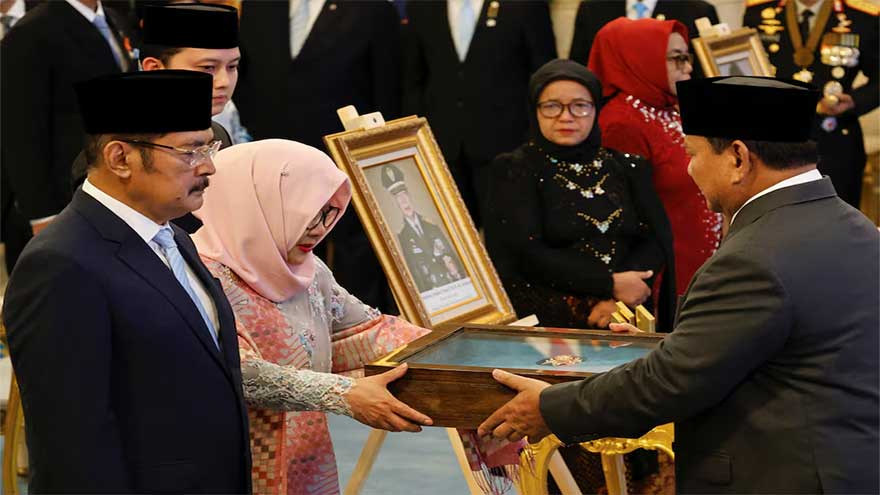
JAKARTA – Indonesia has awarded the title of national hero to former President Suharto, who ruled the country for three decades before being forced from office in 1998 amid violent protests and accusations of corruption, nepotism, and human rights abuses. The ceremony, overseen by President Prabowo Subianto, Suharto’s former son-in-law, sparked protests from pro-democracy activists and families of those affected by his authoritarian rule.
During the ceremony, Prabowo presented the honor to Suharto’s daughter and son, describing him as a prominent figure from Central Java and a hero of Indonesia’s independence struggle. Suharto, a former military officer, assumed the presidency in 1967 after taking power from the country’s first leader, Sukarno, and led Indonesia through decades of rapid economic growth, only to see much of his legacy unravel during the 1997-98 Asian financial crisis.
Read More: Indonesia probes mass poisoning under free meal program
Activists criticized the move, calling it historical revisionism. Some argued that Suharto’s violent suppression of dissent, military domination in East Timor, and alleged corruption should disqualify him from such recognition. Protesters warned that honoring Suharto could embolden authoritarian tendencies under President Prabowo, who previously served under Suharto and remains linked to his political network.
Supporters, including Suharto’s family and government officials, defended the decision, noting that all recipients met the formal criteria for the award. Culture Minister Fadli Zon stated that the government conducted research and found Suharto’s contributions significant, despite the controversies surrounding his regime.
Read More: Indonesia’s mount Lewotobi erupts, ash rises 10 kilometers high
The decision has reignited debate in Indonesia over how the nation remembers its past, with many citizens and human rights groups continuing to demand accountability for mass killings and disappearances during Suharto’s rule. Some historians estimate around 500,000 people were killed in the 1965 purges, yet the country has never officially investigated these events.