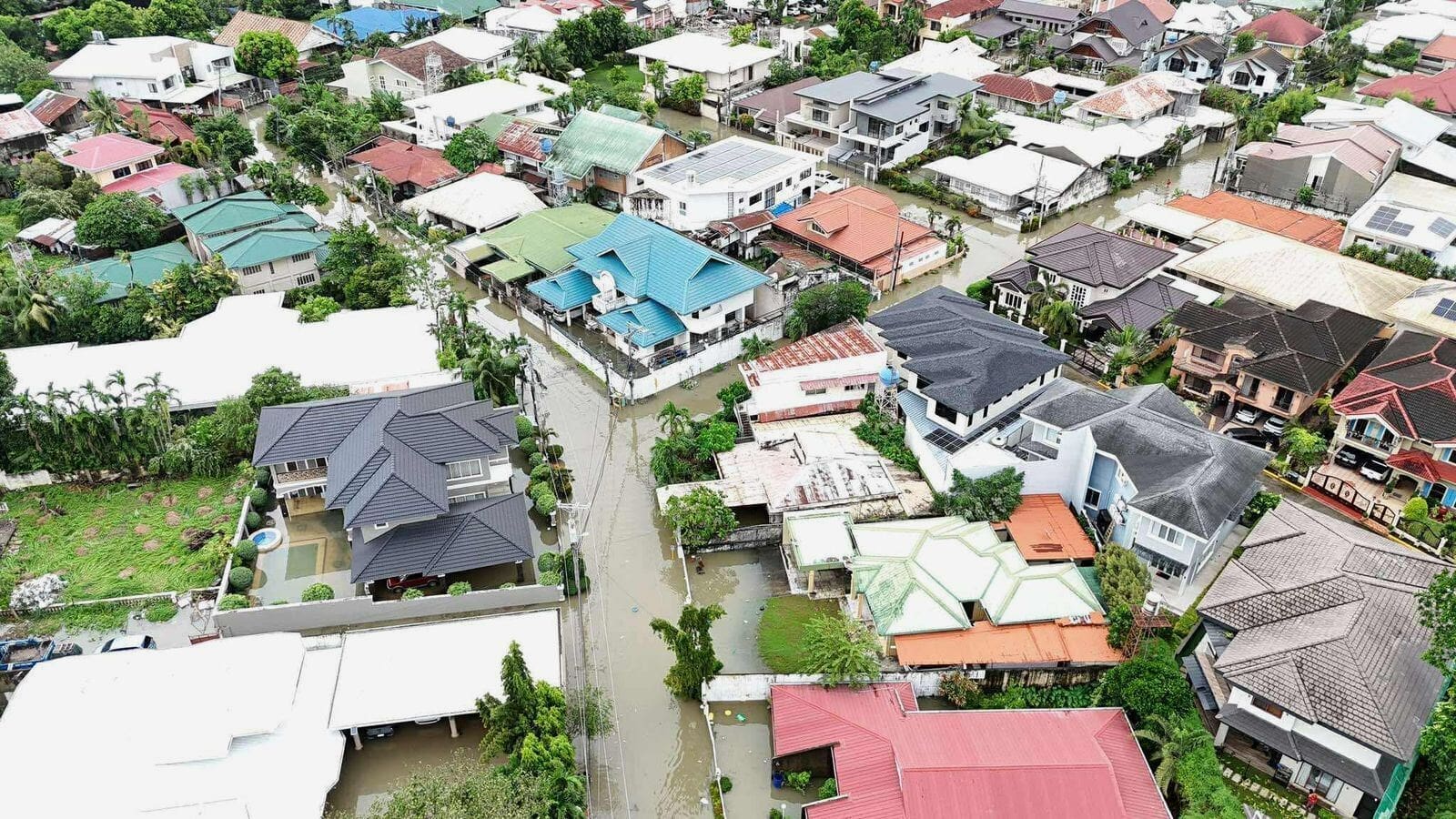
At least four people have died and hundreds remain trapped on rooftops as Typhoon Kalmaegi unleashed heavy rainfall and widespread flooding across the central Philippines. The powerful storm, locally known as Tino, inundated major areas of the Visayas region, particularly Cebu province, where three fatalities have been confirmed. In the neighbouring province of Bohol, one person died after being struck by a falling tree, while another drowning was reported in Southern Leyte as rescue efforts struggled against strong currents and debris-filled waters.
Cebu Governor Pamela Baricuatro said authorities had underestimated the storm’s flooding potential, noting, “We were expecting the winds to be the dangerous part, but the water is what’s truly putting our people at risk.” She added that emergency teams were working tirelessly to reach isolated communities cut off by rising waters. In addition, the Philippine Air Force reported losing contact with a Super Huey helicopter carrying five personnel near Loreto town in Agusan del Sur. The aircraft was en route to assist in rescue operations when it disappeared, prompting a large-scale search effort.
Read more : Torrential rains submerge Central Vietnam, 11 missing and 13 dead
The Philippines Red Cross described the situation as “dire,” saying rescuers were overwhelmed by the number of calls from residents trapped by the floods. Secretary-General Gwendolyn Pang said, “We have received so many calls from people asking for rescue from their rooftops, but it’s impossible to reach them. The debris and fast-moving water have made operations extremely difficult.” Videos shared by local agencies showed cars floating through city streets and entire neighbourhoods submerged under several feet of water.
Although Typhoon Kalmaegi has slightly weakened, it continues to bring destructive winds of up to 130 kilometres per hour with gusts reaching 180 kilometres per hour. More than 387,000 people have been evacuated to shelters in schools, churches, and government buildings across affected provinces. Meanwhile, authorities have cancelled 186 domestic flights, suspended ferry services, and closed major ports to prevent further casualties. Power outages and communication breakdowns have also been reported across several central regions.
The storm is now moving westward toward Vietnam, where officials have begun preparing for its projected landfall on Thursday, November 6. The Philippines, located within the Pacific “Typhoon Belt,” experiences an average of 20 storms each year. The country has already been struggling with multiple disasters this season, including September’s Super Typhoon Ragasa and a 6.9 magnitude earthquake that hit Cebu weeks earlier. Authorities warn that climate change is likely intensifying such extreme weather events, demanding stronger infrastructure and early warning systems to protect vulnerable communities.