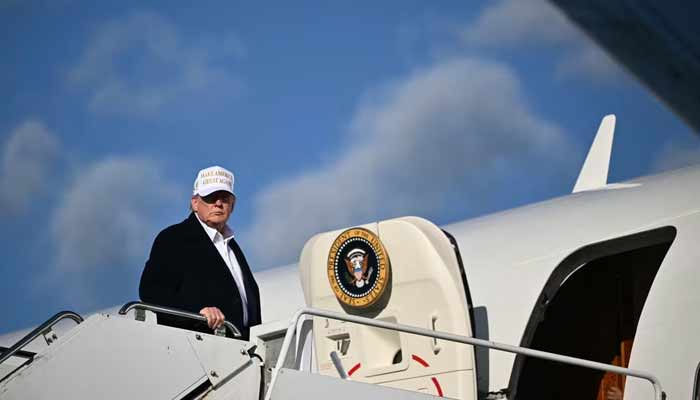
US President Donald Trump take off on a five-day trip to Asia on Friday. His aim is to secure trade, mineral, and ceasefire deals across Malaysia, Japan, and South Korea. The visit marks Trump’s first to the region during his second term. Although his longest international tour since taking office.
The trip comes amid escalating trade tensions between Washington and Beijing. With both nations imposing heavy tariffs on each other’s exports. While Trump hopes to meet Chinese President Xi Jinping in South Korea on Thursday, uncertainty looms as Beijing has yet to confirm the encounter. Officials say no major breakthroughs are expected, though a limited deal could include tariff relief, agricultural purchases, or easing restrictions on critical minerals.
Read More: White House Confirms Trump-Xi Meeting Scheduled for October 30
Trump scheduled his visit to 3 countries
Trump will first attend the ASEAN Summit in Kuala Lumpur. He may oversee a ceasefire agreement between Thailand and Cambodia; part of his broader image as a global mediator. His next stop is Japan, where he will meet newly elected Prime Minister Sanae Takaichi. His Aim is to reaffirm Tokyo’s defense investments and strategic alignment with Washington. The president will then head to Busan, South Korea. The potential meeting between Trump and Xi could shape the future trajectory of US-China relations.
.@POTUS departs for his big trip to Asia, where he’ll make stops in Malaysia, Japan, and South Korea. ✈️ pic.twitter.com/VhaSQrpFuN
— Rapid Response 47 (@RapidResponse47) October 25, 2025
Before departure, Trump told reporters he plans to raise issues such as Taiwan, China’s purchase of Russian oil, and the imprisonment of Hong Kong activist Jimmy Lai. He also downplayed speculation about meeting Canadian Prime Minister Mark Carney, saying he was “satisfied with the deal we have.”
The White House confirmed that Trump will return to Washington before the Asia-Pacific Economic Cooperation (APEC) forum begins. However, with his threats to raise tariffs on Chinese imports to 155% from November 1, analysts warn that any failure to strike an agreement could trigger another round of trade escalation between the world’s two largest economies.
Read More: Trump Accuses Xi of Using Soybeans in Trade Talks