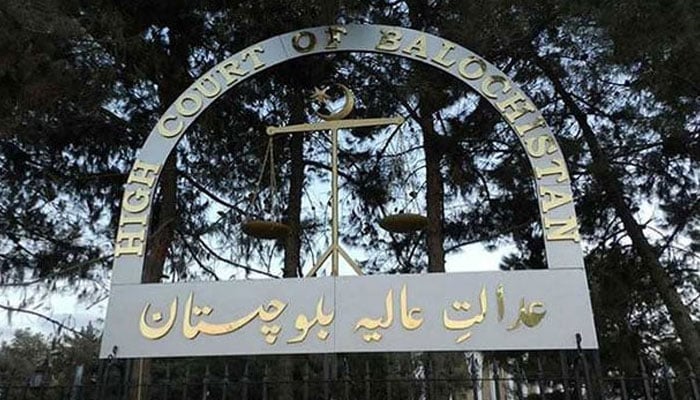
The Quetta water crisis has drawn sharp criticism from the Balochistan High Court. Judges called the shortage of clean drinking water in Hazara Town and nearby areas a serious administrative failure. The court ordered the Water and Sanitation Authority (Wasa), Public Health Engineering Department (PHE), and Quetta Electric Supply Company (Qesco) to take urgent action to solve the problem.
During the hearing, officials said several water projects were delayed because of poor funding and departmental mismanagement. They revealed that Hazara Town receives 700,000 gallons of water daily, though the system was designed for only 260 houses but now serves over 3,000 homes. Despite a Rs20 billion allocation under the Public Sector Development Programme, progress remains slow.
READ MORE:Water Crisis in Balochistan
Residents strongly disputed government claims and accused a private water mafia of controlling the supply. They said illegal water connections were being sold for up to Rs40,000, with monthly fees reaching Rs3,000. The court condemned these actions, calling them unlawful and unjust. It ordered Wasa to immediately end all illegal private contracts and resume direct water supply through public channels.
The judges also directed finance and development officials to release funds quickly and coordinate with Qesco for continuous electricity to tube-wells. They instructed authorities to design new underground reservoirs and solar-powered water systems to meet long-term needs. The court stressed that lack of coordination and negligence had worsened the Quetta water crisis.
READ MORE:Pakistan moves to uniform electricity tariffs nationwide
Justice Muhammad Kamran Khan Mulakhail reminded officials that access to safe water is a fundamental right. He warned that no delay or negligence would be tolerated and demanded a detailed progress report by November 6. The court vowed strict oversight until the Quetta water crisis is fully resolved.