On a rainy September afternoon in Karachi, Uroosa* busies herself with household chores while watching her two children play in the corridor. It looks like an ordinary scene, but for the 33-year-old mother, each laugh of her children is a reminder of a life she once tried to end.
“I thought it was the only solution,” she says softly. “I couldn’t handle the burden anymore — the children, the house, the in-laws, and the stress. It all became too much.”
Uroosa, who has been married for 10 years, speaks for the first time about the darkest chapter of her life. Marking World Suicide Prevention Month, she hopes her story will spark a conversation that moves away from stigma and toward understanding and support.
Her struggle began soon after the birth of her second child, just months after her first. What seemed like joy quickly turned to exhaustion as sleepless nights, distant family responses, and the crushing weight of domestic responsibilities pushed her into postpartum depression — a condition she didn’t even have a name for at the time.
“I didn’t share with anyone, nor did I ask for help,” she recalls. “After childbirth, I was getting care and attention, which made me feel special. But soon, even trivial things started upsetting me — remarks about the baby or my health became unbearable.”
When she tried to confide in her husband and in-laws, her feelings were dismissed. “Their response was too casual, like ‘these things are part of every woman’s life.’” With two children born in quick succession and tensions at home, Uroosa’s world began to crumble. “I had been struggling with this conflict for two years,” she admits. “At that time, the only thought on my mind was to end it once and for all.”
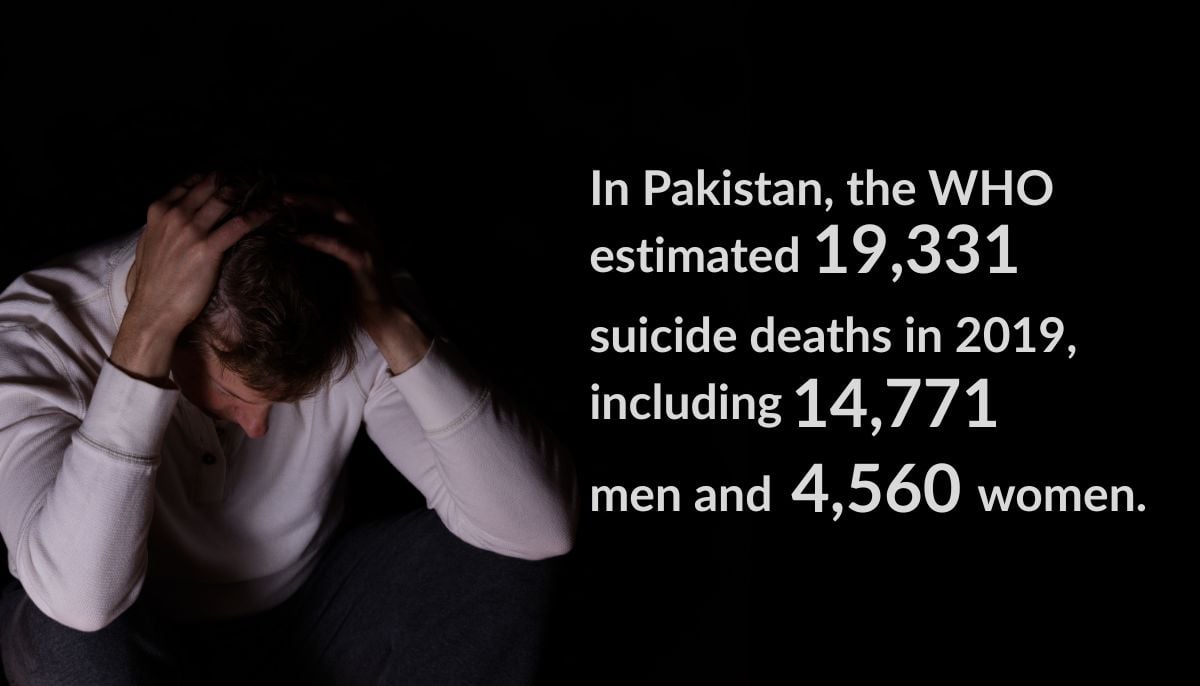
Every year, more than 700,000 people die by suicide worldwide, according to the World Health Organization. In Pakistan, the WHO estimated 19,331 suicide deaths in 2019, yet mental health conversations remain taboo. Many people suffer in silence, especially new mothers.
For Uroosa, survival came through support. After her suicide attempt, her husband became her anchor. “He passionately supported me to return to a normal life,” she says. Her parents also stepped in, looking after the children so she could take time to recover. “My husband encouraged me to take courses, and whenever I went out to refresh my mind, my mother took care of the kids.”
Uroosa’s story mirrors that of countless Pakistani women who face postpartum depression and domestic pressures without recognition or help.
Another voice in this crisis is Saira*, a 30-year-old writer and communication specialist. Once a bright, enthusiastic teenager with dreams of becoming a writer, she was forced by her father to study medicine. “Those two years of college were the darkest days of my life,” she says. “I had always excelled in school, but I simply couldn’t grasp physics and chemistry. I felt like I was drowning.”
Read More: CTD confirms Daesh network behind Peshawar suicide attack
With academic struggles compounded by domestic tensions, Saira developed severe insomnia and migraines at 21. Feeling ignored and judged, she attempted suicide. “It’s painful to recall the details,” she says with tears in her eyes. “Before I tried, I wrote a note for my mother. The writer in me, I thought, deserved at least that moment.”
Her family, fearful of police involvement, avoided hospitalisation. “I received aid at home, and that’s it — a trauma for a lifetime. Worse than the trauma was the stigma; I was forever marked as someone with ‘troubled mental health.’”
By 23, Saira’s hair had turned white, her eyesight weakened, and her insomnia never improved. Yet she slowly rebuilt her life through writing and education. “There is dawn to every night,” she says. “It wasn’t easy, but my love for writing gave me courage.” She went on to complete a master’s degree and later earned a scholarship for her MS. “My friends supported me like a lifeline during my toughest phase,” she adds. Today, she works in a leading organisation and continues to inspire others.
Experts say Uroosa and Saira’s stories reflect a nationwide crisis. Dr. Arslan Akhtar Ali, founder of Psychology Experts and a survivor himself, points out that suicide in Pakistan is shaped by social, cultural, and economic pressures. “There is no national registry to capture its true scale,” he says. “Reported cases rose from 7.3% in 2020 to 17.63% in recent years. Youth are increasingly vulnerable due to digital exposure, impatience, and distorted self-worth. Economic pressures are also a major trigger.”
He notes that gender expectations deepen the divide. “Men are expected to provide for families, while women face domestic abuse and workplace exploitation without safe outlets,” he says.
Dr. Hafsa Sheikh, a resident in internal medicine, adds that suicide prevention is not just the responsibility of medical experts but requires a cultural shift toward empathy and early action. She highlights untreated mental disorders, financial struggles, and relationship breakdowns as key risk factors. “Students face immense academic pressure, while professionals struggle with workplace stress. We must recognise these burdens as real,” she says.
Practical steps can help. Dr. Hafsa suggests safe spaces for open conversations, school and workplace counselling, and promoting coping mechanisms like meditation, exercise, and creative outlets. “Don’t be afraid to ask directly if someone has suicidal thoughts,” she says. “It gives them permission to open up.”
Dr. Arslan stresses the need for public campaigns similar to polio drives to normalise mental health discussions. “People must know that seeking help is not shameful,” he says.
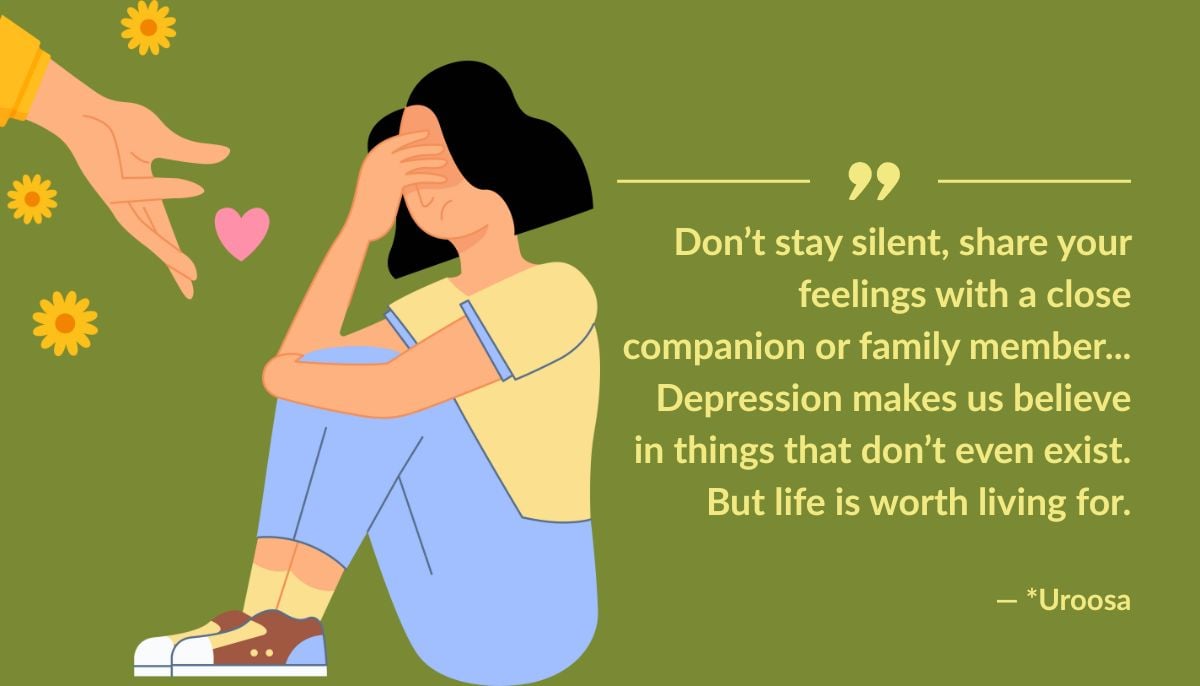
Both Uroosa and Saira now advocate for openness. “Don’t stay silent,” Uroosa tells other women. “Depression makes us believe in things that don’t even exist. But life is worth living for.”
Their stories are a reminder that suicide is not just a statistic but a lived experience. World Suicide Prevention Day is about creating space for those still struggling. “Seeking help is not weakness; it is strength,” Dr. Arslan says. “Together, we must build a culture where no one feels suicide is their only option.”