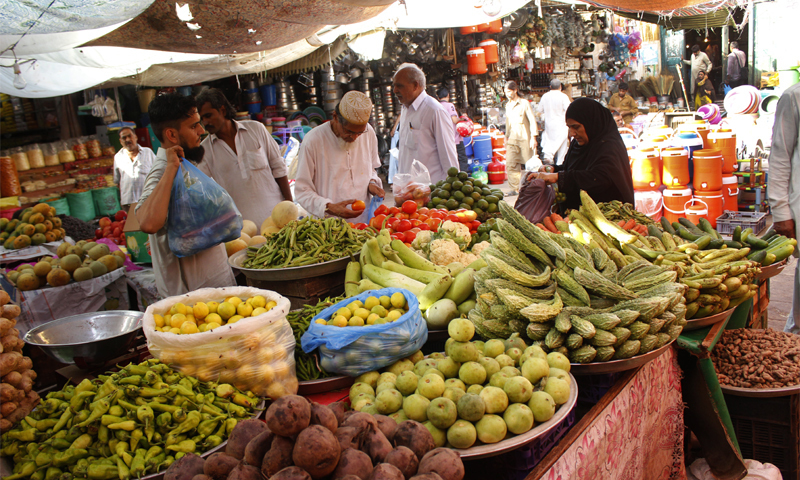
Inflation in Pakistan rose faster than expected in September, reaching 5.6 percent on an annual basis, surpassing the Finance Ministry’s projection of 3.5 to 4.5 percent for the month. The latest report issued by the Pakistan Bureau of Statistics revealed that inflation increased by 2 percent compared to August, highlighting rising pressure on households struggling to cope with higher prices.
The quarterly review also showed that average inflation during July to September stood at 4.22 percent, signaling consistent price hikes across essential goods. In contrast, inflation in August 2025 was recorded at 2.99 percent, while in September 2024 it was 6.9 percent, indicating that although the current increase is significant, it remains lower than last year’s level.
Read more : Pakistan sees inflation at 3.5–4.5% in Sept –
Breaking down the data, inflation in rural areas surged by 2.8 percent on a monthly basis in September, while urban centers recorded a 1.5 percent increase during the same period. On an annual basis, rural inflation stood at 5.8 percent compared to 5.5 percent in cities, showing that rural households are facing slightly more intense price pressures than urban populations.
The Finance Ministry had earlier expressed confidence that inflation would remain within the 3.5 to 4.5 percent range, despite challenges posed by recent floods. However, the ministry had also warned that disruptions in food supply chains caused by the floods could temporarily drive up prices, particularly in the agriculture-dependent rural sector. This warning has now materialized as prices continue to climb beyond earlier estimates.
At the same time, the ministry highlighted that overall economic activity remains stable, with encouraging signs of recovery in large-scale manufacturing. Positive trends in cement dispatches, automobile production, and related industries are expected to strengthen industrial momentum in the coming months. Yet, the persistence of inflation remains a concern for economic planners, as rising costs threaten to undermine gains made in the production sector.
Read more : Pakistan’s average inflation to rise to 6% in FY26: ADB
With inflationary pressures mounting, policymakers face the challenge of balancing economic stability with the rising cost of living. The data emphasizes the urgent need for targeted measures to address supply chain disruptions and control food inflation, ensuring relief for both rural and urban populations amid ongoing uncertainties.