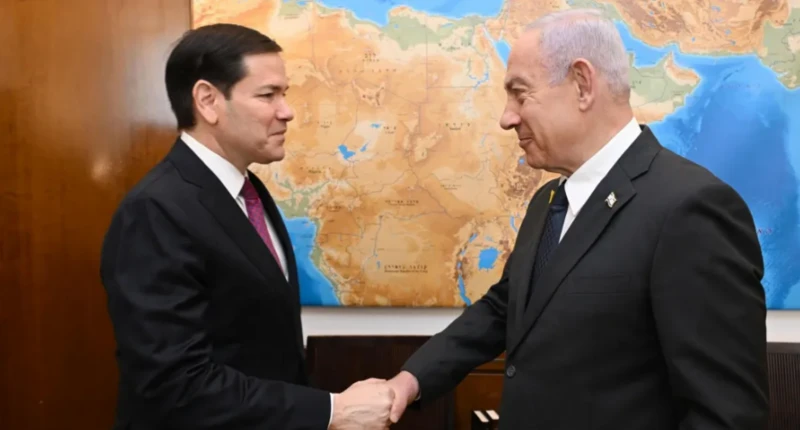
US Secretary of State Marco Rubio met Israeli Prime Minister Benjamin Netanyahu in Jerusalem amid rising tensions in the Middle East. Their discussion is expected to focus on Israel’s recent airstrikes on Qatar and plans for military operations in Gaza. The visit comes as regional outrage grows over Israel’s expanding conflict, which has now affected several neighboring countries. Israel’s actions have drawn global criticism, especially following the attack on Doha last week. Both leaders avoided questions from reporters regarding the Qatar strike.
The timing of the meeting is significant. It takes place just days after Israel bombed Doha, and as an emergency Arab-Islamic summit is underway in Qatar. The summit is being held to address the Israeli assault and its impact on regional peace. Tensions have been mounting, as Israel’s war in Gaza enters its third year. Meanwhile, Qatar continues to play a central diplomatic role, acting as a key mediator in ceasefire talks. Despite being attacked, Qatar has vowed to continue its efforts for peace.
During the visit, Rubio acknowledged US concerns over the attack on Qatar. He said both sides need to assess the next steps carefully. Netanyahu, meanwhile, claimed that US-Israel ties remain strong, comparing them to Jerusalem’s ancient stone walls. He also reaffirmed Israel’s stance on national security. While reporters pressed for comments on the Qatar bombing, both leaders sidestepped the questions.
The US has a major military base in Qatar, and its strategic partnership with Doha remains vital. Qatar’s Prime Minister, during a closed-door summit with Arab foreign ministers, urged the global community to end its double standards. He said silence over Israeli actions encourages more violence and destabilizes the region. The summit is co-hosted by the Arab League and the Organisation of Islamic Cooperation.
As the Gaza war drags on and Israeli settlements expand in the West Bank, hopes for peace grow dimmer. However, with Qatar pushing for diplomacy and the US engaging in high-level talks, there is a chance for de-escalation. For now, regional leaders are calling for stronger international pressure on Israel. The world watches closely as events in Doha and Jerusalem unfold.