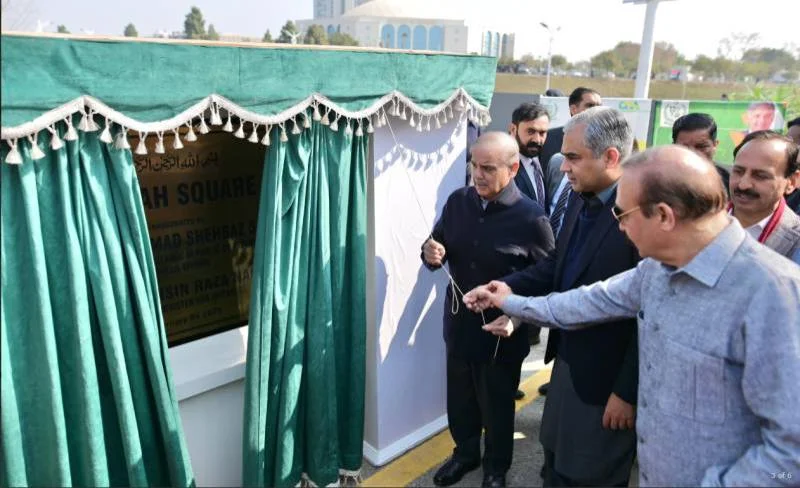
Prime Minister Shehbaz Sharif and Interior Minister Mohsin Naqvi inaugurated the stone-laying ceremony for the T-Chowk Flyover in Islamabad on Friday, marking the start of a major infrastructure project. The one-kilometer flyover aims to improve traffic flow and ease commuting for residents of Rawalpindi and surrounding areas, connecting them more efficiently to the Islamabad Expressway and other major routes.
Addressing the ceremony, PM Shehbaz Sharif described the T-Chowk Flyover as a milestone project that will significantly benefit daily commuters. He praised the efforts of Interior Minister Naqvi and the Capital Development Authority (CDA) in planning the project. The Prime Minister emphasized that quality should remain a top priority in all development projects to ensure long-term durability and effectiveness.
Furthermore, the Prime Minister announced that Pakistan will host the Shanghai Cooperation Organisation (SCO) Summit in 2027. He also revealed plans for a new rail car project aimed at facilitating travel within the twin cities of Islamabad and Rawalpindi. PM Shehbaz highlighted that these initiatives will bring convenience, reduce travel time, and support urban mobility for thousands of residents.
Interior Minister Mohsin Naqvi, speaking at the ceremony, noted that the Islamabad Expressway, completed a few months ago, was designed efficiently without acquiring additional land. He stated that the T-Chowk Flyover will complement the expressway and provide smoother travel, reducing congestion and ensuring timely access to key areas of the city.
Naqvi also assured citizens that all targets for the flyover’s completion would be met on schedule. He stressed that quality will be maintained at every stage of construction, and no compromise will be made on materials or design standards. The project is expected to set a benchmark for urban development in the twin cities.
Finally, both leaders expressed confidence that the T-Chowk Flyover will transform commuting in Islamabad and Rawalpindi. They encouraged cooperation among authorities and contractors to complete the project efficiently while prioritizing public safety, convenience, and long-term infrastructure improvement.