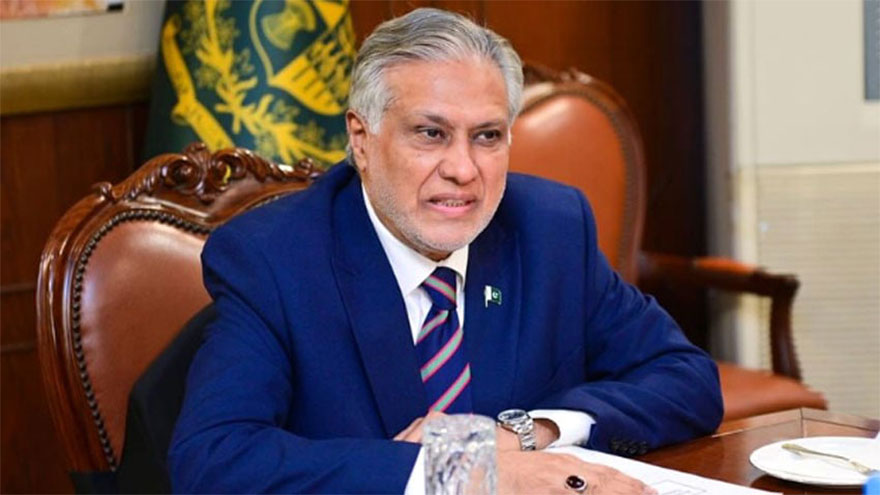
Deputy Prime Minister Ishaq Dar stated that Pakistan responded strongly to Indian aggression before India itself asked for a ceasefire. Speaking at a press conference in London, he clarified that no one asked the U.S. or any country to broker peace. He said Pakistan carried out a firm response from 4:00 am to 8:00 am on May 10. At 8:15 am, U.S. Secretary Marco Rubio called him to say India wanted a ceasefire.
Dar explained that Pakistan has no interest in war and seeks peace to focus on economic development. He told the U.S. that Pakistan’s goal is growth, not conflict. The deputy PM stressed that peace allows the country to invest in public welfare and infrastructure. He added that Pakistan only defended itself and never initiated hostility. “We are a peace-loving nation,” he said.
He warned that India cannot unilaterally suspend the Indus Waters Treaty. Any attempt to block or divert Pakistan’s water will be seen as an act of war. Dar said Pakistan is committed to defending its rights, especially regarding water. He emphasized that no country should mistake Pakistan’s desire for peace as a sign of weakness. “Even a drop of water is our right under the treaty,” he noted.
Dar praised the unity shown during the recent conflict with India. He credited Prime Minister Shehbaz Sharif and all three armed forces for leading the nation effectively. According to him, the war proved India holds no real advantage over Pakistan. He also said that Pakistan’s version of events gained international support. “Even Indian media admitted their narrative failed,” he added.
Lastly, Dar highlighted Pakistan’s economic and anti-terror efforts. He mentioned Pakistan is recovering from inflation and improving key financial indicators. He also reminded the world that Pakistan has suffered the most from terrorism, with over 90,000 lives lost. He urged others not to lecture Pakistan on fighting terror. “We fought this war for the world and paid the highest price,” he concluded.