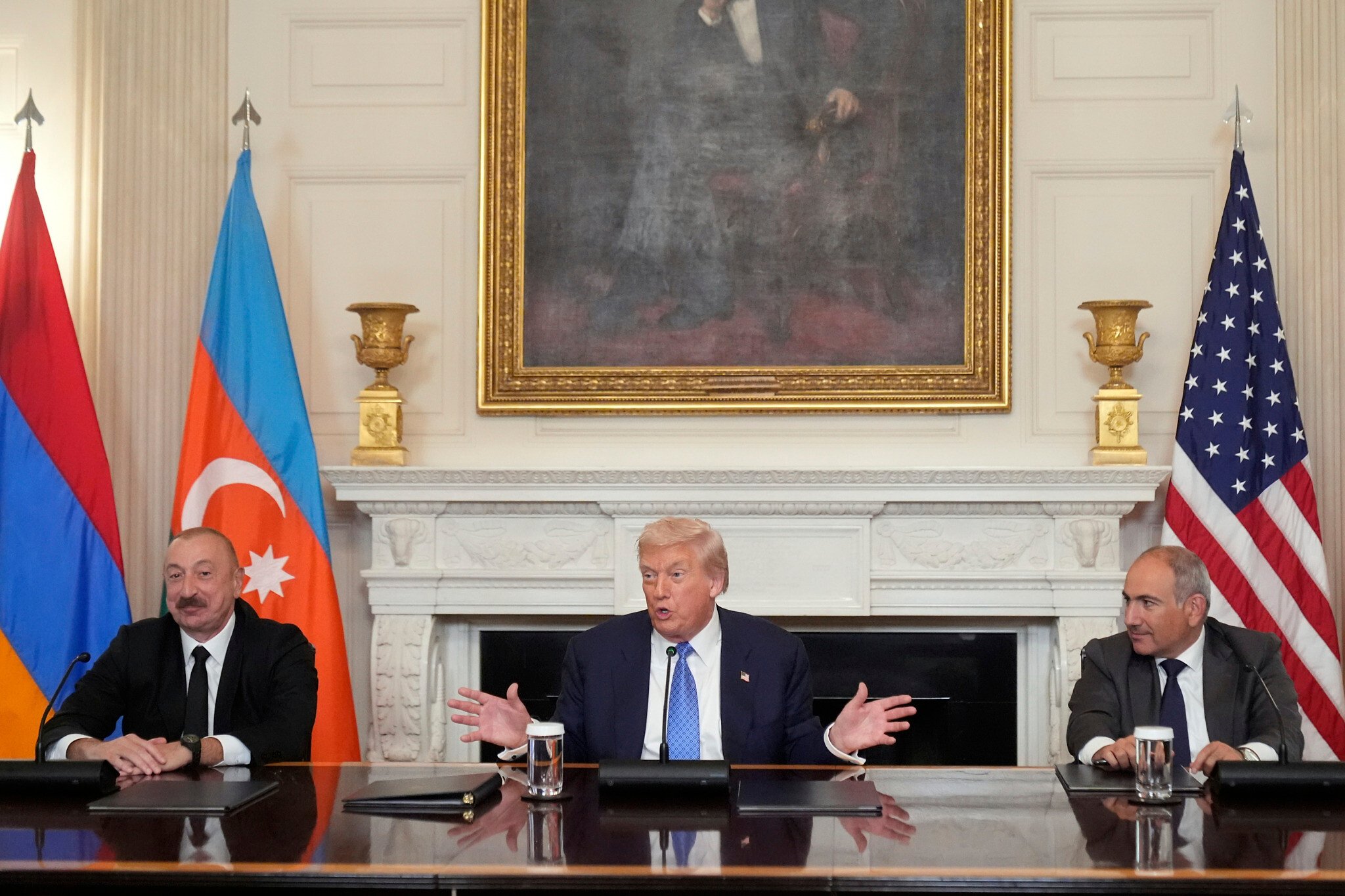
Iran has threatened to block a planned transport corridor in the Caucasus, part of a peace deal between Azerbaijan and Armenia brokered by US President Donald Trump. The Trump Route for International Peace and Prosperity (TRIPP) would run through southern Armenia, linking Azerbaijan directly to its Nakhchivan exclave and Turkey, with the US granted exclusive development rights. Iranian media quoted Ali Akbar Velayati, top adviser to Supreme Leader Ayatollah Ali Khamenei, warning the route would become a “graveyard for Trump’s mercenaries” rather than a US-controlled passage.
Velayati’s remarks came despite Iran’s foreign ministry earlier calling the deal an “important step toward lasting peace,” while cautioning against foreign intervention near its borders. He said recent military drills in northwest Iran showed Tehran’s readiness to resist any geopolitical changes in the region. Analysts, however, noted that Iran, already under pressure over its nuclear programme and after a 12-day war with Israel in June, may lack the military power to stop the corridor’s development.
Trump hosted Azerbaijani President Ilham Aliyev and Armenian Prime Minister Nikol Pashinyan at the White House on Friday, where they signed a joint declaration to end decades of conflict. Azerbaijan’s ambassador to Britain, Elin Suleymanov, called the plan a “paradigm shift” for regional prosperity and transport connectivity. He added that only one obstacle remained before a final peace deal — Armenia must amend its constitution to remove claims over Nagorno-Karabakh.
Armenia’s prime minister has called for a referendum on the constitutional change, though no date has been set. The vote is expected before parliamentary elections in June 2026. Suleymanov said Azerbaijan was ready to sign the agreement once Armenia fulfilled its “basic commitment” to drop the territorial claim. The proposed corridor’s operational timeline would depend on US-Armenia cooperation, with discussions already underway.
Russia, a traditional broker in the South Caucasus, was excluded from the US-led summit but welcomed the accord while urging solutions developed with regional neighbours, including Iran and Turkey. Meanwhile, experts warned that key details — such as customs procedures, security arrangements, and Armenia’s reciprocal access to Azerbaijani territory — remain unresolved and could derail the plan if not addressed quickly.