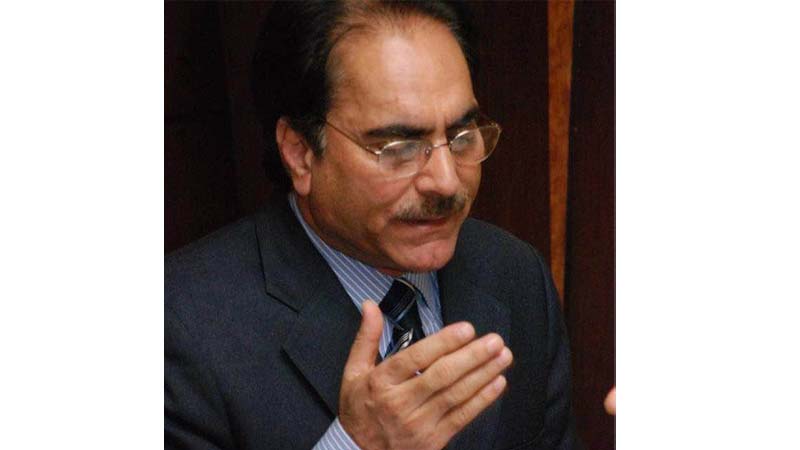
Mumtaz Ahmad Sheikh has a passion to serve the literary community the world as far as Urdu literature is concerned. He has ventured to capture selected Afsana (short story) writings from 1901 to 2017 in his quarterly magazine, ‘Lowh’ (June – December 2017) as a gift from Old Ravians (old students of Government College, Lahore) to the present students of Urdu literature. Starting with traditional Hamd-o-Naat and Salaam sessions, he gives the selected stories for six eras; first era from Akhtar Aureenvi to Niaz Fatehpuri, second era from Ahmad Ali to Rasheed Jahan, third era from Akhtar Ansari Dehelvi to Mumtaz Mufti, fourth era from Agha Babar to Hajira Masroor, fifth era from Agha Gul to Younis Javed and the sixth from Asif Farkhi to Nuzhat Abbasi. It was Mumtaz Sheikh’s dream since forty years to start a literary magazine, and the closure of Naqoosh, Auraq, Funoon and Symbol encouraged him to start this venture – an effort he has carried out selflessly.
Selecting the short stories in alphabetical order, he has only picked those of six eras of the twentieth century to-date. He does not include critical appraisals or criticism to avoid any uncalled for debate among the rival groups prevalent in literary factions (Page 16). The pattern of writing short stories, themes, and change in techniques are some of the areas that can be appreciated in his present selection. Mumtaz had to undergo a lot of trouble especially when it came to collecting short stories of the pre-independence era (before 1947). This reviewer had no option but to take a sample from each era and see the changes in themes, writing styles etc. if any.
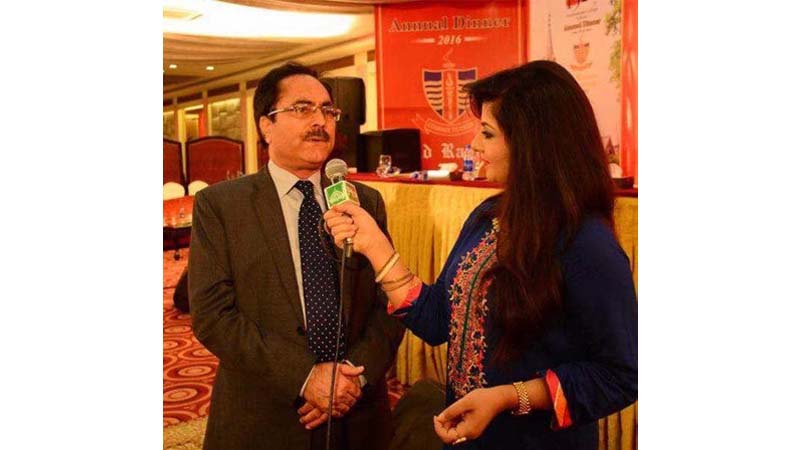
The first short story titled ‘Mareez’ (patient) by Akhtar Oreenvi revolves around the mental delirium of a patient, Javed, who has written somewhere in his diary that God is a reality to be reckoned with. According to him, the concept of ‘bad deeds’ or ‘reward’ is meaningless and the reality of God and Universe is the only truth as we cannot see from the surface of the earth and cannot feel like God. Javed initially objects to the narrator’s reading of his diary, and then later opens it up to him on his own will. Javed is a poet and a painter. He falls sick and is admitted in a sanatorium. The rest of the short story is about the conflict between life and death, between the will to live and not to live. Shaheena, his wife sticks to him till the very end and in his last days asks God as till when he will have to fight his will. Finally, wife Shaheena and Javed cry till his head falls in Shaheena’s lap. This story is a simple narrative with simple vocabulary. It is a story belonging to those times when tuberculosis was an epidemic. Now it is not, so present day stories would not make this disease their theme. The last story of the first era ‘Do Ghante Jahanum Main’ (two hours in hell) by Niaz Fatehpuri, somehow or the other also relates to a death scene when the narrator watches him die and faces hell for a couple of hours while unconscious. His first entry to hell makes him come across Satan’s house. There is only smoke inside, no light. Next house is that of the Pharos. Memories of his quarrel with Hazrat Musa surface in his mind. He passes through Haman-o-Shadad’s nameplates and does not enter but stops at Cleopatra’s house. Here, Cleopatra’s statue is engulfed in fire. He witnesses a woman coming out of the statue with blood coming out of her eyes till the statue opens again and she re-enters it. He is pardoned and put in a corner of the Heavens and when he wakes up he sees his family weeping and his coffin ready. This short story is an interesting discourse with quotations from Asatazas’ poetry. This reviewer did not see any change in diction or vocabulary in this era.
He does not include critical appraisals or criticism to avoid any uncalled for debate among the rival groups prevalent in literary factions. The pattern of writing short stories, themes, and change in techniques are some of the areas that can be appreciated in his present selection
The story ‘Garmiyon Ki Aik Raat’ (one summer night) by Sajjad Zaheer reminded this reviewer of the black and white days of Indian Cinema in the 1940s and 1950s where the characters of Lala, Seth, Head Clerk and Munshi are amply shown in their plots, probably due to the only occupation for the masses under British legacy. The story starts with people in a jam packed park – the poverty stricken characters. Walking out on foot Munshi is followed by Jumman, a poor peon who by the end of the walk begs for a one rupee loan. Those were the days when the salary used to be sixty rupees only. They reach a spot where people are coming out of a cinema house, including a middle aged man (Seth) wearing ‘angrakha’ (a traditional upper garment worn by men in the Indian Subcontinent which overlaps and is tied to the left or right shoulder) and a two layered cap, eating paan (beetle leaf) and with a cigarette in his fingers. They meet after a long time. Seth offers Munshi to accompany him to a singing girl’s Kotha (Red Light Area). Munshi happily agrees and both leave in the car and Jumman is seen standing dumbstruck. Such a theme was expected from Syed Sajjad Zaheer who died in USSR in 1973. He was of the Marxist ideologue and was a radical revolutionary who worked in both India and Pakistan. In the pre-independence era, he was a leading member of the Communist Party of India. Upon Independence, he moved with his family to the newly-created Pakistan and became a founding member of the Communist Party of the country. In 1951, he was caught and jailed for his involvement in the Rawalpindi Conspiracy Case that overthrew the first prime minister of Pakistan. Upon his release, he moved back to India and resumed his activities in various “progressive” cultural organizations of the Communist Party. So as time passed there were thematic changes visibly more inclined towards the socialist structure in the domain of short story writing.
Title: Lowh — June — December 2017
Editor: Mumtaz Ahmad Sheikh
Price: Rs. 1500/- local, US $ 75/- abroad
Publishers: Rahbar Publishers, Lahore, Islamabad
It was Prem Chand who introduced the concept of realism in short story writing. The difference with his contemporaries was that he even offered solutions to the masses’ social issues. This is unlike Alice Munro, the Canadian Nobel Laureate who leaves the solutions open to the readers. Saadat Hassan Manto did not write short stories for sexual entertainment of the readers but wrote them to expose the ills of the society. He was acknowledged many decades after his departure from this world.
As far as changes in trends in short-story writing is concerned, many writers touched upon this issue in the sixth international conference held in Karachi in 2013. “Fiction reading increases empathy and people have stopped caring and asking about others with the decline of short stories,” said writer and critic, Dr. Asif Farrukhi. “Short story writers of the 21st century have more challenges to face. On one hand, they are facing imperialism while on the other, they face the Taliban,” said writer and critic, Akhlaq Ahmed. Short story writers of the 21st century have more challenges to face. On one hand, they are facing imperialism while on the otherhand; they face the Taliban, said writer and critic Akhlaq Ahmed. The time of Intizar Hussain and Anwar Sajjad was the time of symbolic short stories. Events such as the rule of Zia ul Haq (who was not popular amongst writers), nuclear tests in the subcontinent and the 9/11 attacks in New York City affected Pakistan, and a number of symbolic short stories of good quality were written in that period.

From the fourth era, short story ‘Ami’ (mother) by Ashfaq Ahmad needs mention. It is a story of a son who cheats his friend’s mother and sister by becoming victim to gambling. In the end he loses his life to pick pockets. This reviewer has picked the story ‘Gaaye’ (cow) by Anwar Sajjad from the fifth era. The story revolves around collective decision of all to sell their cow as it was of no use to them. The narrative also excels in describing the cow’s resistance and determination to this collective decision.

The gigantic effort by Mumtaz Ahmad Sheikh encompassing the representative short stories and dozens of writers in the book under review, is the result of dedication to the purpose. The gradual shift in expression, themes, and the external and internal factors from the great Prem Chand, Sajjad Haider Yildrim and Saadat Hassan Manto to the present generation is amply established. From the writers of the 1960s till today’s writers, contributions keep on appearing in this domain of literature, only if its readership is revitalized.
Published in Daily Times, November 1st 2017.