
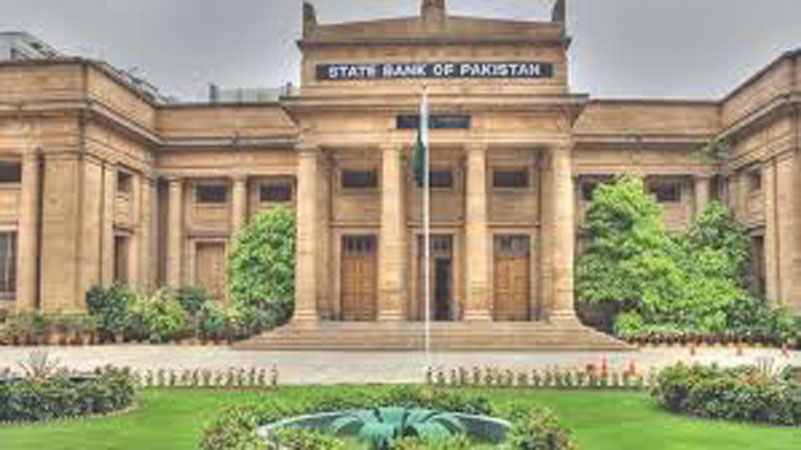
 In a widely expected move, the State Bank of Pakistan (SBP) kept the policy rate unchanged at 11 percent on Monday, citing emerging external sector risks, the fiscal impact of the upcoming budget, and a recent rebound in international oil prices.
The decision, taken at the Monetary Policy Committee (MPC)’s meeting, suggests that the central bank is keen to consolidate earlier rate cuts while monitoring inflationary pressures that may resurface in the coming months.
The MPC observed that “the increase in inflation in May to 3.5 percent year-on-year was in line with its expectation, whereas core inflation declined marginally.” Taking stock of these developments and potential risks, the Committee assessed that the real interest rate remains adequately positive to stabilize inflation within the target range of 5 – 7 percent. It added that inflation expectations among households and businesses had also moderated. However, the Committee warned that “some of the proposed FY26 budgetary measures may further widen the trade deficit by increasing imports.”
While recent inflation readings remain benign. Officials flagged potential risks to the external account amid a sustained trade deficit, weak financial inflows, and a volatile global commodity environment. In a particularly telling admission, the MPC stated that “some of the proposed FY26 budgetary measures may further widen the trade deficit,” indirectly flagging the pro-growth tilt in fiscal planning that could complicate monetary management.
Oil Shock: Crucially, this meeting came on the heels of a notable rally in oil prices. Just days before the decision, Israel launched a military strike on Iranian nuclear and military installations, pushing the Middle East to the brink of wider conflict, with heavy exchanges on both sides and regional stability at risk. In the immediate aftermath, global oil prices surged by more than 7% on Friday, with Brent spiking on fears of supply disruptions.
However, as of Monday, the gains had pared. Oil prices pulled back – Brent hovered near $72 a barrel, and WTI around $70 – as markets digested the fact that neither country’s oil production or export facilities were directly hit. The easing of price pressure may also be due to speculation around backchannel diplomacy, as both sides publicly signalled restraint after initial escalation.
But for Pakistan, even temporary volatility matters, as the committee noted that “Going forward, external outlook is susceptible to multiple risks, which mainly stem from heightened geopolitical tensions, volatility in international oil prices,” amongst others.
A surge in oil prices can bleed into domestic inflation quickly, especially via fuel and energy costs – key reasons why the SBP chose to hit pause. Policymakers are wary of imported inflation sneaking back just as disinflation gains were beginning to take hold.
Growth, Budget, and the IMF Lens:
Meanwhile, Pakistan’s real GDP is estimated to have grown by 2.7 percent in FY25, and the government has set an ambitious target of 4.2 percent for FY26. Much of this optimism rides on the continued impact of earlier rate cuts and hopes of a revival in the industrial and services sectors. The SBP noted that “real GDP growth accelerated to 3.9 percent from 1.4 percent in H1-FY25” in the second half of the fiscal year, led by a rebound in industry and services, even as agriculture underperformed due to a decline in major crop output.
But the external sector remains a flashpoint. Although the current account was “broadly balanced” in April, thanks in part to foreign exchange inflows under the IMF’s Extended Fund Facility (EFF), the trade deficit has continued to widen. FX reserves stand at $11.7 billion as of June 6, bolstered by a $1 billion inflow after completion of the first EFF review.
But all of this hinges on execution. As the MPC pointed out, “the timely realisation of planned foreign inflows, achievement of the targeted fiscal consolidation and the implementation of structural reforms” remain critical to sustaining macroeconomic stability. It also reaffirmed that the real interest rate remains “adequately positive” to anchor inflation within the 5-7 percent target range.
It is worth mentioning that heading into the June 16 monetary policy meeting, the market had largely priced in a hold. While the 3.5% inflation print for May – the lowest since 2015 – fueled whispers of a rate cut, most brokerage houses including Topline Securities, Arif Habib Ltd., and JS Global expected the central bank to stay cautious. Their rationale: the budget was still pending, external financing remained uncertain, and global oil prices were creeping up again amid israel-iran conflict. Reuters’ analyst poll echoed this sentiment – predicting no change – as the SBP weighed near-term disinflation against medium-term risks. The MPC’s decision to keep the rate unchanged at 11% was, in that sense, broadly aligned with market expectations.
In plain terms, the SBP seems to be walking a tightrope-balancing a fragile recovery with the need for macroeconomic stability, all while keeping an eye on a volatile global environment. Any deviation in fiscal discipline or delay in foreign inflows could force the bank back into a tightening stance sooner than markets expect.