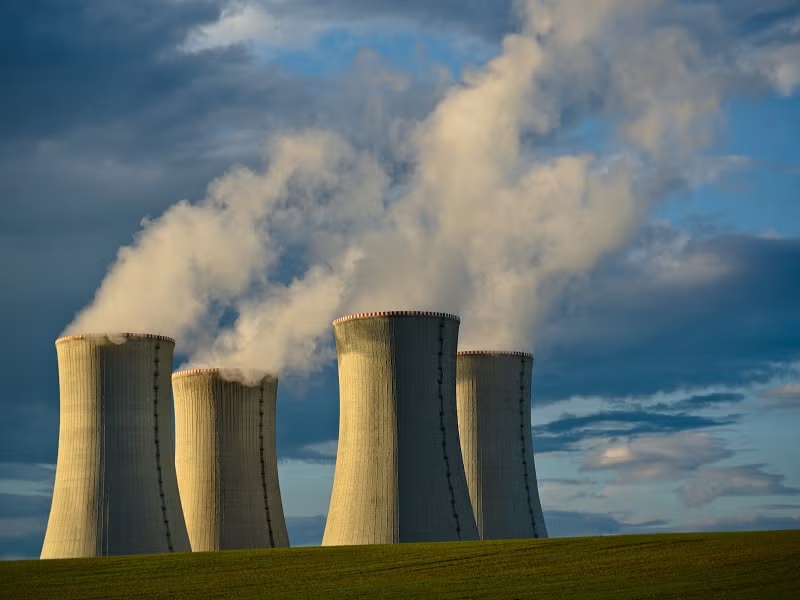
Pakistan is moving ahead with signing power purchase agreements for its two major nuclear power plants in Karachi — K-2 and K-3. These agreements involve three parties: the Pakistan Atomic Energy Commission (PAEC), the National Transmission and Despatch Company (NTDC), and the Central Power Purchasing Agency (CPPA-G). The approval came during a recent meeting of the Economic Coordination Committee (ECC), showing the government’s push for energy reliability.
Both plants are already operational. K-2 started supplying power in May 2021, while K-3 followed in April 2022. Each plant generates 1,145 megawatts of electricity. Together, they contribute significantly to Pakistan’s base-load power — meaning electricity that’s always needed. These nuclear plants help reduce reliance on expensive imported fuels and support energy affordability.
Earlier, NEPRA (National Electric Power Regulatory Authority) issued licenses and allowed interim tariffs based on the “Take or Pay” model. This model means payments must be made whether or not all electricity is used. Later, in 2022 and 2023, NEPRA approved final tariffs, confirming the plants’ financial terms. Following this, CPPA-G’s board agreed to purchase electricity under these updated tariffs.
To proceed, the ECC approved a standard draft for the tripartite agreements, customized for K-2 and K-3. The draft is based on the 2015 Power Generation Policy, ensuring legal and technical compliance. NEPRA also reviewed the draft and gave clearance in an official letter dated April 3, 2024. The agreements include technical performance standards and payment terms for all three parties.
Now, the Power Division has been authorized to finalize and sign these agreements. This step marks a major milestone in securing long-term energy supply for Pakistan. With K-2 and K-3 operating under formal contracts, the country can better manage future electricity demands and promote energy sustainability.